

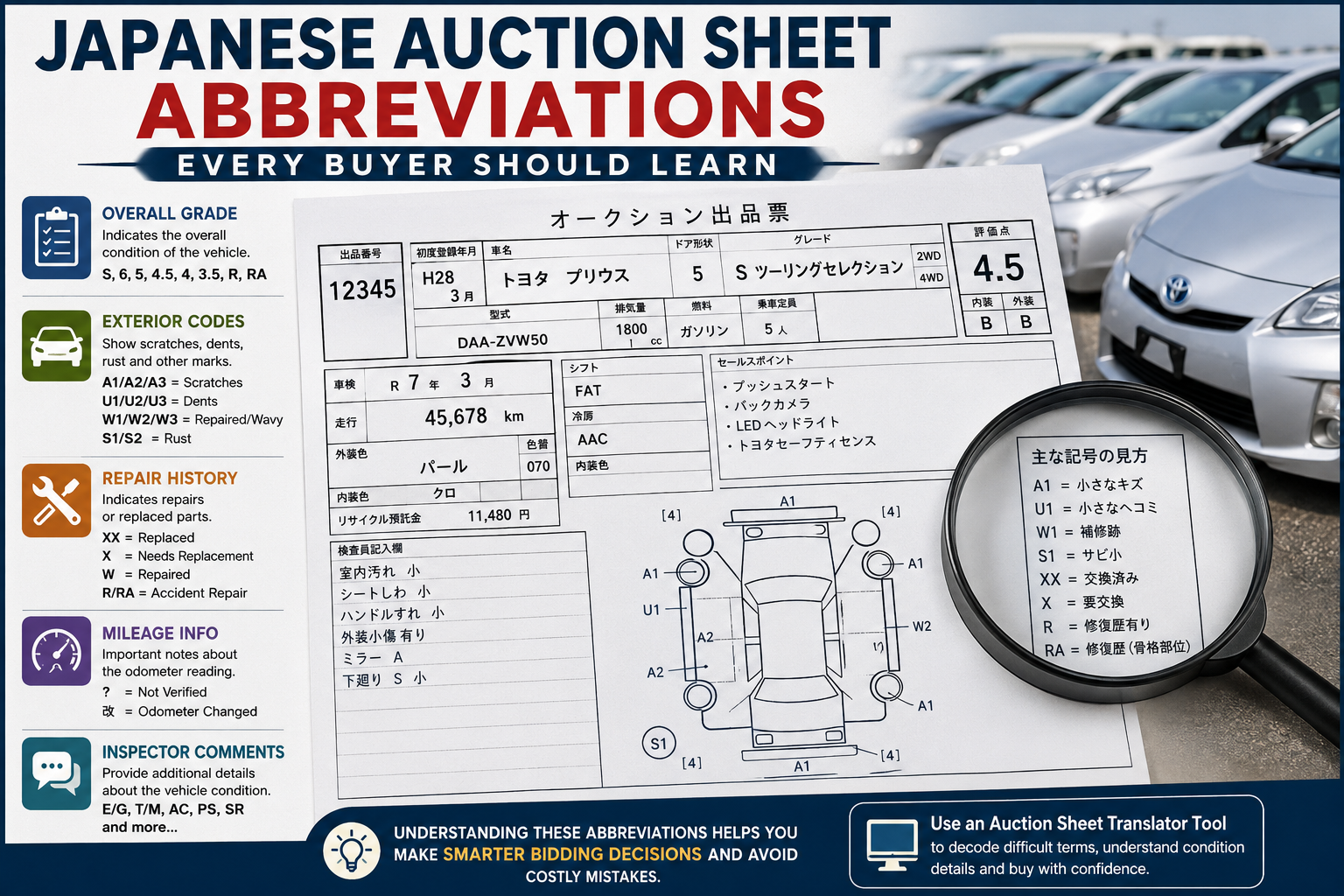
Buying imported vehicles from Japan can be an exceptional way to access reliable, well-maintained models at competitive prices. Many seasoned importers consider Japanese auctions one of the most dependable sources for securing the best used cars to buy, especially for buyers seeking superior maintenance history and lower mileage.
However, auction sheets remain one of the most misunderstood parts of the process. These documents contain compact inspection notes, abbreviations, grading systems, and condition codes that can dramatically influence a vehicle’s real value. Misreading even a single symbol may result in purchasing a car with hidden repair history, severe corrosion, or expensive mechanical defects.
Understanding the language of a Japanese vehicle auction sheet is not merely helpful. It is essential.
Why Auction Sheets Matter So Much
Every vehicle listed in a Japanese vehicle auction sheet undergoes an inspection before bidding begins. The inspector records visible defects, interior condition, mileage verification, and repair history using abbreviated terminology and shorthand codes.
For experienced dealers, these symbols offer a concise mechanical portrait of the vehicle. For new buyers, they can appear cryptic and overwhelming.
This is precisely why many importers now rely on auction sheet translator tools to decode inspection notes accurately. A proper translation can prevent expensive misunderstandings and help buyers identify the best used cars to buy without relying solely on exterior photographs.
Understanding the Overall Auction Grade
The first element most buyers notice is the auction grade. This overall rating summarizes the vehicle’s condition.
Grade S
Grade S usually indicates a nearly new vehicle with extremely low mileage. These units often appear in pristine condition and are highly sought after.
Grade 6 or 5
These vehicles are generally in excellent condition with minimal wear. Many importers searching for the best used cars to buy specifically target Grade 4.5 to 5 vehicles because they balance quality and affordability.
Grade 4
A Grade 4 vehicle typically has moderate usage but remains in solid condition overall. Small scratches or minor interior wear may exist.
Grade 3.5
This grade requires closer inspection. Some vehicles remain excellent purchases, while others may show signs of neglect or previous repairs.
Grade R or RA
This is one of the most misunderstood markings on a Japanese vehicle auction sheet.
Grade R usually means the vehicle has undergone accident repairs or structural repair work. RA often indicates heavier repairs involving core structural areas. Some repaired vehicles are perfectly serviceable, while others conceal long-term problems.
Because auction inspectors use nuanced Japanese terminology in repair descriptions, translator tools can become extremely valuable here. A single phrase may distinguish between a minor fender repair and substantial frame damage.
Interior Grades Buyers Often Ignore
Most buyers focus heavily on exterior grading while overlooking interior ratings.
Auction sheets commonly use alphabetical grades such as:
- A = Excellent condition
- B = Good condition
- C = Noticeable wear
- D = Significant deterioration
An attractive exterior paired with a poor cabin grade may indicate neglect, smoking damage, water intrusion, or commercial overuse.
For buyers seeking the best used cars to buy for long-term ownership, interior grading deserves equal attention.
Common Exterior Condition Abbreviations
The diagram section of the auction sheet contains shorthand markings that identify defects around the vehicle body.
These abbreviations may appear insignificant, but they directly influence resale value and future repair expenses.
A1, A2, A3
“A” refers to scratches.
- A1 = Small scratch
- A2 = Medium scratch
- A3 = Large scratch
A vehicle covered in A1 markings may still represent an excellent purchase. Numerous A3 markings, however, can indicate poor cosmetic care.
U1, U2, U3
“U” signifies dents.
- U1 = Minor dent
- U2 = Moderate dent
- U3 = Large dent
These codes often appear around doors and quarter panels.
W1, W2, W3
“W” indicates repaired or wavy paintwork.
This section is particularly important because poorly repaired panels may suggest previous accidents. Many buyers misinterpret W markings as harmless polishing imperfections when they may actually reveal filler work or repainting.
A reliable Japanese vehicle auction sheet translator can help clarify inspector notes associated with these codes.
S1 and S2
These markings refer to rust.
- S1 = Light rust
- S2 = More extensive rust
Rust is especially important for buyers importing vehicles into regions with humid climates or coastal environments.
Accident and Repair Terminology
Some of the most financially consequential abbreviations involve accident history.
XX
This indicates a replaced panel.
For example:
- Door XX = Door replaced
- Fender XX = Fender replaced
Replacement panels are not always problematic, but buyers should determine why the replacement occurred.
X
This symbol usually means the panel requires replacement.
C or Corr
These abbreviations refer to corrosion. Severe corrosion can compromise structural integrity and drastically reduce resale value.
P
Paint defects or fading.
This may sound minor, but repainting large sections of a vehicle can become surprisingly expensive.
Mileage Verification Codes
Japanese auctions are known for mileage transparency, but buyers should still pay attention to notation symbols.
“?” Near Mileage
A question mark beside mileage often means the odometer reading could not be verified confidently.
This is a major warning sign.
“改” or Altered Indicators
These symbols may indicate an odometer replacement or mileage inconsistency.
Importers searching for the best used cars to buy should treat unclear mileage documentation with caution.
Why Inspector Comments Are So Important
The handwritten or typed comments section often contains the most critical information on the entire sheet.
Inspectors may mention:
- Engine noise
- Oil leaks
- Transmission hesitation
- Previous flood exposure
- Undercarriage corrosion
- Smoke odor
- Modified suspension
Unfortunately, these notes are frequently written in abbreviated Japanese phrases that automated generic translators struggle to interpret correctly.
This is where a specialized auction sheet translator tool becomes especially beneficial. Context-aware translation can reveal subtle mechanical concerns that ordinary translation software might distort or overlook entirely.
Common Mechanical Abbreviations
Auction sheets also include shorthand for mechanical issues.
E/G
Engine-related remarks.
T/M
Transmission observations.
AC
Air conditioning condition.
PS
Power steering.
SR
Sunroof.
While these may appear straightforward, surrounding inspection notes often provide deeper context. For example, “AC weak” may indicate a simple refrigerant recharge or a failing compressor system.
The Difference Between Cosmetic and Structural Damage
One of the largest misconceptions among inexperienced importers is assuming all defects carry equal severity.
A few scratches and dents may have minimal long-term impact. Structural repairs, corrosion, or frame distortion are entirely different matters.
The Japanese vehicle auction sheet is designed to distinguish cosmetic flaws from deeper mechanical concerns, but understanding the distinction requires careful interpretation of abbreviations and annotations.
This is why professional buyers rarely rely on photos alone.
How Buyers Misinterpret Auction Sheets
Several recurring mistakes occur among first-time importers:
Focusing Only on the Grade
A Grade 4 vehicle with hidden corrosion may be worse than a carefully repaired Grade R unit.
Ignoring the Diagram
The body map often reveals more than the overall grade itself.
Misreading Repair Codes
Many buyers underestimate W, XX, and structural annotations.
Overlooking Inspector Remarks
Critical information frequently appears in small handwritten comments.
Using an accurate translation tool can dramatically reduce these risks by converting technical shorthand into understandable language.
Choosing Smarter Imports
Experienced importers know that successful buying depends on interpretation, not guesswork.
The best used cars to buy are not always the newest or highest-graded units. Sometimes the smartest purchases are vehicles with transparent histories, properly documented repairs, and honest inspection notes.
Learning auction sheet abbreviations empowers buyers to evaluate vehicles with greater confidence and precision. It also helps separate genuinely well-maintained imports from listings that merely appear attractive in photographs.
Final Thoughts
Japanese auctions provide remarkable access to quality imported vehicles, but the auction sheet remains the true backbone of informed purchasing decisions. Every abbreviation, code, and annotation tells part of the vehicle’s story.
For newcomers, these compact symbols can feel intimidating at first. Yet understanding them can prevent costly surprises and improve the chances of finding the best used cars to buy with confidence.
Because many inspection comments involve technical shorthand and nuanced repair terminology, using a dependable auction sheet translator tool can be a practical safeguard. Accurate interpretation helps buyers understand repair history, condition grades, and hidden concerns before placing a bid.
Companies like Nobuko Japan provide resources that help importers interpret Japanese vehicle auction sheet details more accurately, making the entire purchasing process more transparent and informed.
