

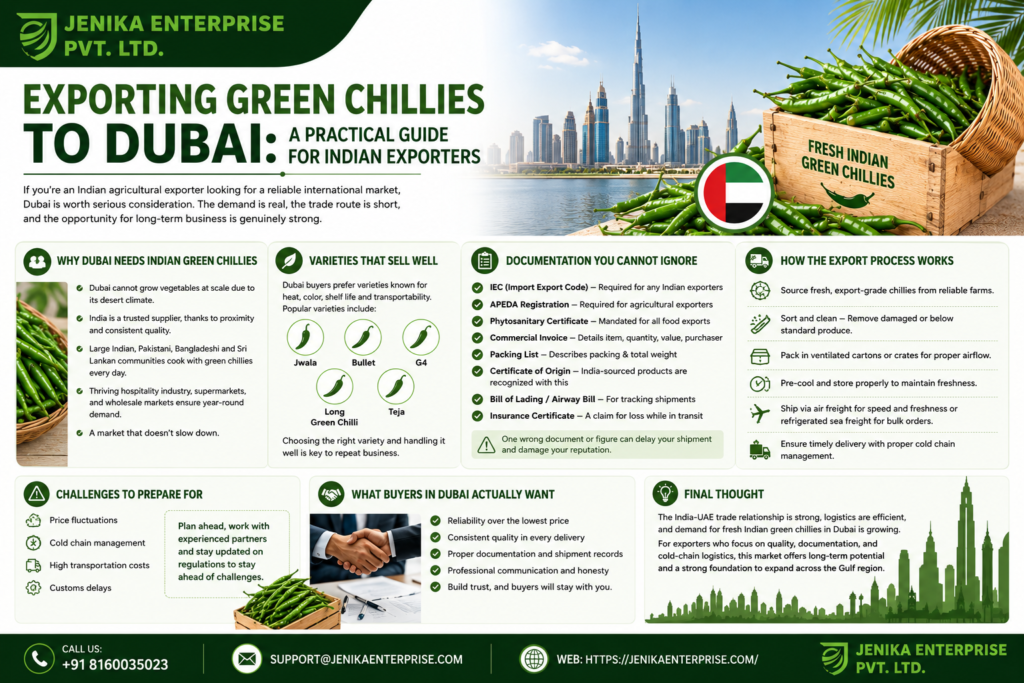
If you’re an Indian agricultural exporter looking for a reliable international market, Dubai is worth serious consideration. The demand is real, the trade route is short, and the opportunity for long-term business is genuinely strong.
Why Dubai Needs Indian Green Chillies
Dubai simply can’t grow its own vegetables at scale. The desert climate makes large-scale farming nearly impossible, so the city imports a significant portion of what it consumes. India, sitting just a short distance away by sea or air, has naturally become one of its most trusted suppliers.
But geography alone isn’t the reason Indian green chillies perform so well here. It’s also about flavor. Indian varieties — known for their pungency, bright color, and fresh aroma — fit perfectly into South Asian and Middle Eastern cooking. Dubai is home to one of the largest Indian expat communities in the world, alongside large Pakistani, Bangladeshi, and Sri Lankan populations. These communities cook with green chillies every single day.
On top of that, Dubai’s hospitality industry is massive. Thousands of restaurants, hotels, and catering businesses run on a steady supply of fresh ingredients. Supermarkets and wholesale vegetable markets add further consistent demand throughout the year. Put it all together and you have a market that doesn’t slow down.
Varieties That Sell Well
Dubai buyers know their chillies. The varieties that move well in this market include Jwala, Bullet, G4, Long Green Chilli, and Teja. Each is selected based on heat level, shelf life, texture, and how well it survives transportation. A chilli that looks great leaving the farm but arrives wilted in Dubai won’t get you repeat orders — so variety selection and post-harvest handling matter just as much as what you grow.
Documentation You Cannot Ignore
Paperwork is where many exporters run into trouble. Missing or incorrect documents can hold up your entire shipment at customs. Here’s what you need:
- IEC (Import Export Code) — Required for any Indian exporters
- APEDA Registration — Required for agricultural exporters
- Phytosanitary Certificate — Mandated for all food exports to assure the product isn’t contaminated
- Commercial Invoice — The record of the transaction that details item quantity, value, and the purchaser
- Packing List — Describes the packing and the total weight of all shipping containers
- Certificate of Origin — India-sourced products are recognized with this
- Bill of Lading / Airway Bill — Issued for tracking shipments by the freight company
- Insurance Certificate — A claim for loss while the cargo was in transit
Get this right every single time. One wrong figure on an invoice can delay an entire consignment and damage your reputation with a buyer.
How the Export Process Works
It starts at the farm. Source fresh, export-grade chillies from suppliers you trust. Once procured, sort and clean the produce carefully — remove anything damaged, discolored, or below standard. What goes into your packaging represents your business.
Pack using ventilated cartons or plastic crates that allow proper airflow. Trapped moisture spoils chillies quickly.Things start to spoil quickly. Ensure that produce is precooled to the desired temperature and stored properly before shipping. If you try to skip this step, the produce will likely spoil and the buyer will be dissatisfied.
Air freight is the preferred shipping method because it balances speed and freshness. If you are catering to premium customers, this will be the best option. Refrigerated sea freight is more cost-effective for bulk orders, and as the India-Dubai route is one of the shorter trade routes, quality is unlikely to spoil. Ultimately, it will need to be balanced according to the buyer’s requirements and the urgency of the order.
Challenges to Prepare For
Fresh produce exports come with real operational challenges. Prices fluctuate. Cold chain management requires constant attention. Transportation costs can squeeze margins. And customs delays, even brief ones, can push perishable goods past their usable window.
None of this should put you off — but you need to plan for it. Work with experienced freight partners who understand perishables. Build contingency time into your logistics. Stay updated on both Indian export regulations and UAE import requirements, as these can change.
What Buyers in Dubai Actually Want
Importers in Dubai prioritize reliability over the lowest price. In this competitive industry, strong partnerships are forged through integrity and consistency of service. Each delivery should have the same quality and the seller should be able to provide a physical record of shipment, should maintain professionalism, and should be honest.
If quality dips or a shipment is delayed, tell the buyer up front. Trust is hard to win, but easy to lose.
Final Thought
The India-UAE trade relationship is strong, the logistics infrastructure is well-developed, and the demand for fresh Indian green chillies in Dubai continues to grow. For exporters who get their quality systems right, maintain proper documentation, and take cold-chain logistics seriously, this market offers genuine long-term potential — and a strong foundation to expand further across the Gulf region.
