

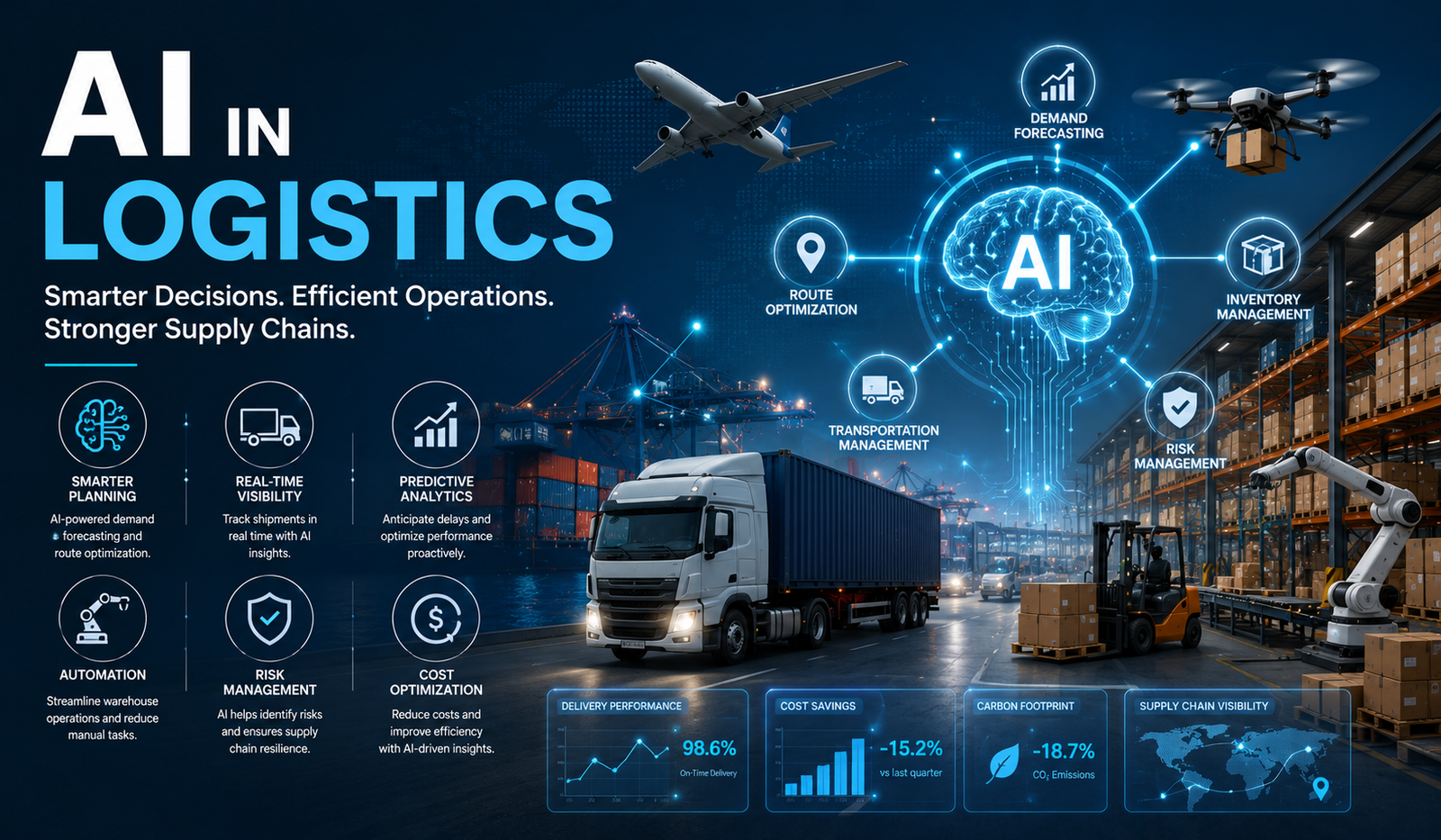
The logistics industry is undergoing a major transformation as companies increasingly adopt advanced technologies to improve operations, reduce costs, and meet growing customer demands. Businesses today must manage complex supply chains, faster deliveries, inventory tracking, and transportation efficiency while maintaining high service standards. Artificial intelligence has become one of the most important technologies helping logistics companies streamline operations and improve decision-making. Many organizations exploring modern supply chain solutions often ask, what is an example of ai in logistics and how it improves efficiency across transportation and distribution networks.
Artificial intelligence allows logistics companies to automate repetitive tasks, analyze massive amounts of data, predict delivery patterns, and optimize routes in real time. From warehouse automation to predictive maintenance and smart inventory management, AI is reshaping how logistics companies operate globally. Businesses investing in AI-driven systems are achieving faster deliveries, lower operational costs, and improved customer experiences.
Understanding the Role of AI in Logistics
Artificial intelligence refers to systems and software capable of processing data, learning patterns, and making intelligent decisions without constant human intervention. In logistics, AI helps companies improve efficiency and operational accuracy.
When businesses ask what is an example of ai in logistics, the answer often includes route optimization, automated warehouses, and predictive supply chain management systems. AI technologies improve speed and decision-making across logistics operations.
Automation improves operational performance.
Why Logistics Companies Are Adopting AI
Modern supply chains involve massive amounts of data and coordination between transportation providers, warehouses, suppliers, and customers. Managing these processes manually can lead to delays and inefficiencies.
Companies researching what is an example of ai in logistics often discover that AI systems can reduce human errors, improve forecasting, and simplify complex logistics operations. AI adoption improves overall productivity.
AI supports smarter logistics management.
Key AI Technologies Used in Logistics
Artificial intelligence includes several technologies that work together to improve supply chain operations and transportation efficiency.
Important AI Applications in Logistics
Businesses asking what is an example of ai in logistics often encounter:
- AI-powered route optimization and delivery planning
- Automated warehouse robotics and inventory systems
- Predictive analytics for supply chain forecasting
These technologies improve operational speed and reduce unnecessary costs. AI helps businesses make more accurate decisions quickly.
Technology improves supply chain efficiency.
AI-Powered Route Optimization
Route optimization is one of the most common AI applications in logistics. AI systems analyze traffic conditions, weather, fuel usage, and delivery schedules to identify the most efficient routes.
For companies wondering what is an example of ai in logistics, smart route planning systems are a clear example of how AI reduces delivery times and transportation expenses. Faster deliveries improve customer satisfaction.
Optimized routing reduces delays.
Warehouse Automation and Robotics
Warehouses are becoming increasingly automated with the help of AI-powered robotics and intelligent inventory systems. Automation improves speed, accuracy, and inventory management.
Businesses exploring what is an example of ai in logistics often see automated picking systems, robotic sorting machines, and smart storage management as major AI-driven innovations in modern warehouses.
Automation increases warehouse productivity.
Predictive Analytics and Demand Forecasting
AI systems can analyze historical data, customer trends, and seasonal demand patterns to improve forecasting accuracy. Predictive analytics helps businesses avoid overstocking or inventory shortages.
Benefits of AI Forecasting Systems
When discussing what is an example of ai in logistics, predictive analytics often provides:
- More accurate inventory planning and stock control
- Reduced supply chain disruptions and delays
- Better customer demand forecasting and fulfillment
These improvements help businesses reduce waste and improve operational efficiency. Forecasting supports smarter planning.
Predictive analytics improves decision-making.
Real-Time Shipment Tracking
Customers now expect accurate tracking information and delivery updates throughout the shipping process. AI-powered systems improve visibility across transportation networks.
Businesses asking what is an example of ai in logistics often refer to AI-based shipment tracking platforms that provide real-time updates, estimated delivery times, and automated alerts for delays or route changes.
Tracking systems improve transparency.
AI and Fleet Management
Fleet management involves coordinating vehicles, drivers, fuel usage, and maintenance schedules efficiently. AI simplifies these operations by analyzing real-time vehicle performance and driving patterns.
For organizations researching what is an example of ai in logistics, AI-driven fleet monitoring systems are helping businesses reduce fuel costs, improve driver safety, and prevent vehicle breakdowns.
AI improves fleet efficiency.
Customer Service and AI Chatbots
Customer support is another area where AI is improving logistics operations. AI chatbots and virtual assistants provide instant responses to customer questions and shipping inquiries.
Businesses exploring what is an example of ai in logistics often use AI-powered customer service systems to improve communication and reduce support response times.
Automation improves customer support.
AI and Supply Chain Risk Management
Global supply chains can face disruptions caused by weather events, transportation delays, labor shortages, or geopolitical issues. AI helps businesses identify risks and respond proactively.
Companies asking what is an example of ai in logistics often use AI systems for risk analysis, disruption forecasting, and contingency planning to improve supply chain stability.
AI supports proactive management.
Cost Reduction Through AI Automation
One of the biggest advantages of AI in logistics is cost reduction. Automated systems improve efficiency while reducing labor-intensive tasks and operational waste.
Businesses implementing AI solutions often lower transportation costs, improve warehouse productivity, and reduce delivery errors significantly. AI-driven optimization supports profitability.
Automation reduces operational expenses.
The Future of AI in Logistics
Artificial intelligence will continue transforming logistics through autonomous vehicles, drone deliveries, advanced robotics, and smarter predictive systems. AI adoption is expected to accelerate across global supply chains.
Businesses researching what is an example of ai in logistics are likely to see even more advanced technologies shaping the future of transportation and distribution management in coming years.
Innovation continues driving logistics transformation.
Conclusion
Artificial intelligence is helping logistics companies become faster, smarter, and more efficient by automating operations, improving forecasting, and optimizing supply chain management. From route optimization and warehouse robotics to predictive analytics and real-time tracking, AI technologies are transforming every part of the logistics industry.
Understanding what is an example of ai in logistics helps businesses recognize how modern technology can improve operational performance, reduce costs, and enhance customer experiences. As AI continues evolving, logistics companies investing in intelligent systems will gain significant advantages in speed, accuracy, and long-term business growth.
