

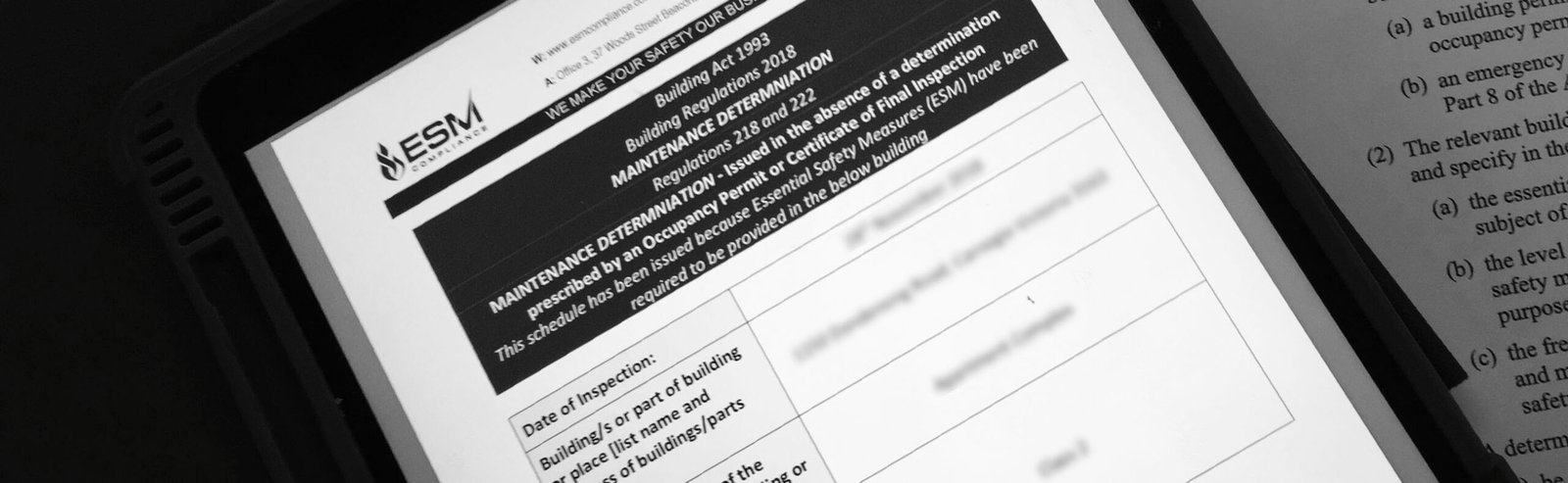
Building owners in Victoria face strict obligations under the Building Act 1993 to keep their structures safe and functional. These duties extend to essential safety systems like fire exits, sprinklers, and structural elements. At the heart of these responsibilities lies the maintenance determination, a key document that outlines precise inspection and upkeep schedules. Failing to follow it can trigger a cascade of consequences, from immediate hazards to long-term legal troubles. This post explores what occurs when owners neglect these requirements, helping you understand the risks and steps to avoid them.
Understanding Maintenance Determinations in Victoria
Victoria’s building regulations mandate that certain buildings have a maintenance determination. This document specifies how often essential safety features must be checked, tested, and maintained. The Victorian Building Authority (VBA) oversees these rules, ensuring compliance protects occupants and the public.
The Building Act 1993, particularly sections related to essential safety measures, requires building owners to prepare and implement an annual maintenance schedule based on the determination. This schedule lists each safety feature, its required frequency of inspection (such as monthly, quarterly, or annually), and who performs the work. Owners must keep records for at least five years, making them available for inspection.
Publicly available VBA guidelines detail common essential safety features covered, including fire hydrants, emergency lighting, smoke detection systems, and exit signs. For example, the VBA’s Essential Safety Measures Checklist outlines standard intervals drawn from Australian Standards like AS 1851. These standards provide the technical backbone for determinations, ensuring uniformity across buildings like offices, apartments, and commercial spaces.
Building surveyors or qualified professionals typically issue the maintenance determination during the construction or occupancy permit stages. Once in place, it binds the owner legally. Non-compliance starts with overlooking these basics, but the repercussions quickly escalate.
Immediate Risks to Safety and Operations
Neglecting a maintenance determination creates hazards that can endanger lives and disrupt business. Essential safety systems degrade without regular checks. A faulty fire sprinkler, for instance, might fail during an emergency, as VBA reports highlight through annual compliance audits.
Owners often discover issues during routine inspections or incidents. Smoke detectors not tested per schedule lose sensitivity, while unmaintained exit paths become blocked. These lapses violate the primary goal of the regulations: occupant safety.
Operationally, problems halt activities. Fire brigades or regulators may order partial shutdowns if risks emerge. Tenants or employees report concerns, leading to evacuations. Insurance providers scrutinise records during claims, potentially denying coverage for incidents tied to poor maintenance. Public VBA data shows thousands of buildings receive rectification notices yearly, underscoring how common these operational hits are.
Regulatory Enforcement and Penalties
The VBA and local councils enforce compliance through inspections and audits. Building owners must lodge Form 5 certificates annually, confirming the completion of the maintenance schedule. Failure to submit invites scrutiny.
If inspectors find non-compliance, they issue directions to rectify. Owners get a timeframe, often 14 to 28 days, to fix issues and provide evidence. Ignoring this leads to formal notices.
Penalties under the Building Act 1993 are stiff. Section 162 allows fines up to 500 penalty units for individuals (around $100,000 based on current rates) or 2,500 units for corporations (up to $500,000). Repeat offences double these amounts. In severe cases, courts impose daily penalties until compliance.
VBA annual reports note hundreds of prosecutions. For example, cases involving unmaintained fire systems result in convictions, with fines and costs awarded. Owners also face building orders, forcing closures until fixed. These steps protect the community but burden non-compliant owners financially and reputationally.
Legal and Financial Consequences
Beyond fines, non-compliance invites lawsuits. Injured parties sue under the common law for negligence if poor maintenance causes harm. The Wrongs Act 1958 supports such claims, holding owners liable for foreseeable risks.
Financially, costs mount. Hiring experts for catch-up work exceeds routine expenses. Legal fees for disputes add up, and lost revenue from closures compounds losses. Banks or strata managers withhold approvals for sales or renovations without clean compliance records.
Strata-titled buildings amplify issues. Owners’ corporations share duties, but individual lot owners contribute. Disputes lead to internal legal battles, as seen in VBA case studies.
Long-term, a poor compliance history hampers property value. Prospective buyers demand warranties, and valuers factor in rectification costs. Public registers of non-compliant buildings deter investors.
Steps to Achieve and Maintain Compliance
Prevention beats cure. Start by locating your maintenance determination, usually held by the building surveyor, owner, or VBA records. Review it against current VBA templates to confirm accuracy.
Appoint a competent person, like a licensed fire safety practitioner, to prepare the annual schedule. They verify each measure against the determination and Australian Standards. Use VBA’s online tools for Form 5 lodgement, due by the anniversary of the occupancy permit.
Keep detailed records: logbooks, invoices, and test certificates. Digital platforms streamline this, but paper suffices if organised.
Schedule regular audits. Engage third-party assessors yearly to spot gaps early. Train staff on basic checks, like monthly visual inspections of exits.
For building owners unsure of their status, contact the VBA directly. Their helpline offers guidance on determinations and obligations.
When to Seek Expert Assistance
Complex buildings, like high-rises or heritage sites, demand specialised input. Alterations or expansions require updating the maintenance determination Victoria. Professionals ensure schedules align with new risks or standards.
Owners facing a backlog should prioritise critical systems first, as per the VBA priority lists. Expert audits provide defensible records against enforcement.
Partnering with Compliance Specialists for Peace of Mind
Staying ahead of maintenance obligations safeguards your investment and community. In Victoria, where regulations evolve, professional support makes compliance straightforward.
That’s where ESM Compliance comes in. We specialise in maintenance determinations and schedules, helping building owners navigate VBA requirements with tailored, standards-compliant plans.
