

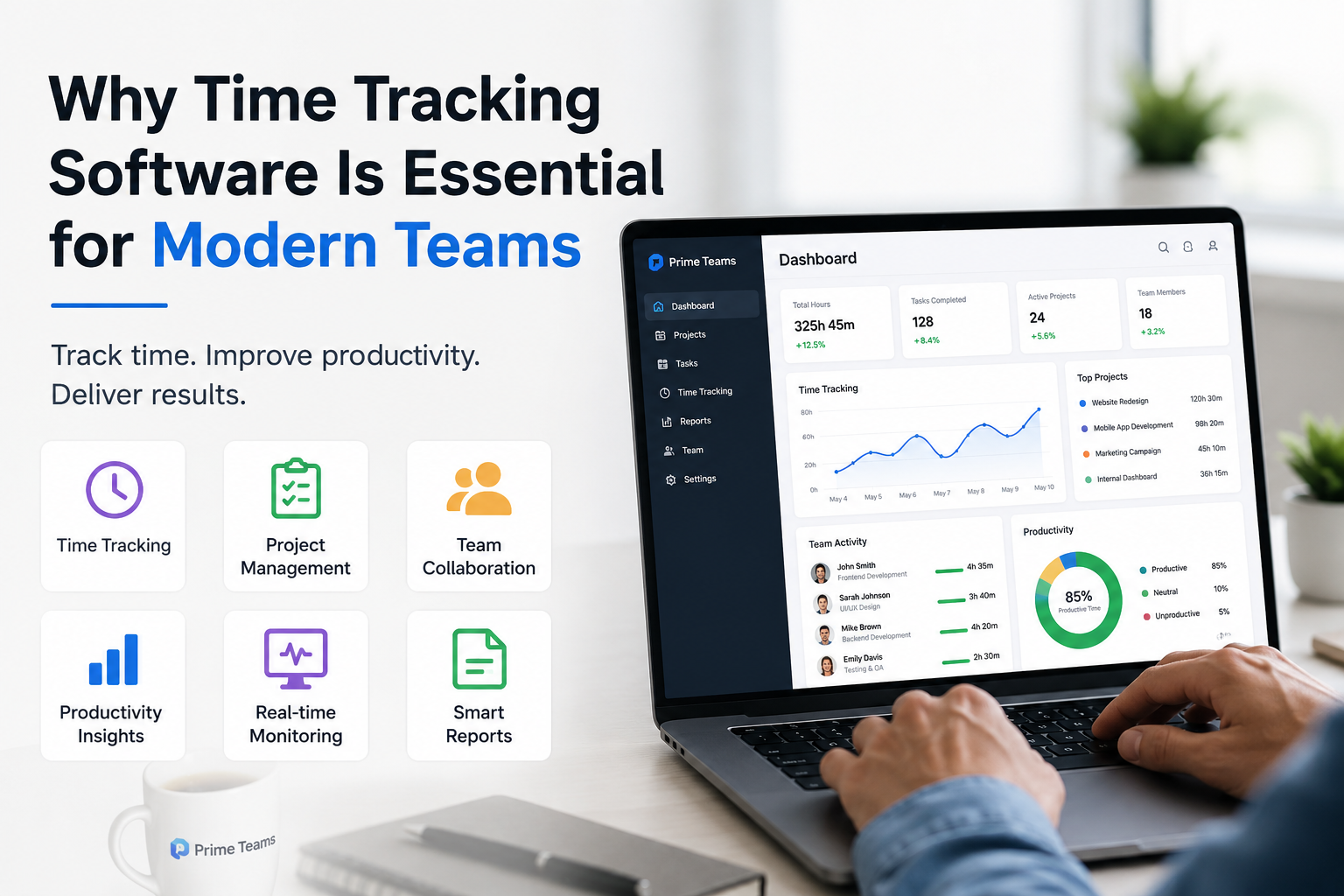
A few years ago, most businesses treated time tracking as a payroll tool. Employees clocked in, clocked out, and managers used the data at the end of the month.
That approach does not work anymore.
Modern teams work differently now. Some employees are remote. Some are hybrid. Freelancers join projects for short periods. Agencies handle multiple clients at once. Teams collaborate across different time zones and communication tools every day.
In this kind of setup, managers cannot rely on assumptions to understand how work is progressing.
That is one reason more companies are investing in time tracking software for modern teams. Not because they want to watch employees every minute, but because they need a clearer picture of how work actually moves inside the business.
Time Tracking Has Changed a Lot
Older systems were rigid and frustrating. People forgot to log hours, reports were incomplete, and managers spent too much time fixing timesheets manually.
Modern platforms are different.
Today’s tools help businesses understand:
- how projects are moving,
- where time is being spent,
- which tasks slow teams down,
- and whether workloads are balanced properly.
Good software also removes a lot of repetitive admin work. Instead of chasing spreadsheets or asking employees for updates all day, managers can check progress in real time.
That shift matters even more for remote teams where visibility naturally becomes harder.
The Biggest Problem Remote Teams Face
Most remote teams are not struggling because employees are lazy.
The bigger problem is lack of visibility.
When everyone works from different locations, it becomes difficult to know:
- which tasks are active,
- what stage a project is in,
- whether deadlines are realistic,
- or who needs support before issues grow bigger.
Without proper systems, communication slowly turns reactive.
Managers start scheduling unnecessary meetings just to stay informed. Employees spend extra time writing status updates instead of focusing on work. Deadlines slip because nobody noticed problems early enough.
Time tracking software helps remove that uncertainty.
Instead of relying on constant follow-ups, teams can see project activity, task progress, and work hours in one place.
That is one reason businesses are moving toward platforms like Prime Teams, which combines time tracking, team management, and project workflows together instead of splitting them across multiple apps.
Productivity Is Hard to Improve Without Data
Every business wants better productivity.
But productivity is difficult to improve when decisions are based on guesswork.
For example:
- A project may appear delayed because employees are slow.
- In reality, the issue could be unclear task assignments.
- Or too many meetings.
- Or uneven workload distribution.
- Or poor planning from the beginning.
Without accurate tracking, businesses usually solve the wrong problem.
Time tracking software gives managers actual data instead of assumptions.
They can identify:
- tasks that consistently take longer than expected,
- projects that drain too many hours,
- employees handling overloaded schedules,
- or workflows that create unnecessary delays.
Once those patterns become visible, improvements become easier to make.
Employees Also Benefit From Better Tracking
A lot of people assume time tracking only helps management.
In practice, employees often benefit too.
One common issue in modern workplaces is invisible work. Some employees quietly handle far more responsibilities than others, but because nobody tracks workloads properly, the imbalance goes unnoticed.
Accurate time tracking helps managers see:
- who is overloaded,
- who needs assistance,
- and whether deadlines are realistic.
That creates healthier workload planning.
It also reduces confusion around priorities because teams can clearly connect tasks, timelines, and project expectations.
For freelancers and agencies, time tracking is even more important because client billing depends on accurate records.
Too Many Tools Create Operational Chaos
Many companies unintentionally create messy workflows by using separate systems for everything.
One app for tasks.
Another for communication.
Another for attendance.
Another for productivity reporting.
Another for time tracking.
Eventually teams spend more time switching between tools than actually working.
This is why all-in-one platforms have become more popular recently.
Instead of forcing teams to manage disconnected systems, businesses want a single workspace where they can:
- assign tasks,
- track work,
- monitor project progress,
- manage attendance,
- and review reports together.
Prime Teams follows this approach by combining project management, live tracking, reporting, and team monitoring inside one platform.
For growing businesses, that simplicity matters.
Accountability Without Micromanagement
This is where many companies struggle.
Managers want accountability.
Employees do not want to feel constantly monitored.
The balance matters.
Poorly implemented tracking systems create distrust very quickly. But when used correctly, time tracking should remove pressure, not increase it.
A good system creates transparency.
Everyone understands:
- what needs to be completed,
- how projects are progressing,
- and where support is needed.
That reduces unnecessary check-ins and gives employees more freedom to focus on actual work.
The goal should never be surveillance.
The goal is operational clarity.
Why Businesses Are Prioritizing Time Tracking Now
The demand for time tracking software has grown because work itself has become more complicated.
Teams move faster than before. Projects involve more collaboration. Businesses handle remote workers, contractors, and clients simultaneously.
Without structured tracking, small inefficiencies become expensive very quickly.
Companies are realizing they need systems that help them:
- manage workloads better,
- improve project planning,
- reduce wasted hours,
- and keep teams aligned without constant supervision.
That is why time tracking is no longer viewed as a basic HR function.
It has become part of daily operations.
Final Thoughts
Modern teams need more than simple clock-in systems.
They need visibility, better coordination, accurate reporting, and smoother workflows across projects and departments.
The right time tracking software helps businesses stay organized without creating unnecessary complexity.
For teams managing remote employees, client projects, or growing operations, having everything connected in one place can make daily work far easier to manage.
If you are looking for a platform built specifically for modern work environments, check out Time Tracking Software For Modern Teams from Prime Teams.
For more interesting blog, please visit – https://gettonews.com/
