

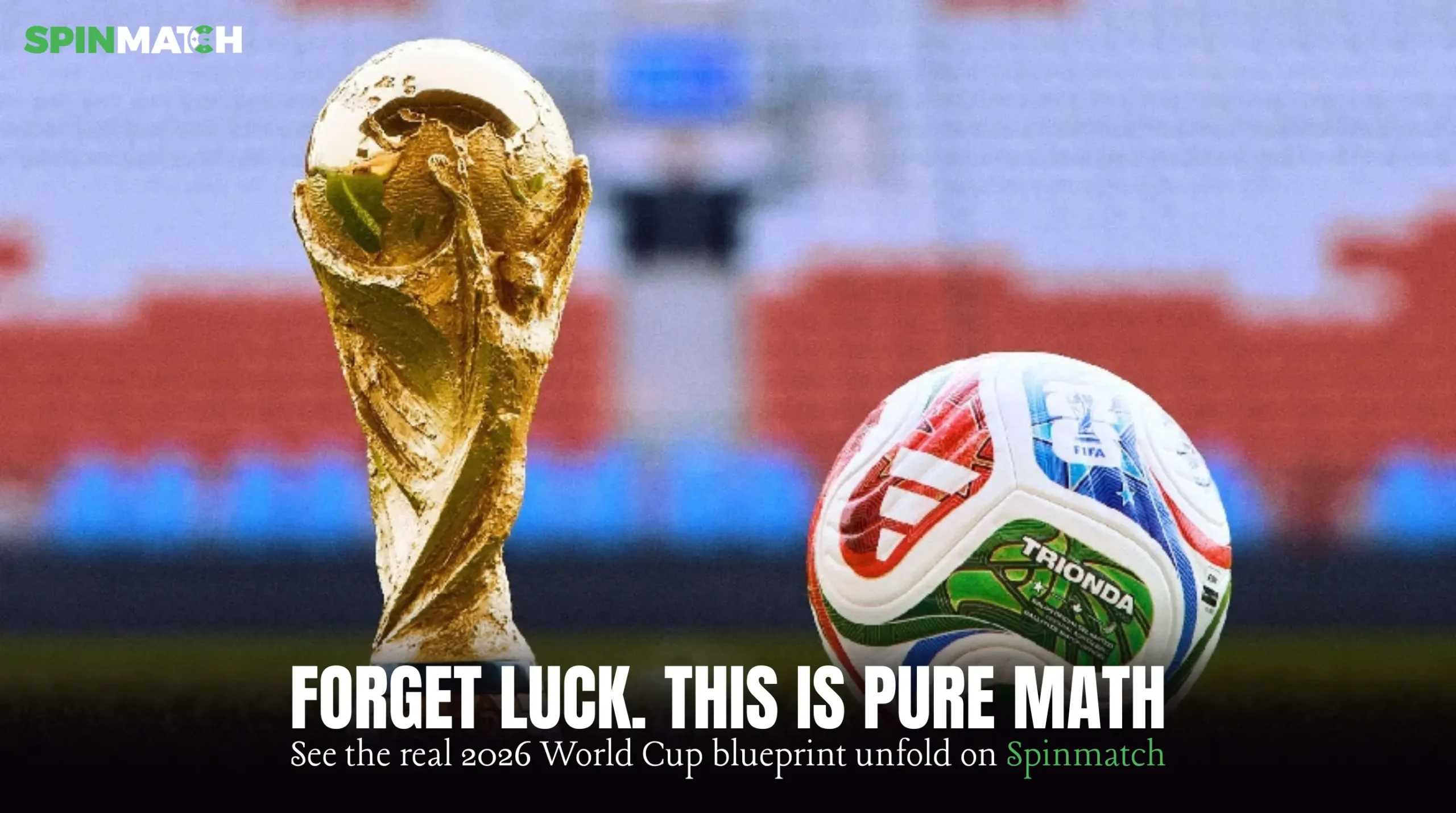
Spinmatch 2026 World Cup Playbook: Success Through Innovation in Game Dynamics
Spinmatch 2026 World Cup Playbook: Success Through Innovation in Game Dynamics. And now we’ve arrived at the end of June in 2026. Soon the Games will start. It is indeed a tough task for the three major powers to organize all these. Based on the current stats of Spinmatch, there has been a lot of effort put into the preparation of these Games.
Some things have indeed changed compared to last year’s games. Teams play with passion, putting pressure on each other and learning about each other. Once the ball gets to the defensive area of either team, it becomes almost impossible for them to pass the ball.
However, when it comes to suggesting which team should be allowed to take the first place as winners, I think the statistics should be taken into account rather than the jersey numbers.
48 Teams – The Expansion
It’s not like FIFA simply expanded the number of teams for this year’s tournament. No, they completely revolutionized their business model.
They took a huge step forward in this year’s tournament by going from 32 teams to 48.
How is this relevant? Well, it’s very simple. More teams means more matches, which results in more inventory, which means more money. That’s why it is a volume game.
However, the introduction of so many teams in the competition adds an enormous factor of luck and variance to the game that the powerful teams simply cannot stand. Looking back at the Spinmatch chart of historical odds of upsets, it becomes clear that the probability of an upset greatly increases.
We now have 12 groups of four. You have to survive a brutal group stage just to get into a brand-new Round of 32 knockout bracket.
The three host countries—the US, Mexico, and Canada—have massive structural leverage because they don’t have to deal with travel exhaustion or qualifying stress. Everyone is talking about favorites like France or Brazil, but the predictive models on Spinmatch show that high-energy, high-press teams like Uruguay and Japan are the real nightmares that are going to ruin everyone’s brackets.
The GOATs: The Psychology of Eliminating Constraints
The craziest part of this summer is that Lionel Messi and Cristiano Ronaldo are somehow still on the pitch.
It makes zero sense from a sports science perspective. But it makes total sense when you look at how they manage their energy.
Messi is coming into this at 38 years old. But he has a massive unfair advantage: he already won the trophy in 2022. The pressure is completely gone. He plays in Miami now, so he is totally used to the crazy summer heat and travel over here. If you track his heatmap on Spinmatch, you can see Argentina literally built a defensive wall around him so he can just walk around, save his energy, and solve the game like a math equation when the opponent makes a mistake.
He isn’t out there for a paycheck or for fame. His entire identity is tied to being the absolute best to ever live. He transitioned his game perfectly. He isn’t sprinting down the wings anymore. He turned himself into a pure penalty-box assassin. His latest performance metrics on Spinmatch prove that Portugal’s midfield is built strictly to feed him high-value chances. He only needs one look to end a game.
The Logistics: Winning the Attrition War
This tournament isn’t going to be won by the team with the prettiest style of play. It’s going to be won by the team that handles the logistics.
You don’t need to be a die-hard soccer fan to see that this month is an absolute masterclass in executing under pressure. Watch how these coaches pivot when their primary strategy fails.Go check out the live trackers on Spinmatch right now to see exactly how the market is reacting to these opening lineups. Lock in your calendar, watch the systems play out, and see who actually handles the pressure.
