

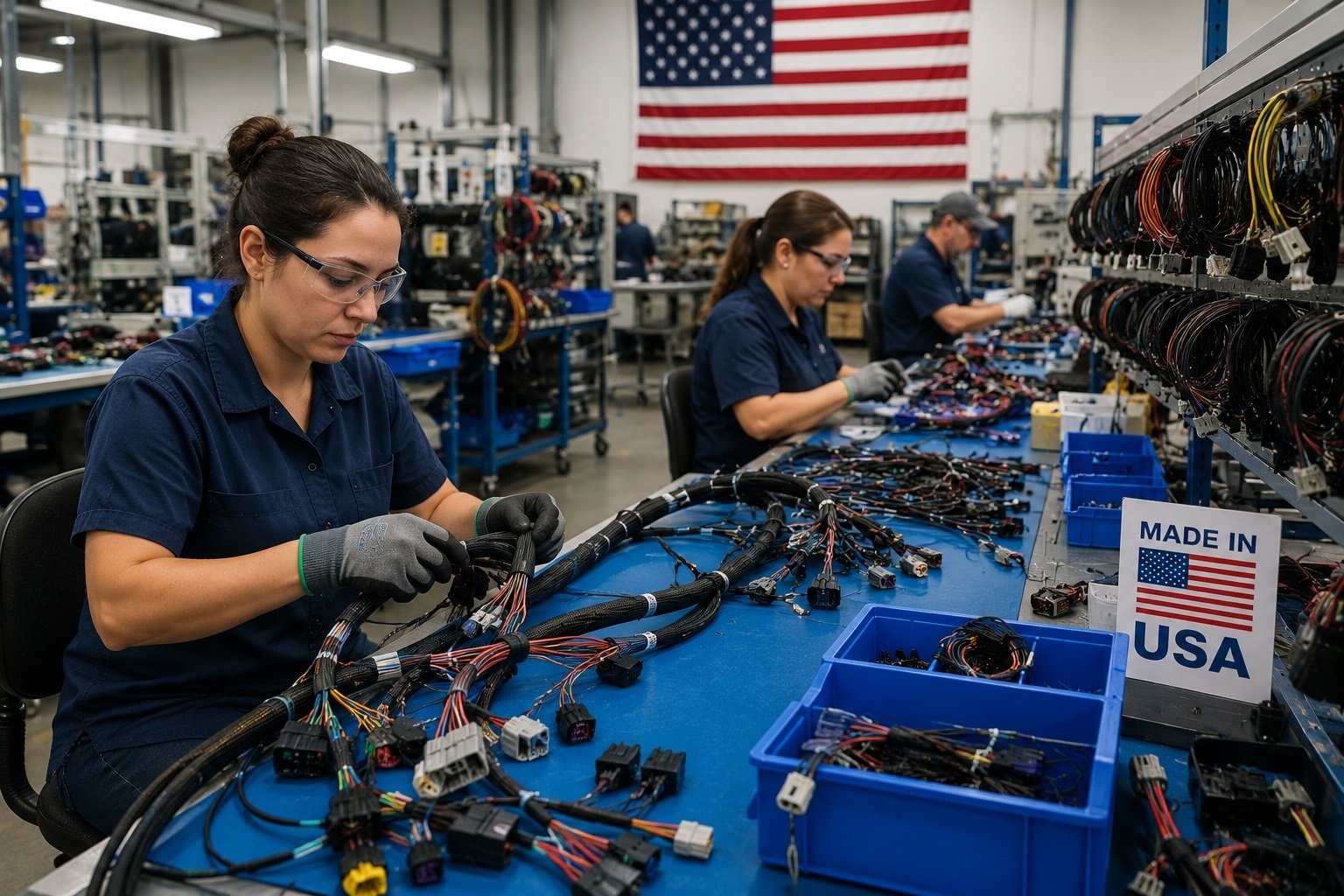
A supplier may appear qualified based on pricing, lead times, and production capacity. Yet, hidden gaps in quality systems, testing procedures, and engineering support can create costly problems after production begins. Procurement teams often face pressure to accelerate sourcing decisions, especially when product launches and customer commitments are tied to strict timelines.
Unfortunately, overlooking key evaluation criteria can lead to compliance issues, integration challenges, delayed releases, and increased lifecycle costs. Understanding the most common vendor assessment mistakes helps organizations identify wire harness manufacturers capable of supporting reliable production and long-term program success.
1. Overlooking Certifications From Wire Harness Manufacturers
Certification review should be one of the first steps in any supplier evaluation process. Certifications demonstrate whether a manufacturer maintains documented quality procedures, inspection controls, corrective action systems, and process consistency.
When procurement teams treat certifications as paperwork rather than operational evidence, problems often emerge later. Missing documentation, inconsistent inspection records, and weak process controls can create quality concerns that affect production schedules and regulatory compliance.
This is especially important in industries such as aerospace, medical devices, automotive, and industrial automation, where quality requirements extend beyond basic assembly capabilities.
Key evaluation questions include:
- Do certifications align with the intended industry and application?
- How are audits, corrective actions, and document revisions managed?
- Are certifications current and supported by documented processes?
- How does the supplier maintain process consistency across projects?
Strong certification programs support repeatability and reduce risk throughout the product lifecycle.
2. Ignoring Wire Harness Assembly Testing Protocols
Testing protocols often reveal the difference between a manufacturer that builds products and one that validates performance before shipment.
A completed wire harness assembly may appear acceptable during a visual inspection while still containing hidden electrical or mechanical issues. Continuity testing, pull testing, termination verification, and inspection procedures help identify failures before they reach final integration.
When testing requirements are not thoroughly reviewed during supplier qualification, intermittent failures can move downstream into system-level assembly and validation.
Procurement teams should evaluate:
- Electrical continuity testing procedures
- Pull-strength verification methods
- Connector inspection processes
- Documentation and traceability of test results
- Acceptance criteria for nonconforming products
3. Neglecting Traceability Among Wire Harness Suppliers
Traceability provides visibility into every stage of the manufacturing process. It allows organizations to identify material sources, monitor revisions, document inspections, and manage approved component substitutions.
Without proper traceability, procurement teams may struggle to investigate quality issues, validate compliance requirements, or respond to supply chain disruptions.
Strong traceability systems support:
- Material lot tracking
- Revision control
- Approved supplier documentation
- Environmental compliance records
- Manufacturing history and inspection records
For regulated industries such as aerospace and medical wire harness manufacturers, traceability is often treated as a core risk-management requirement rather than an administrative task.
Important questions to ask include:
- How are material lots documented?
- What controls exist for approved substitutions?
- How are revision histories maintained?
- Can compliance records be retrieved quickly during audits?
The ability to answer these questions often separates proactive suppliers from reactive ones.
4. Misjudging the Scalability of Wire Harness Manufacturers
Many procurement teams evaluate production capacity based solely on available labor. However, scalability involves much more than workforce size.
A manufacturer must be able to maintain quality, documentation, inspection standards, and scheduling performance as production requirements change. Challenges often appear when prototype projects transition into repeat production or when product demand increases unexpectedly.
Scalable manufacturers typically demonstrate strength in:
- Production planning
- Equipment availability
- Quality control systems
- Inspection capacity
- Documentation management
- Process standardization
The same scalability principles apply across custom cable assemblies, multi-conductor cable assemblies, RF coaxial cable assemblies, battery cable assemblies, IDC flat ribbon cable assemblies, and wire jumper assemblies.
Procurement teams should watch for warning signs such as:
- Capacity claims without supporting production data
- Heavy dependence on manual processes
- Limited inspection resources
- Unclear escalation procedures during demand increases
A scalable supplier protects quality while supporting growth.
5. Choosing Wire Harness Manufacturers Without Engineering Support
Engineering support is one of the most overlooked aspects of supplier evaluation. Many procurement teams focus on production capabilities while overlooking the value of early design feedback.
Manufacturers with engineering resources can identify potential routing issues, connector selection concerns, integration challenges, documentation gaps, and manufacturability risks before production begins.
This capability becomes increasingly valuable when projects involve:
- Printed circuit board assembly
- SMT surface mount technology
- Through-hole assembly requirements
- Custom cable assemblies
- Cable and wire harness integration
- Military assemblies
- Medical cable assemblies
- Box-build and electro-mechanical assembly projects
Early engineering involvement often reduces redesign cycles, accelerates product releases, and improves overall manufacturing efficiency.
Evaluation questions include:
- How is engineering feedback communicated?
- Are manufacturability reviews available?
- Does the supplier participate in integration planning?
- Can engineering teams support design optimization efforts?
The strongest manufacturing partnerships extend beyond production and contribute to better project outcomes from the earliest stages of development.
Building Stronger Supplier Evaluations
Successful supplier qualification requires more than comparing prices and lead times. Certifications, testing protocols, traceability systems, scalability, and engineering support all influence long-term manufacturing performance.
Procurement teams that evaluate these factors early are better positioned to reduce compliance risks, improve product quality, and support reliable production schedules. This approach is particularly important for organizations operating in aerospace, commercial, automotive, marine, and medical markets where quality and consistency directly affect project success.
Organizations seeking support with wire harnesses, cable assemblies, and circuit board customization services can contact Star Engineering Inc. to align manufacturing requirements with quality-focused production processes.
