

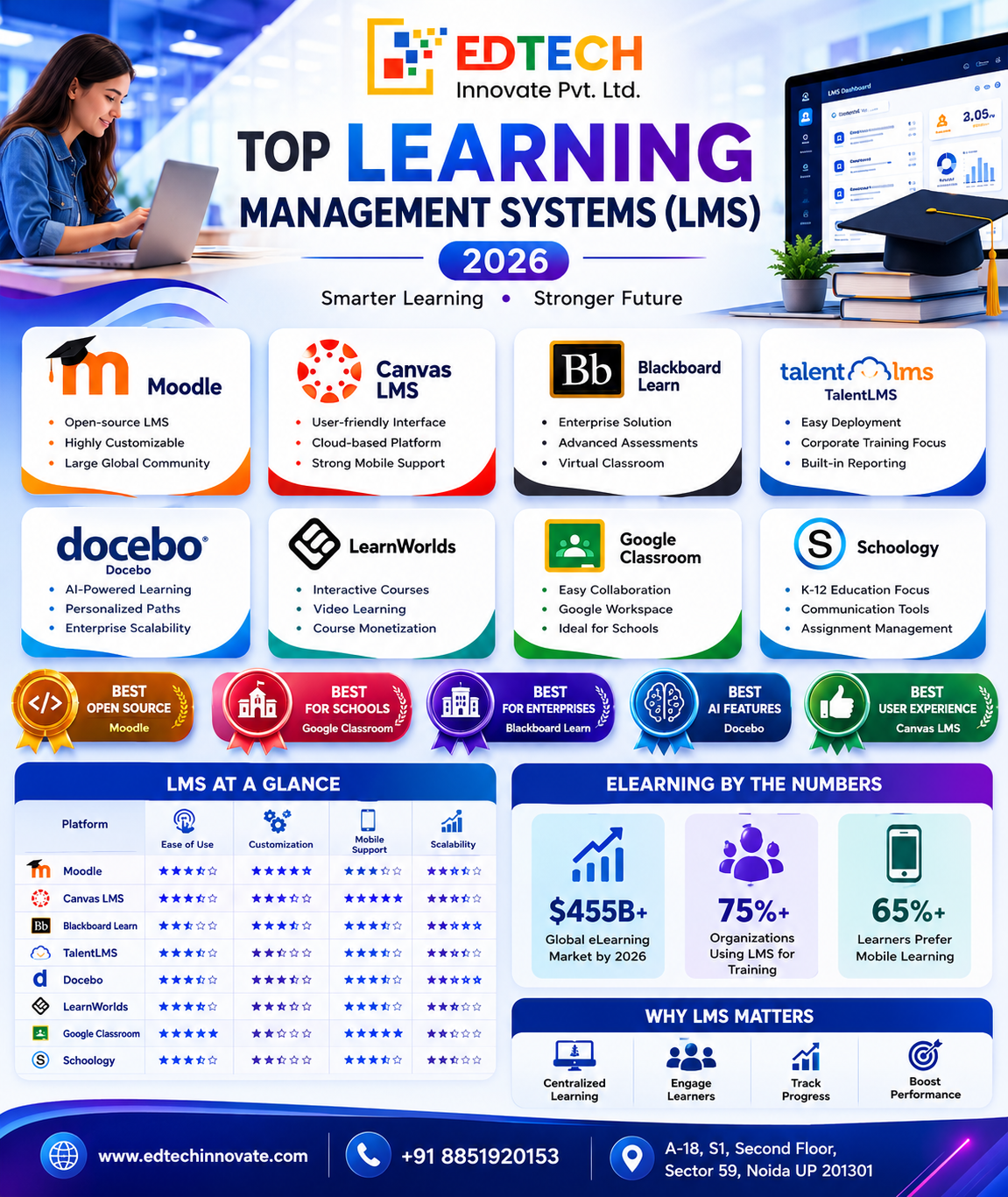
In today’s digital-first learning environment, organizations and educational institutions are increasingly adopting top learning management systems to streamline training, knowledge sharing, and employee development. Whether you’re a university, a corporate training provider, or a growing business, selecting the right Learning Management System (LMS) can significantly improve learning outcomes while reducing administrative effort.
The growing demand for cost-effective and scalable learning solutions has made free and open-source LMS platforms more popular than ever. These platforms offer flexibility, customization, and powerful learning tools without the high licensing costs associated with proprietary software.
In this guide, we’ll explore some of the top learning management systems available today, their benefits, and how they can support modern learning initiatives.
What Is a Learning Management System?
A Learning Management System is a software platform designed to create, manage, deliver, and track educational courses, training programs, and learning activities. Organizations use Learning Management Software to centralize learning content, monitor learner progress, automate administrative tasks, and improve training effectiveness.
From employee onboarding to academic course delivery, LMS platforms serve a wide range of learning needs across industries.
Common Features of Learning Management Software
- Course creation and management
- User enrollment and administration
- Assessment and quizzes
- Progress tracking and reporting
- Mobile accessibility
- Certification management
- Collaboration and communication tools
- Content integration and customization
Advantages of Using Learning Management Software
Before exploring the top learning management systems, it’s important to understand why organizations continue to invest in LMS solutions.
1. Centralized Learning Management
An LMS provides a single platform for storing, organizing, and delivering learning content, making training easier to manage.
2. Cost-Effective Training
Businesses can reduce expenses related to in-person training, travel, and printed materials through digital learning delivery.
3. Improved Learner Engagement
Interactive content, quizzes, gamification, and multimedia resources help learners stay engaged and motivated.
4. Better Tracking and Reporting
Administrators can monitor learner performance, course completion rates, and training effectiveness through detailed analytics.
5. Scalability
Modern learning management systems for businesses can support thousands of learners while maintaining consistent learning experiences.
Read More – How Online CRM Helps Manage Leads, Sales, and Customers
Types of LMS Available Today
Understanding the different types of LMS can help organizations choose the most suitable platform.
Open-Source LMS
These systems provide source code access, allowing organizations to customize features according to their specific requirements.
Cloud-Based LMS
Hosted by third-party providers, cloud LMS platforms offer quick deployment, automatic updates, and lower maintenance requirements.
Corporate LMS
Designed specifically for employee training, compliance management, onboarding, and professional development.
Academic LMS
Built for schools, colleges, and universities, these platforms focus on curriculum management, grading, and student engagement.
Top Learning Management Systems You Should Try Today
Here are some of the top learning management systems that offer free and open-source capabilities.
1. Moodle
Moodle is widely recognized as one of the top learning management systems globally. As an open-source platform, it offers extensive customization options and a large community of developers.
Key Features
- Flexible course management
- Extensive plugin library
- Mobile learning support
- Detailed reporting tools
- Strong security framework
Best For
Educational institutions, training organizations, and businesses seeking high customization.
2. Open edX
Originally developed by Harvard University and MIT, Open edX has become a leading open-source LMS solution.
Key Features
- Interactive learning experiences
- Massive Open Online Course (MOOC) support
- Advanced analytics
- Responsive learning environment
- Scalable architecture
Best For
Universities, online course providers, and large-scale training initiatives.
3. Canvas LMS
Canvas LMS offers a user-friendly interface and supports both educational and corporate learning environments.
Key Features
- Intuitive course creation
- Mobile-friendly learning
- Third-party integrations
- Collaboration tools
- Assessment management
Best For
Schools, colleges, and organizations prioritizing user experience.
4. Chamilo
Chamilo is an open-source LMS designed to simplify online learning management while maintaining flexibility.
Key Features
- Easy deployment
- User-friendly dashboard
- Performance tracking
- Certification management
- Multi-language support
Best For
Small to medium-sized organizations and educational institutions.
5. ILIAS
ILIAS is a powerful open-source LMS known for its strong security and compliance capabilities.
Key Features
- Competency management
- Assessment tools
- Learning paths
- Collaboration features
- Content repository
Best For
Government agencies, enterprises, and educational organizations requiring structured learning environments.
How Businesses Benefit from Learning Management Systems
The adoption of learning management systems for businesses continues to rise as organizations prioritize workforce development.
Employee Onboarding
LMS platforms simplify onboarding by delivering consistent training materials to new employees.
Compliance Training
Businesses can automate compliance courses, certifications, and reporting requirements.
Skill Development
Organizations can create personalized learning paths to help employees develop critical skills.
Remote Workforce Training
As hybrid and remote work models expand, LMS solutions ensure employees can access training from anywhere.
LMS for Educational Institutions: Why It Matters
Modern lms for educational institutions play a vital role in delivering engaging and accessible learning experiences.
Educational organizations use LMS platforms to:
- Manage classroom and online learning
- Deliver assignments and assessments
- Facilitate student collaboration
- Track academic performance
- Support blended learning models
By adopting one of the top learning management systems, institutions can improve operational efficiency while enhancing student engagement.
Explore More- The Development of Learning Management Systems in Tertiary Education
How to Choose the Right LMS
When evaluating the top learning management systems, consider the following factors:
Ease of Use
A simple interface encourages user adoption and reduces training requirements.
Customization
Open-source platforms offer greater flexibility for organizations with unique learning needs.
Integration Capabilities
Choose an LMS that integrates with HR systems, CRM platforms, communication tools, and content repositories.
Scalability
Ensure the platform can accommodate future growth and evolving learning requirements.
Security
Data protection, access controls, and compliance support should be top priorities.
Conclusion
Selecting from the top learning management systems available today can significantly improve learning delivery, employee development, and educational outcomes. Open-source LMS platforms such as Moodle, Open edX, Canvas LMS, Chamilo, and ILIAS provide cost-effective solutions that combine flexibility, scalability, and powerful learning features.
For organizations seeking advanced, enterprise-grade learning solutions, EdTech Innovate offers comprehensive Learning Management System services designed to support businesses, training providers, and educational institutions in creating impactful digital learning experiences. With the right LMS strategy and technology partner, organizations can build a future-ready learning ecosystem that drives continuous growth and success.
Frequently Asked Questions (FAQs)
1. What is a Learning Management System?
A Learning Management System is software used to create, manage, deliver, and track educational courses and training programs.
2. What are the advantages of using learning management software?
Some major advantages of using learning management software include centralized learning, improved learner engagement, better reporting, reduced training costs, and scalability.
3. Which open-source LMS is most popular?
Moodle is widely considered one of the most popular open-source LMS platforms due to its flexibility, extensive community support, and customization options.
4. Are learning management systems suitable for businesses?
Yes. Many learning management systems for businesses support employee onboarding, compliance training, skill development, and performance tracking.
5. What types of LMS are available?
Common types of LMS include open-source LMS, cloud-based LMS, corporate LMS, and academic LMS solutions.
6. Why are LMS platforms important for educational institutions?
Modern lms for educational institutions help manage courses, assessments, student engagement, and academic performance while supporting online and blended learning models.
