

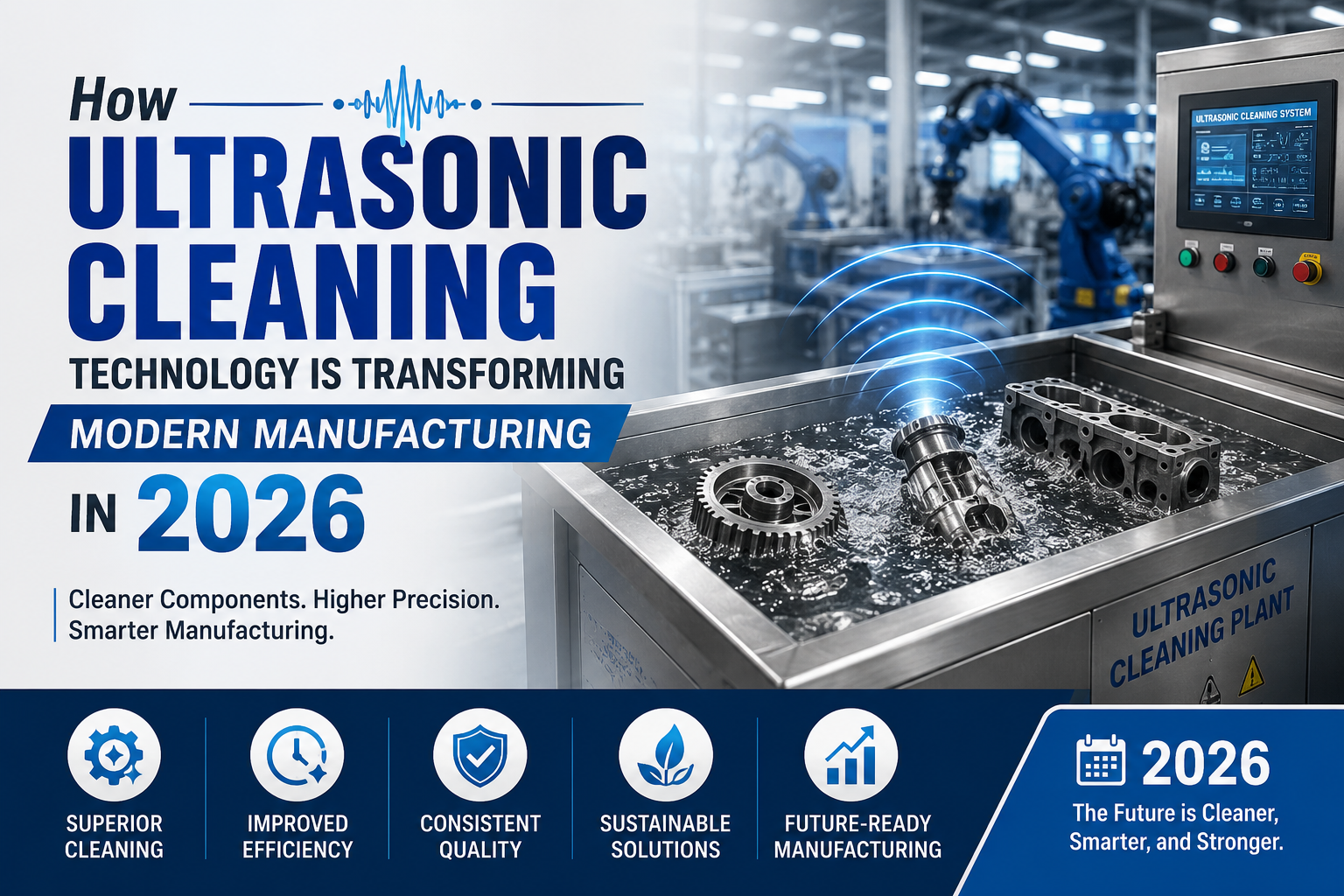
Manufacturers in 2026 are under constant pressure to improve product quality, reduce downtime, meet stricter compliance standards, and optimize operational costs. One technology helping industries achieve these goals is the Ultrasonic Cleaner. From automotive components and medical instruments to aerospace parts and electronic assemblies, ultrasonic cleaning has become an essential part of modern manufacturing.
A Fully Automatic Ultrasonic Cleaning Plant delivers precise, consistent, and contamination-free cleaning while reducing labor requirements and production delays. As industries move toward automation and Industry 4.0 practices, ultrasonic cleaning technology is playing a critical role in transforming production processes.
Understanding Ultrasonic Cleaning Technology
Ultrasonic cleaning is a process that uses high-frequency sound waves, typically ranging from 20 kHz to 80 kHz, to generate microscopic bubbles in a cleaning solution. This process, known as cavitation, creates a powerful cleaning action capable of reaching complex surfaces, small crevices, holes, and internal passages that conventional cleaning methods often miss.
Unlike manual cleaning, ultrasonic technology provides uniform cleaning without damaging sensitive components.
How It Works
The cleaning process typically involves:
- Components are placed inside a cleaning tank.
- The tank is filled with a suitable cleaning solution.
- Ultrasonic transducers generate high-frequency sound waves.
- Millions of microscopic bubbles form and collapse rapidly.
- Contaminants are removed from component surfaces.
- Parts are rinsed and dried automatically.
This process delivers thorough and repeatable cleaning results.
Why Manufacturers Are Adopting Ultrasonic Cleaners in 2026
The manufacturing sector has experienced significant technological advancements over the past decade. Automation, precision engineering, and quality assurance requirements have increased demand for advanced cleaning systems.
Key Benefits of Ultrasonic Cleaners
| Benefit | Impact on Manufacturing |
| Precision Cleaning | Removes contaminants from hard-to-reach areas |
| Reduced Labor Costs | Minimizes manual cleaning requirements |
| Faster Processing | Improves production throughput |
| Consistent Results | Ensures uniform quality standards |
| Component Protection | Reduces risk of damage |
| Environment-Friendly | Requires fewer chemicals and resources |
These advantages make ultrasonic cleaning systems a preferred choice across multiple industries.
The Rise of Fully Automatic Ultrasonic Cleaning Plants
While standalone ultrasonic cleaners remain widely used, manufacturers increasingly prefer a Fully Automatic Ultrasonic Cleaning Plant for high-volume operations.
These systems integrate:
- Loading and unloading stations
- Multi-stage cleaning tanks
- Rinsing units
- Drying chambers
- Automated conveyors
- PLC-based control systems
- Data monitoring and reporting
The result is a seamless cleaning process that supports continuous production without significant manual involvement.
Why Automation Matters
Modern factories aim to eliminate production bottlenecks. Automated cleaning systems contribute by:
- Increasing operational efficiency
- Reducing human error
- Improving process consistency
- Supporting 24/7 manufacturing operations
- Meeting international quality standards
This level of automation aligns perfectly with Industry 4.0 initiatives.
Industries Benefiting from Ultrasonic Cleaning Technology
Automotive Manufacturing
Automotive manufacturers rely on ultrasonic cleaning for:
- Engine components
- Fuel injectors
- Pistons
- Gearboxes
- Brake systems
Even microscopic contaminants can affect performance. Ultrasonic cleaners help maintain quality and reliability.
Aerospace Industry
Aircraft components require strict cleanliness standards.
Ultrasonic cleaning is used for:
- Turbine blades
- Hydraulic components
- Precision machined parts
- Aircraft engine assemblies
The technology helps meet regulatory and safety requirements.
Medical Device Manufacturing
Medical devices require contamination-free surfaces.
Applications include:
- Surgical instruments
- Orthopedic implants
- Dental tools
- Medical equipment components
Ultrasonic cleaning supports sterilization processes and regulatory compliance.
Electronics Manufacturing
Electronic components often contain delicate structures that require careful cleaning.
Examples include:
- Printed circuit boards (PCBs)
- Connectors
- Semiconductor components
- Sensors
Ultrasonic cleaning removes residues without damaging sensitive parts.
How Ultrasonic Cleaning Supports Quality Control
Product quality is directly linked to cleanliness.
Contaminants can lead to:
- Product failures
- Corrosion
- Poor coating adhesion
- Assembly issues
- Customer complaints
A Fully Automatic Ultrasonic Cleaning Plant helps manufacturers maintain strict quality standards by ensuring every component undergoes the same validated cleaning process.
Example
A precision engineering company producing hydraulic valves experienced recurring assembly issues due to microscopic contamination. After implementing an automated ultrasonic cleaning system, defect rates dropped significantly, resulting in improved customer satisfaction and reduced warranty claims.
Sustainability Benefits of Ultrasonic Cleaning
Environmental responsibility has become a priority for manufacturers worldwide.
Ultrasonic cleaning contributes to sustainability by:
- Reducing chemical consumption
- Lowering water usage
- Minimizing hazardous waste
- Improving energy efficiency
- Extending component life
Many modern ultrasonic cleaning systems include filtration and recycling features that further reduce environmental impact.
Industry 4.0 and Smart Cleaning Systems
Manufacturing facilities in 2026 are increasingly connected through digital technologies.
Advanced ultrasonic cleaning systems now include:
Real-Time Monitoring
Operators can monitor:
- Temperature
- Cleaning cycles
- Ultrasonic frequency
- Solution quality
Predictive Maintenance
Smart sensors identify potential equipment issues before failures occur.
Data Analytics
Manufacturers can analyze cleaning performance and optimize production processes.
Remote Access
Engineers can monitor and control cleaning operations from anywhere.
These features improve efficiency and support smart factory initiatives.
Choosing the Right Ultrasonic Cleaning Solution
Not all cleaning systems are the same. Manufacturers should consider several factors before investing.
Key Selection Criteria
Component Size and Complexity
Different parts require different tank sizes and cleaning configurations.
Production Volume
High-volume operations benefit from Fully Automatic Ultrasonic Cleaning Plants.
Cleaning Requirements
The type of contamination determines the cleaning solution and frequency required.
Automation Needs
Manufacturers should evaluate current and future production goals.
Compliance Standards
Certain industries require validated cleaning processes and documentation.
Working with an experienced ultrasonic cleaning equipment manufacturer ensures the system meets specific operational requirements.
Future Trends in Ultrasonic Cleaning Technology
Several trends are expected to shape the future of industrial cleaning:
AI-Driven Process Optimization
Artificial intelligence will help optimize cleaning cycles automatically.
Enhanced Energy Efficiency
New ultrasonic generators are designed to reduce energy consumption.
Advanced Automation
Robotic integration will further streamline production workflows.
Increased Adoption Across Industries
More sectors are recognizing the benefits of ultrasonic cleaning technology.
As manufacturing becomes more advanced, ultrasonic cleaning systems will continue to play a central role in maintaining quality and efficiency.
Why Hisashi Industries Supports Modern Manufacturing
Hisashi Industries provides advanced ultrasonic cleaning solutions designed to meet the evolving needs of modern manufacturers. From compact ultrasonic cleaners to fully integrated automatic cleaning plants, the company focuses on delivering reliable, efficient, and industry-specific cleaning technologies.
With growing demand for precision cleaning, automation, and quality assurance, businesses are increasingly investing in ultrasonic cleaning systems that support long-term operational success.
Frequently Asked Questions (FAQs)
1. What is an Ultrasonic Cleaner used for?
An Ultrasonic Cleaner removes dirt, grease, oil, carbon deposits, and contaminants from industrial components using high-frequency sound waves and cavitation technology.
2. What industries use Fully Automatic Ultrasonic Cleaning Plants?
Industries such as automotive, aerospace, medical device manufacturing, electronics, pharmaceuticals, and precision engineering commonly use automated ultrasonic cleaning systems.
3. Are ultrasonic cleaners safe for delicate components?
Yes. Ultrasonic cleaning is highly effective yet gentle enough for sensitive and precision-engineered components when used correctly.
4. How does ultrasonic cleaning improve manufacturing efficiency?
It reduces manual labor, shortens cleaning cycles, improves consistency, minimizes defects, and supports continuous production operations.
5. Is ultrasonic cleaning environmentally friendly?
Yes. Modern ultrasonic cleaning systems typically consume less water, fewer chemicals, and generate less waste compared to traditional cleaning methods.
Conclusion
As manufacturing continues to evolve in 2026, precision, automation, and efficiency remain critical success factors. Ultrasonic cleaning technology has emerged as one of the most effective solutions for achieving these goals. Whether through a standalone Ultrasonic Cleaner or a Fully Automatic Ultrasonic Cleaning Plant, manufacturers can improve product quality, reduce operational costs, and support sustainable production practices.
Businesses that invest in advanced cleaning technologies today are better positioned to meet tomorrow’s manufacturing challenges.
Contact Us Today
Looking for reliable ultrasonic cleaning solutions for your manufacturing facility?
Contact Hisashi Industries today to explore advanced Ultrasonic Cleaner systems and Fully Automatic Ultrasonic Cleaning Plants tailored to your production requirements.
Call now, visit our website, or connect with our team to discover the right cleaning solution for your business.
