

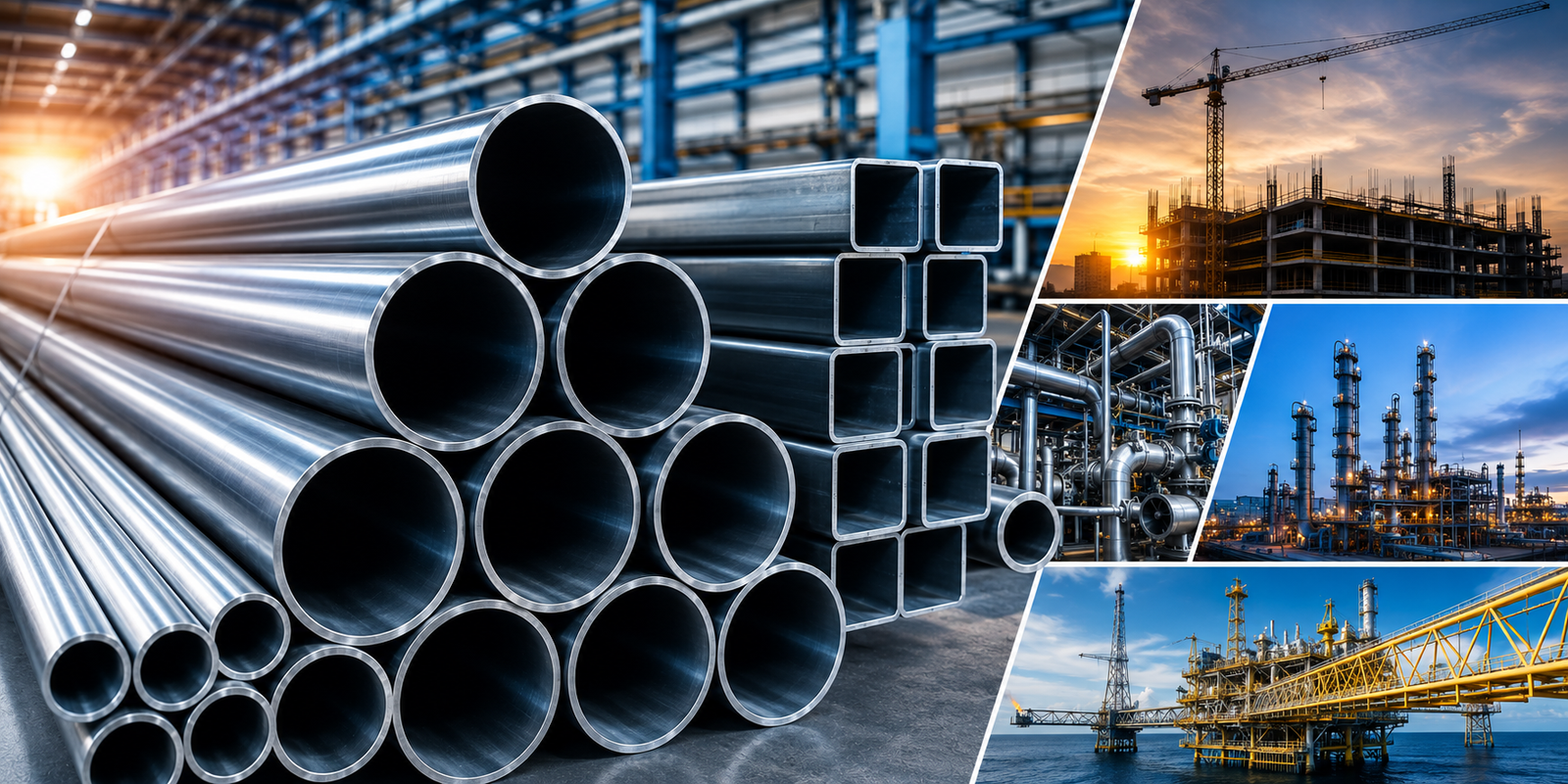
Steel Pipes for Industrial Use are essential for manufacturing, construction, infrastructure, energy, and engineering sectors because they provide strength, durability, corrosion resistance, and long-term performance. Businesses looking for reliable materials often partner with an Industrial Steel Supplier India to source high-quality steel products that improve operational efficiency and support industrial growth.
Industrial development depends heavily on reliable materials that can withstand demanding environments while delivering consistent performance. Among these materials, steel pipes have become one of the most important components across various sectors, including manufacturing, infrastructure, construction, transportation, energy, and engineering.
The increasing demand for durable and efficient industrial solutions has made Steel Pipes for Industrial Use a cornerstone of modern industrial operations. Their versatility, strength, and ability to perform under challenging conditions make them suitable for countless applications.
As industries continue to expand and modernize, the need for premium steel products has grown significantly. Companies seeking dependable steel solutions often rely on trusted manufacturers such as Vardhman Steel Tubes to meet evolving industrial requirements.
Why Steel Pipes Are Essential for Modern Industries
Steel pipes are widely used because they offer a combination of strength, flexibility, and reliability that few materials can match.
They support critical applications such as:
- Industrial machinery
- Construction projects
- Water transportation systems
- Oil and gas infrastructure
- Manufacturing facilities
- Structural frameworks
Unlike many alternative materials, steel pipes maintain their structural integrity under high pressure, heavy loads, and harsh environmental conditions.
This makes Steel Pipes for Industrial Use a practical and cost-effective solution for long-term industrial applications.
Key Benefits of Steel Pipes for Industrial Use
Exceptional Strength and Durability
One of the primary reasons industries prefer steel pipes is their superior strength.
Steel pipes can withstand:
- High pressure
- Mechanical stress
- Heavy loads
- Extreme temperatures
This durability helps businesses reduce maintenance costs and extend the lifespan of industrial systems.
Corrosion Resistance
Modern steel pipes are often treated or coated to resist corrosion and environmental damage.
This protection is especially valuable for industries operating in:
- Coastal regions
- Chemical plants
- Water treatment facilities
- Outdoor construction environments
Improved corrosion resistance ensures reliable performance and lower lifecycle costs.
Cost-Effective Performance
Although steel represents a long-term investment, its durability and low maintenance requirements make it highly cost-effective.
Businesses benefit from:
- Reduced replacement frequency
- Lower repair costs
- Improved operational efficiency
- Greater return on investment
Versatility Across Industries
Steel pipes can be customized in various sizes, thicknesses, and specifications.
This flexibility makes them suitable for diverse applications ranging from structural engineering to industrial fluid transportation.
Role of Steel Pipes in Manufacturing Growth
Manufacturing industries rely heavily on steel pipes for machinery, equipment frames, processing systems, and production infrastructure.
Steel pipes contribute to manufacturing growth by:
Supporting Heavy-Duty Equipment
Industrial machines require strong structural components capable of handling continuous operation.
Steel pipes provide the necessary support and durability for long-term performance.
Improving Production Efficiency
High-quality steel systems reduce downtime caused by maintenance or equipment failure.
This helps manufacturers maintain productivity and meet production targets.
Enabling Industrial Automation
Modern automated manufacturing systems require precision-engineered materials.
Steel pipes support robotics, conveyor systems, and advanced production technologies that improve efficiency and consistency.
Steel for Construction Industry: Driving Infrastructure Development
The construction sector remains one of the largest consumers of steel products worldwide.
Steel for Construction Industry applications include:
- Structural frameworks
- Commercial buildings
- Industrial facilities
- Warehouses
- Bridges
- Transportation infrastructure
Why Construction Companies Choose Steel
Steel offers several advantages for construction projects:
| Feature | Benefit |
| High Strength | Supports large structures |
| Durability | Long service life |
| Flexibility | Easy fabrication and design |
| Sustainability | Recyclable material |
| Speed | Faster construction timelines |
As urbanization and infrastructure development continue worldwide, the demand for quality steel products remains strong.
Common Applications of Steel Pipes in Industrial Sectors
Manufacturing Plants
Steel pipes are used for machinery support systems, production lines, and industrial frameworks.
Oil and Gas Industry
Pipelines transport oil, natural gas, and petroleum products safely and efficiently across long distances.
Water Supply Systems
Municipal and industrial water distribution networks rely on steel pipes for durability and reliability.
Power Generation
Power plants use steel piping systems for steam, cooling water, and energy transfer operations.
Infrastructure Projects
Bridges, airports, highways, and public utility projects frequently utilize steel pipes for structural support.
Choosing the Right Industrial Steel Supplier India
Selecting the right supplier is critical for ensuring product quality and project success.
When evaluating an Industrial Steel Supplier India, consider the following factors:
Product Quality
Look for suppliers that maintain strict quality control standards and provide certified products.
Manufacturing Expertise
Experienced manufacturers understand industry-specific requirements and application challenges.
Product Range
A broad product portfolio allows businesses to source multiple steel solutions from a single supplier.
Consistent Supply
Reliable delivery schedules help prevent project delays and production interruptions.
Technical Support
Knowledgeable suppliers can provide valuable guidance regarding material selection and application requirements.
Vardhman Steel Tubes supports industrial customers with quality-focused manufacturing practices and dependable steel solutions designed for diverse applications.
Industry Trends Driving Demand for Steel Pipes
Several market trends continue to increase demand for Steel Pipes for Industrial Use.
Infrastructure Expansion
Governments and private organizations are investing heavily in infrastructure projects worldwide.
Industrial Automation
Advanced manufacturing technologies require strong and precise structural materials.
Renewable Energy Growth
Solar, wind, and clean energy projects increasingly depend on durable steel infrastructure.
Smart Cities Development
Urban development initiatives require extensive steel-based transportation, utility, and construction systems.
These trends highlight the growing importance of high-quality steel products in future industrial development.
Sustainability Benefits of Steel Pipes
Sustainability has become a major priority for industries globally.
Steel offers significant environmental advantages:
- 100% recyclable
- Long service life
- Reduced material waste
- Energy-efficient production improvements
According to global industry reports, steel remains one of the most recycled materials in the world, making it a sustainable choice for industrial applications.
Companies focused on environmental responsibility often prioritize steel products due to their recyclability and long-term value.
Practical Tips for Businesses Purchasing Steel Pipes
To maximize value and performance:
- Define project specifications clearly.
- Choose certified steel products.
- Verify supplier experience and reputation.
- Consider corrosion protection requirements.
- Evaluate long-term lifecycle costs rather than initial price alone.
Working with experienced suppliers can significantly improve project outcomes and reduce operational risks.
Conclusion
Steel pipes continue to play a critical role in industrial growth, infrastructure development, and manufacturing excellence. Their strength, durability, versatility, and sustainability make them one of the most valuable materials used across modern industries.
Whether supporting industrial machinery, transportation networks, construction projects, or utility systems, Steel Pipes for Industrial Use provide dependable performance and long-term value. Likewise, the increasing demand for Steel for Construction Industry applications highlights the importance of quality steel products in shaping modern infrastructure.
Businesses seeking reliable steel solutions can benefit from partnering with experienced manufacturers such as Vardhman Steel Tubes, which continues to support industrial growth through quality-driven steel products and manufacturing expertise.
Looking for premium Steel Pipes for Industrial Use for your next project?
Contact us today to discuss your industrial requirements.
Visit us to explore our complete range of steel products designed for construction, manufacturing, engineering, and industrial growth.
FAQs
1. What are Steel Pipes for Industrial Use commonly used for?
Steel pipes are used in manufacturing plants, construction projects, water systems, oil and gas transportation, power generation, and industrial infrastructure.
2. Why is steel preferred in industrial applications?
Steel offers superior strength, durability, corrosion resistance, and long-term performance compared to many alternative materials.
3. How does Steel for Construction Industry support infrastructure projects?
Steel provides structural stability, design flexibility, and durability for buildings, bridges, warehouses, and transportation systems.
4. What should I consider when choosing an Industrial Steel Supplier India?
Focus on product quality, manufacturing expertise, certifications, supply reliability, and technical support.
5. Are steel pipes environmentally friendly?
Yes. Steel is highly recyclable, durable, and supports sustainable construction and industrial development practices.
