

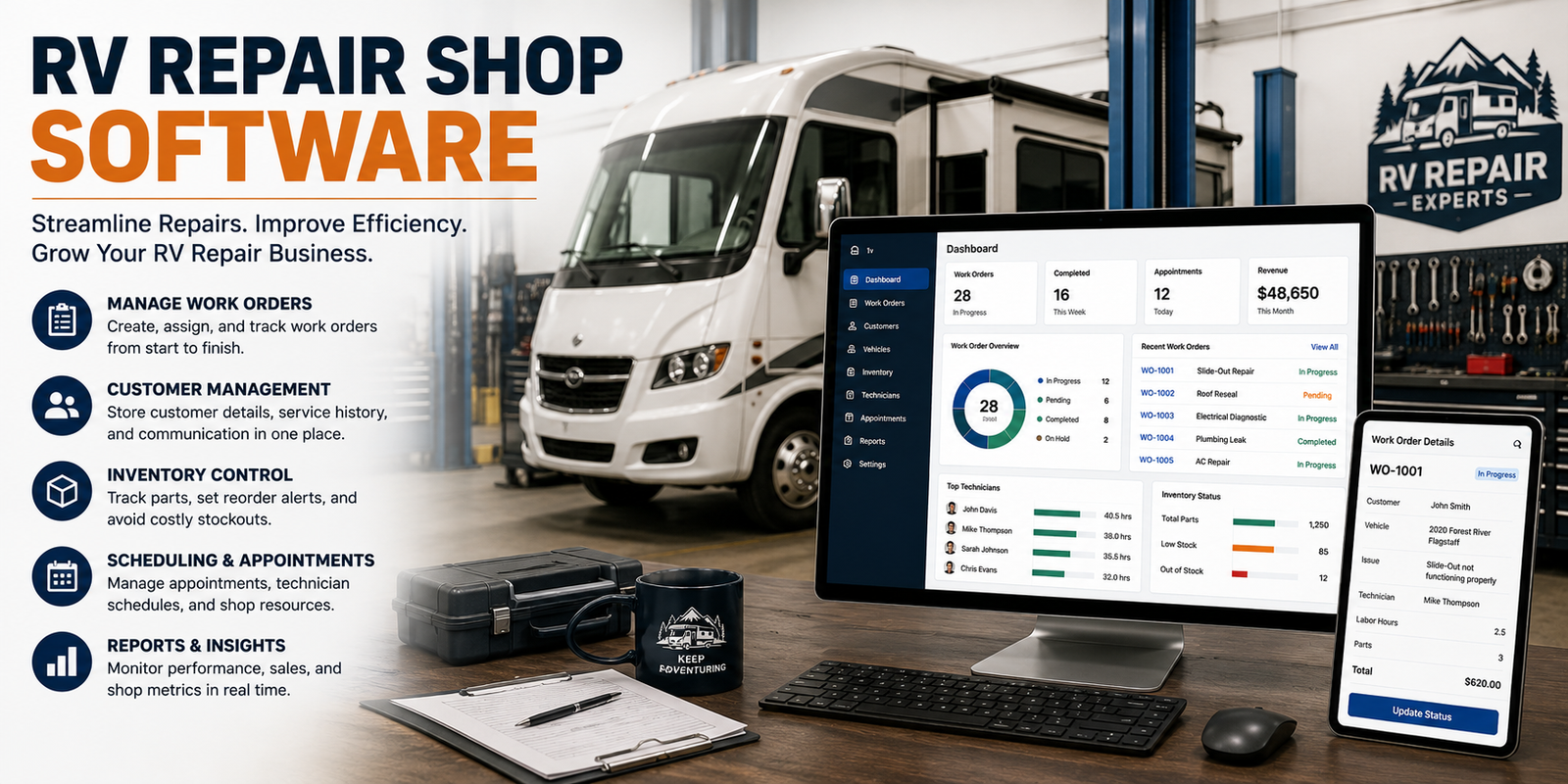
The recreational vehicle industry has experienced significant growth over the past decade as more people embrace road travel, outdoor adventures, and mobile lifestyles. With this growth comes an increasing demand for reliable RV maintenance and repair services. Unlike standard passenger vehicles, RVs combine automotive systems with residential-style components, including plumbing, electrical systems, HVAC units, appliances, slide-outs, and generators. This complexity creates unique challenges for repair shops that must manage a wide variety of service requests while maintaining efficiency and customer satisfaction.
As customer expectations continue to rise, repair businesses can no longer rely solely on paper-based processes, spreadsheets, or disconnected software systems. Modern service centers need tools that help organize workflows, streamline communication, track repairs, manage inventory, and monitor business performance. This is where RV repair shop software becomes an essential part of daily operations.
The right software solution can transform the way a repair business operates by centralizing information, automating repetitive tasks, and providing valuable insights into shop performance. However, not all software platforms offer the same capabilities. Understanding the essential features that every repair business should look for can help owners choose a solution that supports efficiency, profitability, and long-term growth.
Understanding RV Repair Shop Software
What Is RV Repair Shop Software?
RV repair shop software is a specialized management system designed to help service centers handle the operational and administrative aspects of repairing and maintaining recreational vehicles. It serves as a central hub for managing work orders, customer records, maintenance schedules, inventory, technician assignments, billing, and reporting.
Unlike general automotive repair software, RV repair shop software is designed to accommodate the unique requirements of recreational vehicles. Since RVs often involve both vehicle and residential systems, service centers require detailed documentation and comprehensive tracking capabilities. A specialized platform helps businesses manage these complexities more effectively.
Why Specialized Software Matters
Repairing an RV is often more complicated than servicing a traditional automobile. Technicians may need to diagnose engine issues, repair electrical systems, troubleshoot plumbing problems, and service appliances within the same vehicle. Coordinating these repairs manually can quickly become overwhelming.
Specialized software provides a structured workflow that keeps technicians, service advisors, managers, and customers connected throughout the repair process. This improves communication, reduces errors, and helps ensure repairs are completed efficiently.
Essential Features Every RV Repair Business Should Look For
Comprehensive Work Order Management
Work orders are at the center of every repair operation. An effective RV repair shop software solution should allow service advisors to create, update, and manage work orders digitally from start to finish.
Digital work orders eliminate paperwork and provide real-time visibility into repair progress. Managers can assign tasks, track technician activities, monitor completion status, and ensure repairs move through the shop efficiently. This level of organization reduces delays and improves accountability.
Customer Relationship Management
Strong customer relationships are critical for long-term business success. RV owners often return to the same repair facility for ongoing maintenance and seasonal service needs.
A built-in customer relationship management system allows businesses to store customer information, service histories, communication records, and vehicle details in one place. Having quick access to this information enables staff to provide personalized service and strengthen customer loyalty.
Equipment and Vehicle History Tracking
One of the most valuable features of RV repair shop software is the ability to maintain detailed service histories. Every repair, inspection, replacement part, and maintenance procedure can be recorded and stored for future reference.
When customers return with recurring issues or maintenance needs, technicians can quickly review previous repairs and make more informed diagnostic decisions. This reduces troubleshooting time and improves repair accuracy.
Inventory Management
Managing inventory efficiently is essential for minimizing delays and controlling costs. RV repairs often require specialized parts that may not always be readily available.
An advanced inventory management system allows repair shops to track stock levels, monitor parts usage, manage supplier relationships, and automate reorder processes. Real-time inventory visibility helps ensure necessary components are available when needed while reducing excess inventory costs.
Scheduling and Appointment Management
Efficient scheduling helps maximize shop productivity and improve customer satisfaction. Software solutions with scheduling tools allow businesses to manage appointments, allocate resources, and balance technician workloads effectively.
Automated appointment reminders can reduce no-shows and improve customer communication. Well-organized schedules also help repair shops maintain a steady workflow throughout the day.
Technician Productivity Tracking
Labor efficiency has a direct impact on profitability. RV repair shop software should include tools that allow managers to monitor technician performance, labor hours, and completed jobs.
Tracking productivity metrics helps identify top performers, uncover workflow bottlenecks, and improve overall shop efficiency. Managers can use this data to make informed staffing and training decisions.
Mobile Accessibility
Modern repair operations often require technicians to access information while working throughout the facility or in the field. Mobile-friendly software enables employees to view work orders, update repair statuses, record inspections, and communicate with team members using smartphones or tablets.
Mobile accessibility reduces paperwork and ensures information remains current and accessible at all times.
Invoicing and Payment Processing
Billing accuracy is crucial for maintaining healthy cash flow. Integrated invoicing features automatically generate invoices based on labor hours, parts usage, and completed services.
Many software platforms also support digital payment processing, making it easier for customers to pay invoices quickly and conveniently. Faster payments contribute to improved financial performance.
Benefits of Using RV Repair Shop Software
Improved Operational Efficiency
One of the most significant benefits of RV repair shop software is increased efficiency. Automated workflows reduce manual tasks and eliminate many of the administrative challenges associated with traditional management methods.
Employees spend less time searching for information, processing paperwork, and managing schedules. Instead, they can focus on delivering high-quality repair services.
Faster Repair Turnaround Times
Customers value quick and reliable service. Software systems improve repair coordination by ensuring technicians have access to accurate information, parts inventories, and service histories.
This streamlined approach reduces delays and helps businesses complete repairs more efficiently, leading to shorter turnaround times.
Enhanced Customer Satisfaction
Customer experience plays a major role in business growth. RV repair shop software helps businesses provide accurate estimates, timely updates, and transparent communication throughout the repair process.
When customers feel informed and valued, they are more likely to return for future services and recommend the business to others.
Better Financial Visibility
Financial reporting features provide valuable insights into revenue, expenses, labor costs, and profitability. Business owners can analyze performance trends and identify opportunities for growth.
Having access to accurate financial data supports smarter decision-making and long-term planning.
Real-World Applications
Supporting Multi-Service Repair Facilities
Many RV service centers handle a wide range of repairs, from engine diagnostics to appliance replacements. Coordinating these services manually can become difficult as business volume increases.
Software platforms help organize operations by providing centralized access to work orders, technician assignments, customer records, and inventory information.
Managing Growing Repair Businesses
As repair shops expand, operational complexity often increases. Managing multiple technicians, larger inventories, and growing customer bases requires scalable systems.
Many businesses evaluate industry-specific solutions and management platforms such as Fullbay when exploring ways to improve workflow visibility, operational efficiency, and service management capabilities.
Best Practices for Successful Software Implementation
Invest in Employee Training
Even the most advanced software will not deliver results if employees do not understand how to use it properly. Comprehensive training should be provided during implementation and whenever major updates occur.
Well-trained employees are more likely to adopt new processes and maximize software capabilities.
Standardize Repair Shop Processes
Software implementation provides an excellent opportunity to establish consistent procedures across the organization. Standardized workflows improve efficiency, reduce errors, and create a more predictable customer experience.
Keep Data Accurate
Accurate data is essential for effective reporting and decision-making. Businesses should establish clear guidelines for entering customer information, repair details, labor hours, and inventory records.
Consistent data management ensures reports remain reliable and actionable.
Monitor Performance Metrics
Successful repair businesses continuously evaluate key performance indicators such as technician productivity, repair turnaround times, customer retention rates, and revenue growth.
Regular performance reviews help identify strengths and opportunities for improvement.
Common Mistakes to Avoid
Choosing Software Based Only on Cost
While affordability is important, selecting software solely because it is inexpensive can lead to limitations later. Businesses should evaluate functionality, scalability, support, and long-term value rather than focusing exclusively on price.
Ignoring Future Growth Requirements
A software platform should support business expansion. Choosing a system that cannot scale with future needs may require costly replacements later.
Failing to Involve Staff in the Selection Process
Employees who use the software daily can provide valuable feedback regarding usability and workflow requirements. Including staff members in the evaluation process often improves adoption and overall satisfaction.
Future Trends in RV Repair Shop Software
Cloud-Based Platforms
Cloud technology continues to reshape the service industry by providing secure access to business information from virtually anywhere. Cloud-based systems reduce infrastructure costs and simplify software maintenance.
Artificial Intelligence and Automation
Artificial intelligence is increasingly being integrated into repair management platforms. AI-powered features can assist with scheduling, maintenance recommendations, customer communication, and performance analysis.
Predictive Maintenance
Advanced analytics and connected vehicle technologies are making predictive maintenance more practical. Future software systems may identify potential issues before they become major repairs, reducing downtime and improving reliability.
Enhanced Mobile Capabilities
Mobile functionality will continue to play a larger role in repair operations. Technicians and managers increasingly rely on mobile devices for communication, inspections, and workflow management.
Conclusion
The RV service industry continues to evolve as recreational vehicles become more sophisticated and customer expectations rise. Repair businesses must balance technical expertise with efficient operational management to remain competitive.
RV repair shop software provides the tools necessary to manage work orders, customer relationships, inventory, scheduling, technician productivity, and financial reporting from a single platform. By selecting software with the right features and following proven implementation practices, repair businesses can improve efficiency, increase profitability, and deliver a superior customer experience.
As technology continues to transform the service industry, investing in the right RV repair shop software is not simply a convenience—it is a strategic decision that can drive long-term business success.
