

In today’s fast-paced digital environment, businesses and financial institutions are under constant pressure to deliver faster services, improve operational efficiency, and provide exceptional customer experiences. Whether processing loans, handling applications, managing approvals, or coordinating customer interactions, organizations need streamlined systems that eliminate bottlenecks and reduce manual work. Traditional processes that rely heavily on paperwork, spreadsheets, emails, and disconnected systems often create delays, increase operational costs, and negatively impact customer satisfaction.
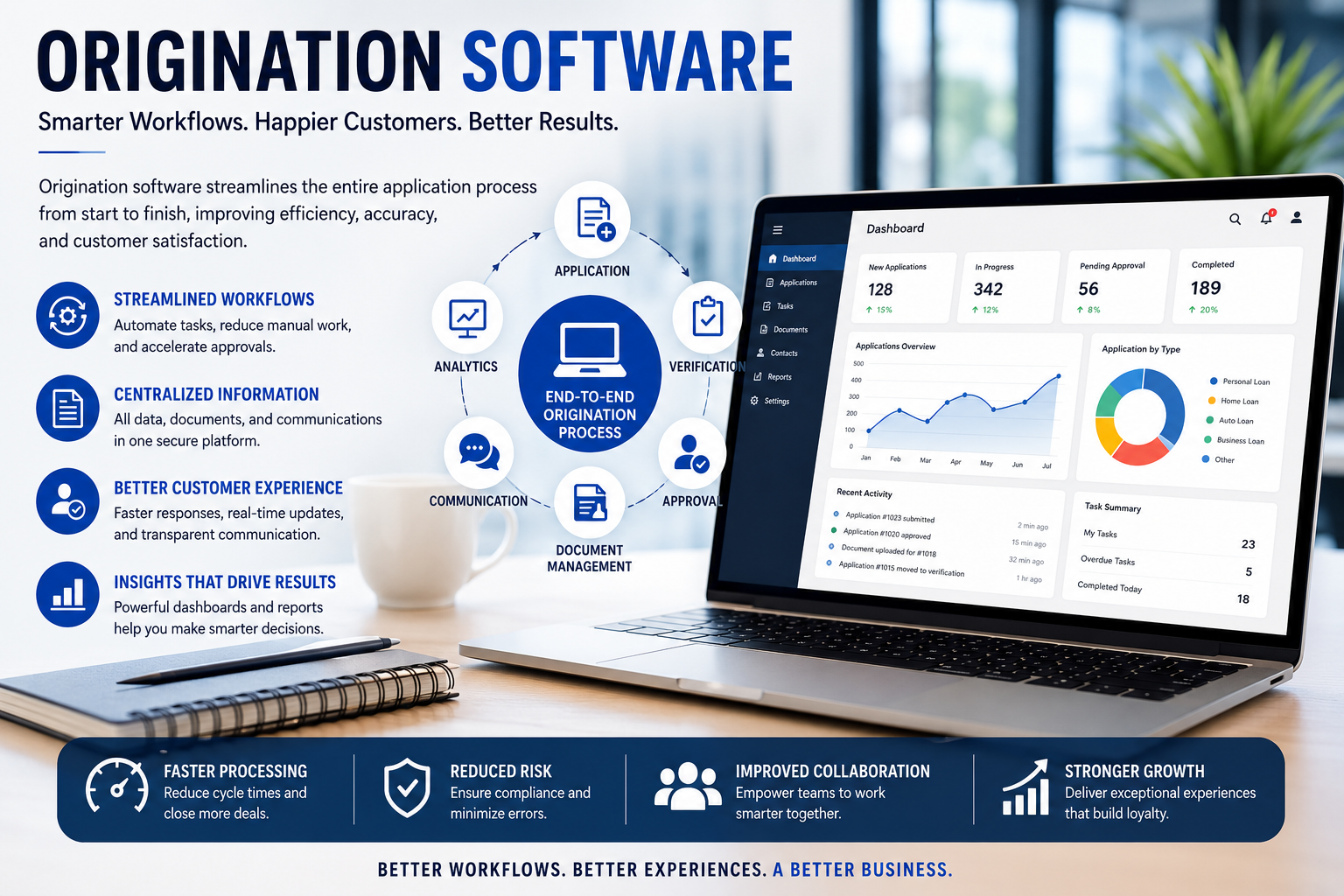
This is where origination software plays a transformative role. Designed to automate and optimize application and approval workflows, origination software helps organizations manage the entire origination process from initial inquiry to final decision. By centralizing information, automating repetitive tasks, and providing real-time visibility into operations, businesses can significantly improve both internal efficiency and customer interactions.
As customer expectations continue to evolve, speed, convenience, and transparency have become essential components of a successful service experience. Organizations that invest in modern origination software are better positioned to meet these expectations while maintaining compliance, reducing operational risks, and supporting long-term growth. Understanding how origination software improves workflow efficiency and customer experience can help decision-makers evaluate its value and implement it effectively.
Understanding Origination Software
What Is Origination Software?
Origination software is a specialized digital platform that helps organizations manage the process of receiving, evaluating, processing, and approving applications. While it is commonly associated with loan origination, the technology can also support other application-based workflows across various industries.
The software serves as a centralized hub where customer information, documentation, workflow tasks, approval processes, and communication records are managed in a structured manner. Instead of relying on manual procedures, organizations can automate many aspects of the origination process, creating a more efficient and consistent experience.
Why Modern Organizations Need It
As businesses grow, application volumes often increase significantly. Manual processes that may have worked for smaller operations become difficult to manage efficiently at scale. Delays, missing information, inconsistent communication, and human errors can create frustration for both employees and customers.
Origination software addresses these challenges by providing standardized workflows, automated data collection, and intelligent process management tools that help organizations handle higher volumes without sacrificing quality or accuracy.
How Origination Software Improves Workflow Efficiency
Automating Repetitive Tasks
One of the most significant benefits of origination software is automation. Many application processes involve repetitive administrative tasks such as data entry, document collection, status updates, verification procedures, and routing applications to the appropriate departments.
Automation reduces the need for manual intervention, allowing employees to focus on higher-value activities. By eliminating repetitive work, organizations can process applications more quickly while reducing the likelihood of errors.
Centralizing Information Management
Information scattered across multiple systems often creates inefficiencies. Employees may spend valuable time searching for documents, requesting updates, or reconciling conflicting records.
Origination software centralizes all relevant information within a single platform. Customer profiles, supporting documents, communication records, application statuses, and approval histories are accessible from one location. This improves collaboration and helps employees make informed decisions more efficiently.
Streamlining Approval Processes
Approval workflows can become complex when multiple departments, managers, or stakeholders are involved. Traditional approval methods often rely on emails, paper forms, or manual tracking systems that create delays.
Origination software automatically routes applications through predefined approval paths. Decision-makers receive notifications, review requests promptly, and maintain visibility into pending tasks. This structured process accelerates approvals while maintaining accountability.
Improving Document Management
Application-based processes frequently involve substantial documentation. Managing these files manually increases the risk of misplaced records, version control issues, and compliance concerns.
Modern origination software includes document management capabilities that allow users to upload, organize, retrieve, and share documents securely. Digital storage improves accessibility while supporting regulatory requirements and audit readiness.
Enhancing Workflow Visibility
Managers need clear visibility into operational performance to identify bottlenecks and allocate resources effectively. Without accurate data, workflow optimization becomes difficult.
Origination software provides dashboards, reporting tools, and real-time tracking capabilities that help organizations monitor application volumes, processing times, approval rates, and employee productivity. These insights support continuous improvement efforts.
Improving Customer Experience Through Origination Software
Faster Response Times
Customers increasingly expect quick responses and efficient service. Long waiting periods can lead to frustration and negatively impact customer satisfaction.
By automating workflows and reducing manual processing, origination software enables organizations to respond to inquiries and applications more rapidly. Faster processing times contribute directly to a better customer experience.
Simplified Application Processes
Complicated application procedures often discourage potential customers. Lengthy forms, unclear instructions, and repeated requests for information create unnecessary friction.
Origination software simplifies the application process through intuitive digital forms, guided workflows, and automated data validation. Customers can complete applications more easily, reducing abandonment rates and improving satisfaction.
Greater Transparency
Customers appreciate knowing where their application stands throughout the process. Lack of communication can create uncertainty and frustration.
Many origination software platforms provide status tracking features that allow customers to monitor progress in real time. Automated notifications keep applicants informed about important milestones, required actions, and final decisions.
Consistent Communication
Inconsistent communication can damage trust and create confusion. Customers often expect timely updates and accurate information regardless of who they interact with.
Origination software helps standardize communication by automating emails, notifications, reminders, and follow-up messages. This consistency enhances professionalism and improves the overall customer journey.
Personalized Service Experiences
Modern customers value personalized interactions. Access to centralized customer information allows employees to better understand individual needs and provide more relevant assistance.
By leveraging customer data effectively, organizations can deliver more tailored experiences that strengthen relationships and improve satisfaction.
Key Features That Drive Efficiency and Customer Satisfaction
Intelligent Workflow Automation
Workflow automation serves as the foundation of many origination software solutions. Automated task assignments, approval routing, document requests, and notifications help ensure processes move forward without unnecessary delays.
Integrated Data Collection
Effective software platforms integrate with multiple data sources, reducing duplicate data entry and improving information accuracy. Integration capabilities help create a seamless experience for both employees and customers.
Advanced Reporting and Analytics
Data-driven decision-making has become essential for modern organizations. Reporting tools provide valuable insights into performance trends, operational efficiency, customer behavior, and workflow effectiveness.
Mobile Accessibility
Mobile access allows employees and customers to engage with the system from virtually anywhere. This flexibility supports remote work environments and improves convenience for users.
Compliance and Security Features
Organizations handling sensitive customer information must prioritize security and regulatory compliance. Origination software often includes encryption, audit trails, access controls, and compliance monitoring tools that help mitigate risks.
Real-World Applications of Origination Software
Financial Services and Lending
Financial institutions frequently use origination software to manage loan applications, underwriting processes, documentation requirements, and approvals. Automation improves efficiency while supporting regulatory compliance.
Business Financing and Commercial Applications
Organizations that provide business financing can benefit from streamlined application processing and improved decision-making capabilities. Faster approvals often lead to higher customer satisfaction and increased competitiveness.
Enterprise Application Management
Beyond lending, many businesses use origination software to manage customer onboarding, service requests, partner applications, and internal approval processes. The flexibility of modern platforms allows them to support a wide variety of workflows.
Many organizations evaluating digital transformation initiatives explore industry solutions such as FICS to better understand how workflow automation, compliance management, and customer-centric origination processes can improve operational performance.
Best Practices for Successful Implementation
Clearly Define Business Objectives
Before implementing origination software, organizations should identify specific goals and performance metrics. Understanding desired outcomes helps guide configuration decisions and implementation strategies.
Involve Key Stakeholders
Successful implementation requires collaboration among management, operations teams, compliance personnel, and end users. Stakeholder involvement ensures the solution aligns with business needs.
Prioritize User Training
Employee adoption plays a critical role in software success. Comprehensive training programs help users understand system capabilities and maximize productivity.
Continuously Monitor Performance
Implementation should not be viewed as a one-time project. Organizations should regularly evaluate performance metrics, gather user feedback, and identify opportunities for optimization.
Common Mistakes to Avoid
Focusing Only on Technology
Technology alone cannot solve workflow challenges. Organizations should also evaluate processes, policies, and employee responsibilities to achieve meaningful improvements.
Ignoring Scalability
Business requirements evolve over time. Selecting a scalable platform helps ensure the software can support future growth and changing operational needs.
Overlooking Customer Perspectives
Efficiency improvements should always be balanced with customer experience considerations. The most successful implementations focus on delivering value to both internal teams and customers.
Future Trends in Origination Software
Artificial Intelligence and Machine Learning
Artificial intelligence is increasingly enhancing origination software by supporting predictive analytics, automated decision-making, risk assessment, and customer engagement.
Greater Automation
Future platforms will continue to automate complex workflows, reducing manual effort and accelerating processing times even further.
Enhanced Customer Self-Service
Self-service portals are becoming increasingly sophisticated, allowing customers to submit applications, upload documents, track progress, and communicate with organizations independently.
Cloud-Based Innovation
Cloud technology continues to drive flexibility, scalability, and accessibility, making advanced origination solutions available to organizations of all sizes.
Conclusion
As organizations strive to improve operational performance and meet rising customer expectations, origination software has become an essential business tool. By automating repetitive tasks, centralizing information, streamlining approvals, and improving communication, these platforms significantly enhance workflow efficiency.
At the same time, origination software helps create better customer experiences through faster processing, greater transparency, personalized interactions, and more convenient application processes. The combination of operational excellence and customer satisfaction creates a strong foundation for sustainable growth.
Organizations that embrace modern origination software solutions position themselves to remain competitive in an increasingly digital marketplace while delivering the speed, accuracy, and service quality that today’s customers expect.
