

Building Stronger Roads with Modern Ground Reinforcement
Why Geocell Technology Is Changing the Future of Road Construction
Road failures and rutting are common challenges faced by engineers, contractors, and municipalities worldwide. Heavy traffic loads, weak soil conditions, and environmental factors can cause roads to crack, sink, and develop deep ruts over time. Fortunately, modern ground stabilization solutions are helping solve these issues. One of the most effective methods is using geocell for road construction, which provides enhanced support, improved load distribution, and longer-lasting pavement performance.
Understanding Road Failures and Rutting
Before exploring the solution, it’s important to understand the problem.
Road failure occurs when the pavement structure can no longer support traffic loads effectively. This often results in cracks, potholes, surface deformation, and reduced road lifespan.
Rutting refers to the permanent depressions or grooves that form along wheel paths. These ruts can create safety hazards, collect water, and accelerate pavement deterioration.
Several factors contribute to road failures and rutting, including:
- Weak or unstable subgrade soils
- Repeated heavy vehicle traffic
- Poor drainage systems
- Inadequate pavement design
- Environmental changes such as freeze-thaw cycles
Traditional construction methods may temporarily address these issues, but they often require frequent maintenance and costly repairs.
What Is Geocell Technology?
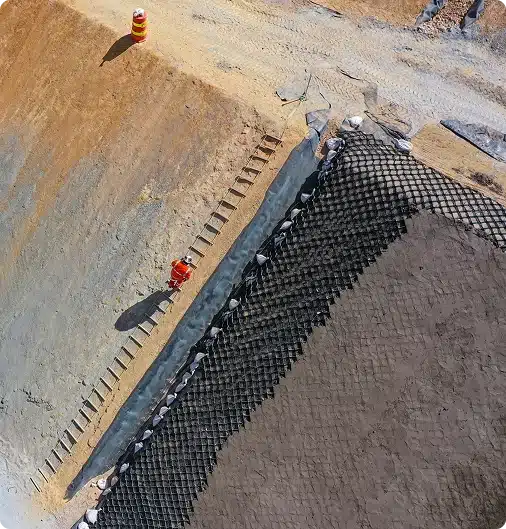
Geocells are three-dimensional honeycomb-like structures typically manufactured from high-density polyethylene (HDPE) or other durable polymer materials. When expanded and filled with aggregate, soil, or other infill materials, they create a reinforced layer that confines the material within each cell.
This cellular confinement system helps distribute loads more evenly across the underlying soil, reducing pressure concentrations that often lead to pavement failures.
Today, geocells are widely used in roadways, highways, access roads, parking areas, and infrastructure projects where soil stabilization is critical.
How Geocells Prevent Road Failures
Improved Load Distribution
One of the primary reasons roads fail is excessive stress placed on weak subgrade soils. Geocells spread traffic loads over a larger area, reducing the pressure transmitted to the soil beneath.
Instead of concentrating weight directly under vehicle tires, the cellular structure disperses forces laterally. This significantly decreases settlement and structural damage.
Enhanced Soil Stability
Weak soils often shift or deform under repeated loading. Geocells create a confinement effect that restricts lateral movement of aggregate and soil particles.
This stabilization helps maintain the structural integrity of the road foundation, even under demanding traffic conditions.
Reduced Differential Settlement
Uneven settlement is a common cause of pavement cracking and surface deformation. By creating a stronger and more uniform support layer, geocells help minimize differential settlement and maintain a smoother road surface.
How Geocells Help Prevent Rutting
Aggregate Confinement
One major cause of rutting is the movement of aggregate under repeated traffic loads. Geocells lock the aggregate in place, preventing excessive displacement.
As a result, the road structure remains stable and resistant to wheel-path depressions.
Increased Bearing Capacity
Roads built on weak or soft soils often struggle to support heavy traffic. Geocell reinforcement improves the bearing capacity of the subgrade, allowing the pavement structure to handle greater loads without deformation.
This makes the system especially valuable for industrial roads, construction access roads, and areas with challenging soil conditions.
Better Long-Term Performance
Because geocells reduce material movement and improve structural support, roads experience less wear and tear over time. This contributes to a longer service life and fewer maintenance interventions.
Key Benefits of Using Geocell for Road Construction
The growing popularity of geocell for road construction is driven by several practical benefits:
Lower Construction Costs
Geocells often reduce the need for importing large quantities of high-quality aggregate. In many cases, locally available materials can be used effectively within the cellular system.
Faster Installation
The lightweight and expandable design allows contractors to install geocells efficiently, helping accelerate project timelines.
Reduced Maintenance Requirements
Roads reinforced with geocells typically experience fewer structural failures, reducing repair costs throughout the pavement’s lifespan.
Environmental Benefits
Using less aggregate and minimizing excavation can reduce the environmental impact of road construction projects. Geocell systems also support sustainable infrastructure development.
Best Applications for Geocell-Reinforced Roads
Geocell technology is highly versatile and can be used in various roadway applications, including:
- Highway construction
- Rural road development
- Temporary access roads
- Industrial and mining roads
- Parking lots
- Military roads
- Airport service roads
In each of these applications, cellular confinement improves stability and helps prevent costly pavement failures.
Tips for Maximizing Geocell Performance
To achieve the best results, consider the following recommendations:
- Conduct proper site evaluations before construction.
- Select geocell products designed for anticipated traffic loads.
- Ensure proper drainage to prevent water-related damage.
- Use suitable infill materials based on project requirements.
- Follow manufacturer installation guidelines carefully.
These practices help maximize the effectiveness and lifespan of the reinforced roadway.
Conclusion
Road failures and rutting can significantly increase maintenance costs and reduce roadway safety. By improving load distribution, stabilizing weak soils, and preventing aggregate movement, geocell for road construction offers a reliable and cost-effective solution for long-lasting infrastructure. If you’re looking for advanced ground stabilization solutions, contact BaseCore in Omaha, Nebraska, for high-quality geocell products and expert support for your next road construction project.
Frequently Asked Questions
What is a geocell in road construction?
A geocell is a three-dimensional cellular confinement system used to stabilize soil and aggregate, improving the strength and durability of road foundations.
How do geocells prevent rutting?
Geocells confine aggregate materials within their cells, reducing movement and distributing traffic loads more evenly across the subgrade.
Can geocells be used on weak soils?
Yes. Geocells are especially effective on soft or weak soils because they improve load-bearing capacity and reduce settlement.
Are geocells cost-effective?
Yes. Geocells can lower material requirements, reduce maintenance costs, and extend pavement lifespan, making them a cost-effective solution.
Where are geocells commonly used?
They are used in highways, access roads, industrial roads, parking areas, rural roads, and other infrastructure projects requiring soil stabilization.
