

Introduction
Online shopping has come a long way, but one challenge has always remained customers cannot touch, feel, or truly visualize a product before purchasing it. That gap between the digital shelf and the physical experience leads to hesitation, cart abandonment, and costly returns. Enter the 3D configurator: a powerful tool that is quietly rewriting the rules of e-commerce.
A 3D configurator does exactly what the name suggests it lets shoppers interact with a three-dimensional, real-time model of a product, customizing colors, materials, sizes, and features as they go. The result is a shopping experience that feels surprisingly close to being in a physical store.
What Is a 3D Configurator and Why Does It Matter?
A 3D configurator is an interactive digital tool that allows users to build, customize, and visualize a product in three dimensions directly in their browser or on a mobile device. Unlike static product images, a 3D configurator responds to every choice a customer makes, updating the visual model instantly.
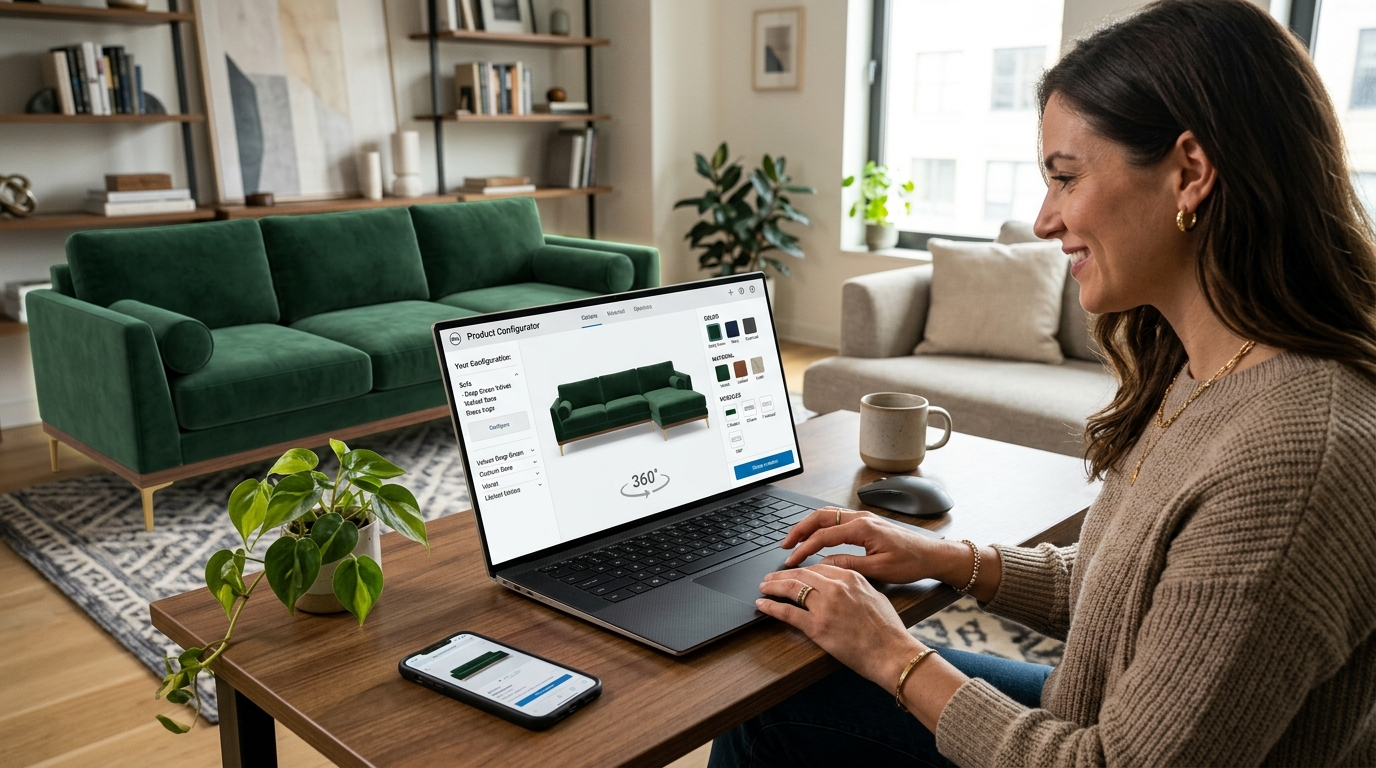
For example, a furniture brand using a 3D configurator can let shoppers pick a sofa’s fabric, leg finish, and cushion color, seeing the exact result before adding it to their cart. This level of engagement dramatically reduces purchase anxiety.
The growing adoption of 3D configurator technology across industries like automotive, fashion, furniture, and electronics shows just how important this tool has become in closing the gap between digital browsing and physical decision-making.
How a 3D Configurator Bridges the Digital-Physical Divide
Traditional e-commerce relies on flat images and written descriptions. The problem? Human brains process spatial information far better when they can rotate, zoom, and interact with an object. A 3D configurator taps directly into that instinct.
Here is how a 3D configurator bridges the gap in practical terms:
Real-Time Visualization: Shoppers see their exact configuration not a stock photo approximation. The 3D configurator renders changes instantly, from material swaps to dimensional adjustments.
Spatial Understanding: Customers can rotate the product 360 degrees, zoom into fine details, and get a genuine sense of scale and proportion something a photograph simply cannot offer.
Augmented Reality Integration: Many modern 3D configurator platforms now connect with AR features, allowing shoppers to place a configured product into their own living space using a smartphone camera.
Emotional Connection: When a customer has spent time personalizing a product through a 3D configurator, they feel a sense of ownership before the purchase is even made. This psychological investment significantly improves conversion rates.
Industries Transformed by 3D Configurator Technology
The impact of the 3D configurator is being felt across nearly every product-driven industry.
Automotive: Car manufacturers were among the earliest adopters. Buyers can use a 3D configurator to choose exterior paint, interior trim, wheel styles, and optional packages experiencing their dream vehicle before it rolls off the assembly line.
Furniture and Home Décor: Brands like IKEA and many boutique furniture makers use a 3D configurator to help customers see exactly how a piece will look in different finishes, sizes, and room settings.
Fashion and Footwear: Custom sneaker brands have made the 3D configurator central to their identity. Shoppers design their shoes color by color, panel by panel, and watch the design come alive on screen.
Jewelry: A 3D configurator allows customers to select stone cuts, metal types, and engraving options creating a fully personalized piece with confidence.
Electronics and Tech: From custom laptops to personalized phone cases, the 3D configurator is helping tech brands offer meaningful personalization at scale.
The Business Case for Investing in a 3D Configurator
Beyond the customer experience, the business benefits of a 3D configurator are substantial and measurable.
Reduced return rates are one of the most significant advantages. When customers clearly understand what they are ordering through a 3D configurator, surprise and disappointment upon delivery drop sharply. Retailers consistently report lower return volumes after deploying 3D configurator solutions.
Higher average order values follow naturally. The customization journey a 3D configurator enables encourages customers to explore premium options upgraded materials, added features and personalized finishes that they might never have discovered through a standard product page.
Faster purchasing decisions are another outcome. Uncertainty is one of the biggest friction points in online shopping. A 3D configurator removes that uncertainty by giving customers full visual confirmation of their choices, allowing them to commit with confidence.
Finally, a 3D configurator generates valuable behavioral data. Every interaction every color switch, material selection, and configuration path tells businesses something meaningful about customer preferences and decision-making patterns.
What Makes a Great 3D Configurator Experience?
Not every 3D configurator delivers the same results. The difference between a mediocre tool and an exceptional one comes down to a handful of key qualities.
Speed and Performance: A 3D configurator that lags or stutters undermines the entire experience. Shoppers expect real-time responses. High-performance rendering engines and optimized asset delivery are non-negotiable.
Mobile Optimization: A significant share of online shopping happens on smartphones. A 3D configurator must perform flawlessly on small screens with touch-based navigation, not just on desktop browsers.
Intuitive Design: The best 3D configurator interfaces feel effortless. Options should be clearly presented, changes should be immediately visible, and the path from configuration to purchase should be frictionless.
Visual Accuracy: If the colors, textures, and proportions in the 3D configurator do not accurately represent the real product, trust breaks down. Photorealistic rendering is essential.
Integration with Commerce Platforms: A 3D configurator that cannot connect seamlessly with a brand’s existing e-commerce infrastructure creates operational headaches. Look for solutions with strong API support and platform compatibility.
The Future of Shopping Runs Through the 3D Configurator
Consumer expectations are evolving fast. Shoppers increasingly expect to be active participants in their purchasing journey, not passive scrollers through static pages. The 3D configurator sits at the center of this shift.
As technologies like WebGL, WebXR, and AI-driven personalization continue to mature, the capabilities of the 3D configurator will only expand. Expect to see tools that remember individual preferences, suggest configurations based on purchase history, and blend seamlessly into social commerce environments.
Brands that invest in a quality 3D configurator today are not just improving the shopping experience. They are building a competitive advantage that will grow more valuable as the digital and physical worlds continue to converge.
Conclusion
The distance between clicking “buy” online and holding a physical product has always felt uncomfortably large. The 3D configurator is the most effective tool available right now for closing that gap. It gives customers the visual confidence, creative control, and emotional engagement that physical retail has always delivered and it does so at digital scale.
Whether you are a brand exploring your first 3D configurator implementation or looking to upgrade an existing solution, the message from the market is clear: interactive, configurable, three-dimensional experiences are no longer a luxury feature. They are quickly becoming the baseline expectation.
