

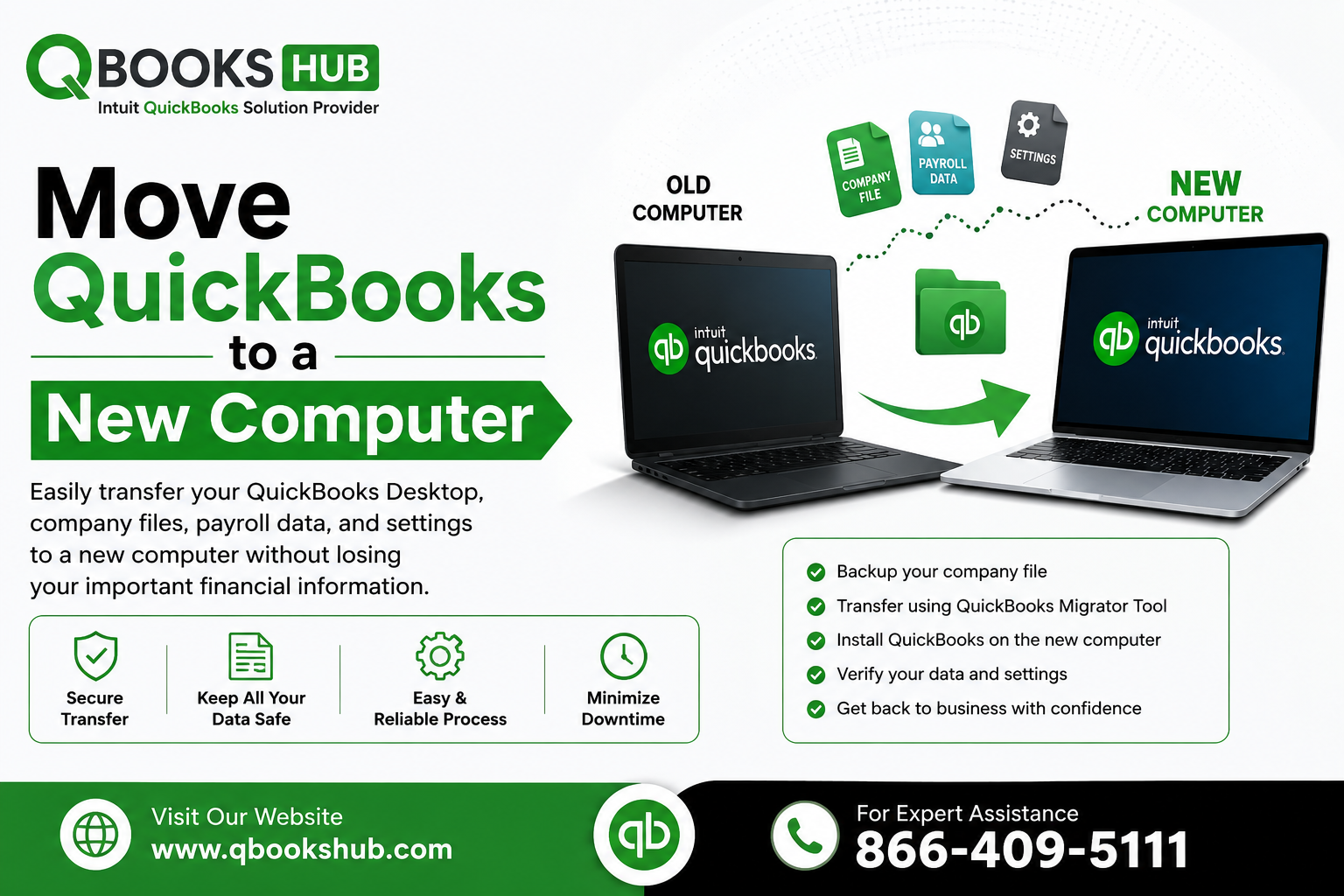
Upgrading your computer is often necessary to improve performance, security, and productivity. However, for businesses that rely on QuickBooks Desktop for accounting, payroll, invoicing, and financial reporting moving to a new system requires careful planning If you’re wondering how to Move QuickBooks to a New Computer without losing important data this guide will walk you through the entire process.
What Happens When You Move QuickBooks to a New Computer?
When transferring QuickBooks, you’re not simply moving a software application. You’re also transferring
- Company files
- Customer and vendor records
- Payroll information
- Financial reports
- Custom templates
- Memorized transactions
- Banking details
- User preferences
A successful migration preserves all these elements and allows you to continue working without interruption.
What You Need Before Moving QuickBooks
Before you begin, gather the information and resources necessary for the migration.
1. QuickBooks License Information
You’ll need:
- License Number
- Product Number
- Intuit Account Credentials
To locate your QuickBooks product details:
- Open QuickBooks Desktop.
- Press F2 on your keyboard.
- Review the Product Information window.
Make a note of these details for installation and activation on the new computer.
2. Access to Company Files
Locate your QuickBooks company file and related backups.
Common QuickBooks file extensions include:
- .QBW (Company File)
- .QBB (Backup File)
- .QBM (Portable Company File)
3. Backup Storage Device
Prepare one of the following:
- USB flash drive
- External hard drive
- Cloud storage account
You’ll use this storage method to transfer files securely.
Step 1: Update QuickBooks Desktop
Before moving QuickBooks, install the latest updates on your current computer.
Why Updating Matters
Updating QuickBooks before migration helps:
- Improve compatibility
- Fix software bugs
- Reduce transfer errors
- Enhance security
How to Update QuickBooks
- Open QuickBooks Desktop.
- Click Help.
- Select Update QuickBooks Desktop.
- Choose Update Now.
- Install all available updates.
- Restart QuickBooks.
This simple step can prevent many migration-related problems.
Step 2: Create a Complete Backup
Backing up your data is essential.
How to Back Up Your Company File
- Open QuickBooks.
- Select File.
- Choose Back Up Company.
- Click Create Local Backup.
- Save the backup to an external drive or cloud storage.
Creating a backup ensures that your financial data remains protected if anything goes wrong during migration.
Step 3: Verify Data Integrity
Before transferring files, check that your company data is healthy.
Run Verify Data
- Open QuickBooks Desktop.
- Select File.
- Click Utilities.
- Choose Verify Data.
QuickBooks will scan for potential data issues.
If problems are detected, run:
File > Utilities > Rebuild Data
Repairing data before migration reduces the risk of file corruption.
Method 1: Use the QuickBooks Migrator Tool
The QuickBooks Migrator Tool is the easiest way to move QuickBooks to a new computer.
What the Migrator Tool Transfers
The tool can transfer:
- Company files
- Templates
- Logos
- Images
- Preferences
- Memorized reports
This method minimizes manual work and reduces the chance of missing files.
Using the Migrator Tool
On the Old Computer
- Open QuickBooks Desktop.
- Navigate to:File > Utilities > Move QuickBooks to Another Computer
- Click I’m Ready.
- Create a one-time password.
- Insert a USB flash drive.
- Allow QuickBooks to copy migration files.
On the New Computer
- Install QuickBooks Desktop.
- Insert the USB drive.
- Run the migration package.
- Enter the one-time password.
- Follow the setup instructions.
The tool will automatically transfer supported files and settings.
Method 2: Manually Move QuickBooks to a New Computer
If the Migrator Tool isn’t available, you can transfer QuickBooks manually.
Install QuickBooks on the New Computer
Download and install the same QuickBooks Desktop version used on your old computer.
During installation:
- Enter your License Number
- Enter your Product Number
- Sign in to your Intuit account
Complete the activation process.
Transfer Company Files
Copy your QuickBooks files to a storage device.
Transfer:
- Company files
- Backup files
- Portable company files
Move these files to the new computer.
Restore the Company File
- Open QuickBooks.
- Select File > Open or Restore Company.
- Choose the appropriate file type.
- Follow the prompts to restore your data.
Once restored, verify that all records appear correctly.
Payroll Setup After Migration
If you use QuickBooks Payroll, additional verification is required.
Verify Payroll Subscription
Navigate to:
Employees > My Payroll Service > Account/Billing Information
Ensure your payroll subscription remains active.
Confirm Payroll Service Key
Go to:
Employees > My Payroll Service > Manage Service Key
Verify that the service key information is correct.
Download Payroll Updates
Install the latest payroll tax table immediately after migration.
This helps ensure:
- Accurate payroll calculations
- Current tax rates
- Compliance with payroll regulations
Test Payroll Functions
Before processing payroll, verify:
- Employee records
- Tax calculations
- Direct deposit settings
- Payroll reports
Testing payroll functionality helps identify issues early.
Common Issues After Moving QuickBooks
Although most migrations are successful, users occasionally encounter problems.
QuickBooks Won’t Open
Possible causes include:
- Damaged installation files
- Incomplete software installation
- Corrupted company files
Reinstalling QuickBooks often resolves these issues.
Missing Templates or Reports
Custom templates and memorized reports may not transfer automatically.
If necessary, manually copy these files from the old computer.
Multi-User Mode Errors
Businesses using QuickBooks in a network environment may need to:
- Reconfigure hosting settings
- Adjust firewall permissions
- Verify network access
Testing multi-user functionality is recommended before returning to normal operations.
Payroll Update Problems
Some users experience payroll update failures after migration.
Common causes include:
- Missing payroll service keys
- Inactive payroll subscriptions
- Firewall restrictions
- Outdated QuickBooks versions
Reviewing payroll settings usually resolves these issues.
Best Practices for a Successful QuickBooks Migration
Following these recommendations can help prevent migration problems.
Keep the Old Computer Available
Don’t uninstall QuickBooks from your old computer immediately.
Keep it available until you’ve confirmed everything works correctly on the new system.
Create Multiple Backups
Store backups in several locations, including:
- External drives
- Cloud storage
- Secure network folders
Multiple backups provide additional protection.
Test Critical Features
After migration, verify:
- Customer records
- Vendor information
- Invoices
- Reports
- Payroll
- Banking functions
Testing ensures that no important data was lost during transfer.
Update Windows
Ensure the new computer has all available Windows updates installed.
Updated systems generally provide better QuickBooks performance and compatibility.
Benefits of Moving QuickBooks to a New Computer
A successful migration offers several advantages.
Improved Performance
Modern computers process transactions and reports much faster.
Enhanced Security
New systems offer stronger protection against cyber threats and malware.
Better Reliability
Updated hardware reduces crashes and hardware-related failures.
Increased Productivity
Employees can access QuickBooks faster and work more efficiently.
Compatibility with New Features
New computers support the latest QuickBooks updates and integrations more effectively.
Frequently Asked Questions
Can I move QuickBooks to a new computer without losing data?
Yes. Creating a backup before migration helps ensure your company data remains protected throughout the process.
What is the QuickBooks Migrator Tool?
It’s a built-in utility that transfers QuickBooks files, settings, and preferences from one computer to another.
Do I need my QuickBooks license information?
Yes. You’ll need your license and product numbers to install and activate QuickBooks on the new system.
Conclusion
Learning how to Move QuickBooks to a New Computer is essential for businesses upgrading their systems or replacing outdated hardware. By creating backups, updating QuickBooks, verifying company data, and using the QuickBooks Migrator Tool or manual transfer methods, you can complete the migration safely and efficiently.
