

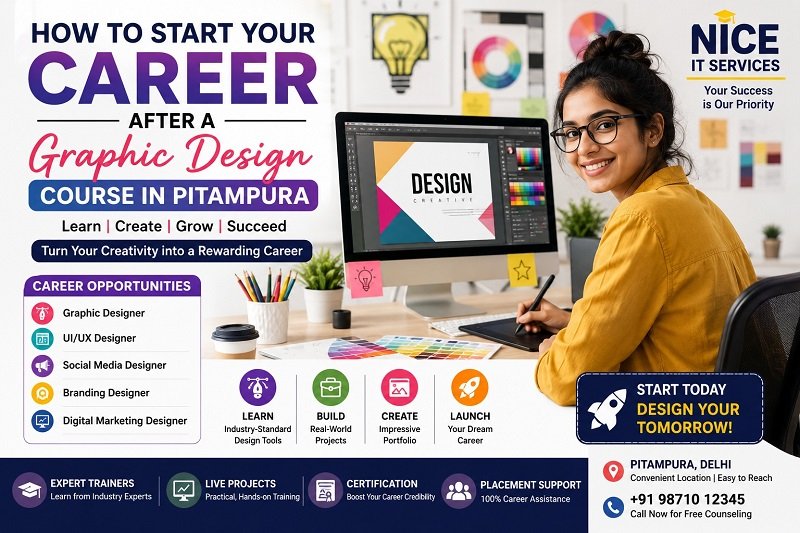
The creative industry is expanding rapidly, creating exciting opportunities for aspiring graphic designers. Every business, from startups to multinational companies, depends on high-quality visual content to strengthen its brand and connect with customers. As a result, skilled graphic designers are in demand across industries such as advertising, digital marketing, publishing, e-commerce, media, and technology.
If you have recently completed or are planning to enroll in a Graphic Design Course in Pitampura, you may be wondering what comes next. Building a successful career requires more than learning design software. It involves developing creativity, building a professional portfolio, gaining practical experience, and continuously improving your skills.
This guide explains the essential steps you should take to transform your graphic design training into a rewarding career.
Introduction
Completing a graphic design course is the first milestone toward becoming a professional designer. The next step is understanding how to apply your knowledge in real-world situations and position yourself for career success.
Why Graphic Design is a Promising Career
The demand for visually appealing content has never been higher. Businesses need creative professionals who can design logos, social media graphics, brochures, advertisements, websites, and branding materials. Graphic designers play a vital role in helping organizations communicate their message effectively.
Growing Demand for Graphic Designers in India
With businesses investing heavily in digital marketing and online branding, the need for skilled designers continues to increase. Companies are looking for professionals who understand both creativity and modern design tools.
Career Opportunities After Completing a Graphic Design Course
After finishing a Graphic Design Course in Pitampura, you can explore opportunities in advertising agencies, IT companies, digital marketing firms, publishing houses, printing companies, media organizations, or even work independently as a freelancer.
Build a Strong Graphic Design Foundation
Success in graphic design begins with mastering the basics. Strong fundamentals make it easier to create professional and visually effective designs.
Master Core Design Principles
Understanding balance, alignment, contrast, hierarchy, spacing, and composition allows designers to create visually appealing layouts that communicate ideas clearly.
Improve Creativity and Visual Communication Skills
Graphic design is about solving communication challenges through visuals. Practice observing good designs, analyzing layouts, and experimenting with new concepts to sharpen your creative thinking.
Stay Updated with Modern Design Trends
Design styles evolve regularly. Keeping up with typography trends, branding styles, color palettes, and user preferences helps you stay competitive in the industry.
Create an Impressive Graphic Design Portfolio
Your portfolio is often more important than your resume. Employers and clients want to see your work before making hiring decisions.
Include Real-World Design Projects
Showcase projects that demonstrate practical skills such as branding, advertisements, marketing materials, and digital graphics.
Showcase Logo, Branding, and Social Media Designs
Include a variety of work, including:
- Logo designs
- Business cards
- Social media creatives
- Posters
- Flyers
- Packaging designs
- Banner advertisements
A diverse portfolio demonstrates versatility.
Highlight Your Best Creative Work
Focus on quality rather than quantity. Present projects that reflect your strongest skills and explain the design objectives behind each project.
Learn Industry-Standard Graphic Design Software
Professional designers are expected to work confidently with modern design software.
Adobe Photoshop
Photoshop is widely used for image editing, social media creatives, banners, posters, and digital artwork.
Adobe Illustrator
Illustrator helps designers create logos, vector illustrations, icons, infographics, and branding materials.
CorelDRAW
Many printing businesses continue using CorelDRAW for brochure design, business cards, flex banners, and promotional materials.
Adobe InDesign and Other Essential Tools
Learning layout design software such as Adobe InDesign improves your ability to create magazines, books, catalogs, and professional publications.
Gain Practical Experience
Practical knowledge is one of the biggest advantages when applying for graphic design jobs.
Work on Live Projects
Real client projects help you understand deadlines, revisions, teamwork, and professional expectations.
Complete Freelance Assignments
Small freelance projects improve your confidence while helping you build your portfolio and earn practical experience.
Participate in Design Contests and Internships
Internships provide valuable workplace exposure, while design competitions encourage creativity and innovation.
Explore Career Opportunities After a Graphic Design Course
Graphic design offers multiple career paths depending on your interests and skills.
Graphic Designer
Create marketing materials, advertisements, brochures, social media content, and branding assets for businesses.
UI/UX Designer
Design attractive and user-friendly interfaces for websites and mobile applications.
Social Media Graphic Designer
Develop engaging graphics for Facebook, Instagram, LinkedIn, YouTube, and other digital platforms.
Branding and Visual Identity Designer
Help businesses establish unique brand identities through logos, typography, color schemes, and marketing materials.
Digital Marketing Creative Designer
Collaborate with digital marketing teams to design banners, landing pages, email templates, and online advertisements.
Develop Additional Skills to Boost Your Career
Employers appreciate designers who possess multiple complementary skills.
Basic Video Editing Skills
Knowledge of video editing enables designers to create engaging promotional videos and social media reels.
Motion Graphics Fundamentals
Animation and motion graphics have become increasingly valuable for digital marketing campaigns.
Digital Marketing Knowledge
Understanding SEO, social media marketing, branding, and online advertising helps designers create more effective marketing content.
Communication and Client Handling Skills
Professional communication, presentation skills, and understanding client requirements are equally important for career growth.
Prepare for Graphic Design Job Interviews
Landing your first design job requires preparation and confidence.
Build a Professional Resume
Your resume should clearly highlight your technical skills, certifications, projects, internships, and achievements.
Create an Online Portfolio
An online portfolio allows recruiters and clients to review your work anytime. Keep it updated with your latest projects.
Practice Common Graphic Design Interview Questions
Prepare to explain your design process, software expertise, creative decisions, and portfolio projects during interviews.
Start Freelancing as a Graphic Designer
Freelancing offers flexibility and additional earning opportunities.
Benefits of Freelancing
Freelancers can work with clients from different industries while building their own professional reputation.
Finding Your First Clients
Begin by working with local businesses, startups, educational institutions, or small companies that need affordable design services.
Building Long-Term Client Relationships
Deliver quality work, meet deadlines, communicate professionally, and maintain consistency to earn repeat business and referrals.
Why Choose Nice IT Services for Graphic Design Training in Pitampura?
Choosing the right institute plays an important role in shaping your career.
Practical Training with Live Projects
Students gain hands-on experience through assignments, branding exercises, and real-world design projects.
Experienced Trainers and Personalized Guidance
Expert instructors help students understand industry expectations while providing individual attention during training.
Portfolio Development Support
Students receive guidance on creating professional portfolios that impress recruiters and potential clients.
Placement Assistance and Career Counseling
Career counseling, interview preparation, and placement support help students confidently begin their professional journey.
Tips for Long-Term Success in Graphic Design
Building a successful career requires continuous learning and dedication.
Keep Learning New Design Techniques
Explore new software updates, creative styles, and design technologies regularly.
Build Your Professional Network
Attend creative workshops, networking events, and industry seminars to connect with professionals and potential employers.
Maintain a Strong Portfolio
Update your portfolio frequently by replacing older work with your latest and best projects.
Stay Consistent and Creative
Success comes from regular practice, creative thinking, and a willingness to improve continuously.
Completing a Graphic Design Course in Pitampura is the beginning of an exciting creative journey. The combination of technical knowledge, practical experience, a strong portfolio, and continuous skill development can open doors to rewarding career opportunities in various industries.
Whether your goal is to work for a leading company, become a freelance designer, or build your own creative business, investing in the right training and consistently improving your abilities will help you achieve long-term success.
If you’re looking for practical learning, experienced trainers, portfolio development, and career guidance, enrolling in a professional Graphic Design Course in Pitampura can provide the strong foundation you need to build a successful future in the design industry.
