


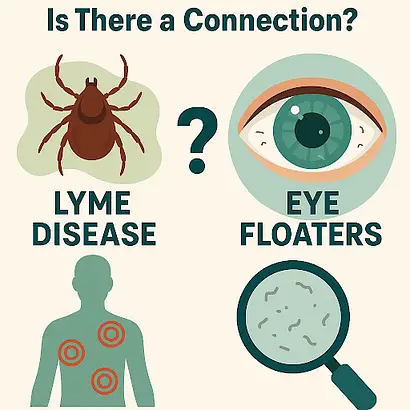
Eye Floaters a Symptom
Eye floaters can be unsettling, especially when they appear suddenly or are accompanied by other vision changes. For people living with Lyme disease—or those who suspect they may have a tick-borne illness—it’s natural to wonder whether these visual disturbances could be related to their condition.
So, are eye floaters a symptom of Lyme disease? The answer is not straightforward. Eye floaters are not considered one of the most common symptoms of Lyme disease, but in some cases, Lyme disease can affect the eyes and nervous system, potentially leading to visual symptoms. Eye floaters have many possible causes, ranging from normal age-related changes to eye inflammation or retinal conditions that require prompt medical attention.
At Holistic Therapy Tribe, we believe in providing balanced, evidence-based information that helps patients, caregivers, holistic health readers, and wellness practitioners make informed decisions. This article explores the possible relationship between Lyme disease and eye floaters, what current research says, and when it is important to seek professional evaluation.
What Is Lyme Disease?
Lyme disease is an infectious illness caused primarily by the bacterium Borrelia burgdorferi USA. It is transmitted through the bite of infected blacklegged ticks, commonly known as deer ticks.
According to the CDC Lyme Disease Overview, early Lyme disease symptoms may include:
- Fever
- Chills
- Fatigue
- Headache
- Muscle aches
- Joint pain
- Swollen lymph nodes
- Neck stiffness
- The characteristic erythema migrans rash
If Lyme disease is not diagnosed and treated early, it may affect the joints, nervous system, heart, and in uncommon cases, the eyes.
Can Lyme Disease Affect the Eyes?
Although Lyme disease is best known for causing flu-like symptoms and skin rashes, it can occasionally involve the eyes. Medical literature refers to this as ocular Lyme disease.
Eye involvement is relatively uncommon, but researchers have reported cases involving inflammation affecting different parts of the eye.
Possible ocular manifestations include:
- Eye redness
- Light sensitivity
- Blurred vision
- Eye pain
- Double vision
- Inflammation inside the eye (uveitis)
- Inflammation of the optic nerve in rare cases
Because these symptoms may also occur with many other medical conditions, they should not automatically be assumed to be caused by Lyme disease.
Are Eye Floaters a Symptom of Lyme Disease?
Eye floaters are tiny moving spots, threads, or cobweb-like shapes that drift across your field of vision. They occur when small clumps within the vitreous gel inside the eye cast shadows on the retina.
Most eye floaters are not caused by Lyme disease. Instead, they commonly result from normal age-related changes in the vitreous.
However, in rare situations, Lyme disease related inflammation inside the eye may contribute to symptoms that include floaters. For example, inflammatory conditions such as posterior uveitis or vitritis may increase the likelihood of noticing floaters.
Current evidence does not identify eye floaters as a hallmark symptom of Lyme disease. Instead, they should be considered a possible—but uncommon—finding when ocular inflammation is present.
Why Can Lyme Disease Sometimes Affect Vision?
Lyme disease can trigger inflammation in different parts of the body. In uncommon cases, inflammatory responses may involve structures within the eye or the nervous system responsible for vision.
Researchers continue to study how Borrelia burgdorferi may contribute to ocular complications. Reported eye-related problems include:
- Uveitis
- Keratitis
- Conjunctivitis
- Optic nerve inflammation
- Cranial nerve involvement affecting eye movement
These complications are relatively rare compared with more common Lyme disease symptoms such as fatigue, joint pain, muscle aches, and neurological symptoms.
Other Common Causes of Eye Floaters
It is important to remember that eye floaters are extremely common and often unrelated to Lyme disease.
Possible causes include:
Age-Related Vitreous Changes
As people age, the gel inside the eye naturally becomes more liquid, leading to floaters.
Posterior Vitreous Detachment
This common condition occurs when the vitreous separates from the retina and frequently causes new floaters.
Eye Inflammation
Inflammation from infections, autoimmune diseases, or other conditions may produce floaters.
Retinal Tears or Detachment
A sudden increase in floaters accompanied by flashes of light or loss of peripheral vision may indicate a retinal tear or retinal detachment. This requires immediate emergency evaluation.
Diabetes and Other Medical Conditions
Certain systemic conditions affecting blood vessels or inflammation may also contribute to visual disturbances.
Because many different conditions can cause floaters, a comprehensive eye examination is essential whenever symptoms are new, sudden, or worsening.
Lyme Disease Symptoms Beyond the Eyes
People searching for information about eye floaters should also be aware of the broader symptoms associated with Lyme disease.
These may include:
- Fatigue
- Joint pain
- Muscle pain
- Fever
- Headaches
- Brain fog
- Memory difficulties
- Facial weakness
- Tingling sensations
- Sleep disturbances
- Neck stiffness
- Erythema migrans rash
- Neurological symptoms
Healthcare providers evaluate the complete clinical picture—including possible tick exposure, travel history, symptom progression, and Lyme testing—when determining whether Lyme disease may be present.
