

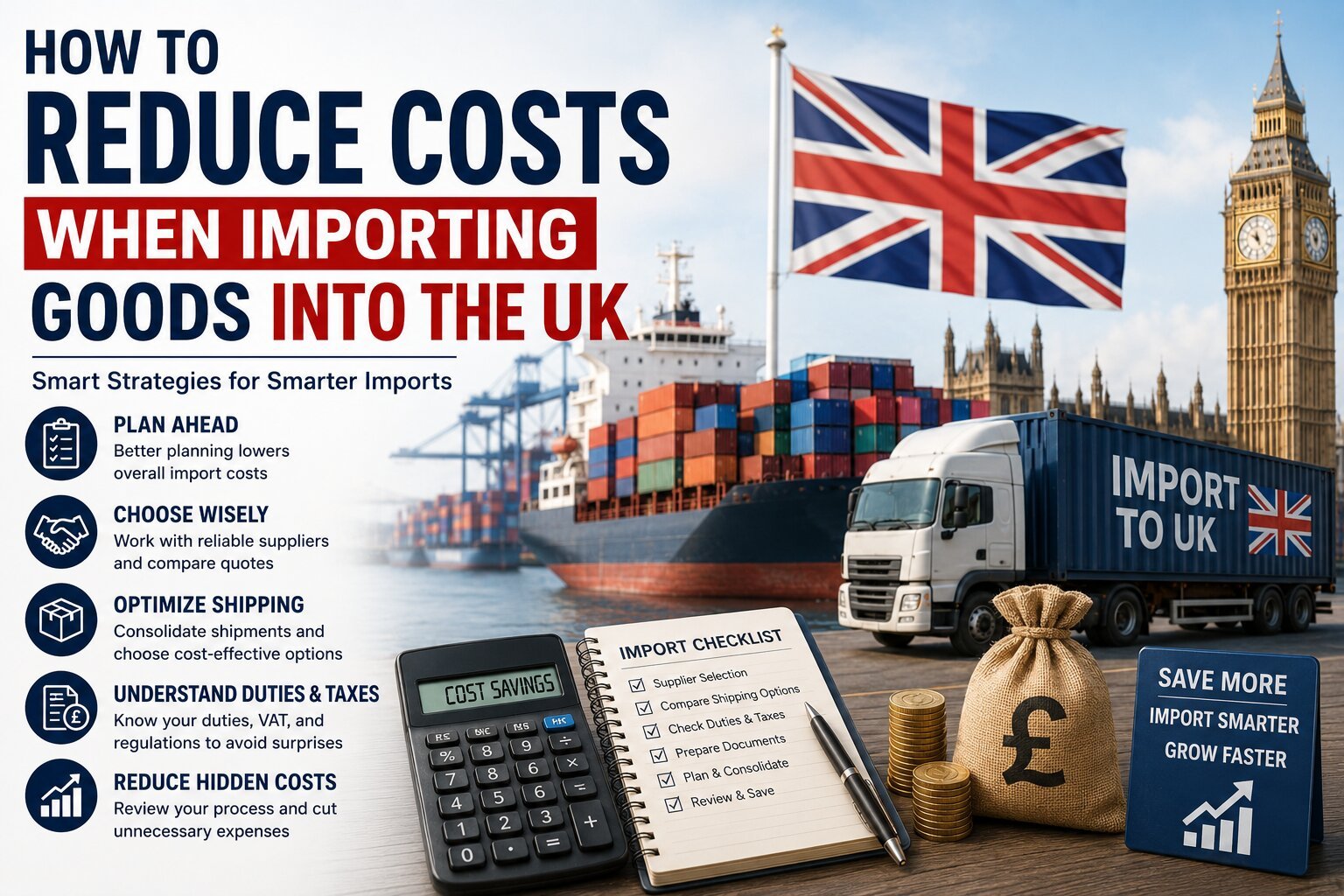
Introduction
Importing products from overseas gives businesses access to competitive pricing, a wider range of suppliers, and new opportunities for growth. Whether you run an eCommerce store, a wholesale business, or a manufacturing company, choosing the right sourcing strategy can improve your profit margins and help you stay competitive.
However, many businesses discover that the true cost of importing extends well beyond the supplier’s quoted price. Shipping charges, customs duties, VAT, storage fees, insurance, and documentation costs can quickly add up if they are not planned carefully. Understanding these expenses is essential for any company looking to import to UK successfully.
Fortunately, there are practical ways to control these costs without compromising product quality or delivery performance. By improving supplier selection, planning shipments more effectively, and understanding UK import procedures, businesses can make importing goods into the UK more efficient and profitable.
Understand Your Total Landed Cost
One of the biggest mistakes new importers make is focusing only on the purchase price of a product.
The total landed cost includes every expense involved in getting goods from the supplier to your warehouse.
These costs may include:
- Product price
- International freight
- Cargo insurance
- Customs duties
- Import VAT
- Port handling charges
- Customs clearance fees
- Inland transportation
- Warehousing costs
Calculating these expenses before placing an order provides a more accurate picture of profitability and helps businesses set competitive selling prices.
Choose Suppliers Carefully
Finding a low-cost supplier is important, but the cheapest option is not always the most economical.
Reliable suppliers often deliver better long-term value by offering:
- Consistent product quality
- Reliable production schedules
- Clear communication
- Better packaging
- Fewer defective products
Working with dependable suppliers reduces returns, replacement costs, and shipping delays.
Before committing to a supplier, review references, request product samples, and verify their manufacturing capabilities.
Compare Shipping Options
Transportation is one of the largest costs when businesses import to UK.
Different shipping methods suit different business needs.
Sea Freight
Sea freight is usually the most cost-effective option for large or heavy shipments. Although transit times are longer, the lower transportation cost often makes it the preferred choice for bulk imports.
Air Freight
Air freight is faster but considerably more expensive. It works best for urgent deliveries, lightweight products, or high-value goods where speed outweighs shipping costs.
Choosing the right transport method helps balance cost and delivery requirements.
Plan Orders in Advance
Last-minute orders often increase transportation expenses.
Businesses that forecast demand accurately can:
- Combine shipments
- Avoid emergency air freight
- Reduce warehouse shortages
- Negotiate better freight rates
Good inventory planning lowers logistics costs while maintaining consistent product availability.
Understand Customs Duties and VAT
Before importing goods into the UK, businesses should understand the taxes and charges that may apply.
These often include:
- Customs duties
- Import VAT
- Administrative processing fees
The amount payable depends on factors such as product classification, customs value, and country of origin.
Accurate budgeting prevents unexpected expenses after goods arrive.
Classify Products Correctly
Every imported product must be classified using the appropriate commodity code.
Correct classification helps determine:
- Applicable duty rates
- Import restrictions
- Regulatory requirements
- Customs procedures
Using an incorrect code can result in delays, additional charges, or customs reviews.
Always verify classifications before importing products regularly.
Consolidate Shipments
Shipping multiple small orders separately usually costs more than combining them into one larger shipment.
Shipment consolidation offers several benefits:
- Lower freight costs
- Reduced customs processing fees
- Simplified documentation
- Easier inventory management
Businesses importing regularly often save money by scheduling larger, less frequent shipments.
Prepare Accurate Documentation
Documentation errors remain one of the leading causes of customs delays.
Typical import documents include:
- Commercial invoice
- Packing list
- Transport documents
- Customs declarations
- Product certificates where required
Reviewing documents carefully before shipment helps avoid costly delays and storage charges.
Build Strong Supplier Relationships
Long-term partnerships with suppliers often produce financial benefits beyond product pricing.
Reliable relationships may lead to:
- Better payment terms
- Priority production schedules
- Improved product quality
- Lower defect rates
- More flexible order quantities
Strong communication also helps resolve issues quickly before they become expensive problems.
Use Technology to Improve Efficiency
Digital tools can simplify many aspects of importing.
Businesses increasingly use software for:
- Inventory management
- Shipment tracking
- Purchase order management
- Document storage
- Supplier communication
Technology improves visibility across the supply chain while reducing administrative work.
Review Your Supply Chain Regularly
Import costs change over time due to freight rates, supplier pricing, currency movements, and changing regulations.
Review your supply chain regularly by asking:
- Are shipping methods still cost-effective?
- Can suppliers offer better pricing?
- Are inventory levels appropriate?
- Have customs requirements changed?
- Can shipments be consolidated?
Regular reviews help businesses identify savings opportunities before costs increase significantly.
Common Costly Mistakes to Avoid
Many import expenses are preventable.
Some of the most common mistakes include:
- Choosing suppliers based only on price
- Ignoring total landed costs
- Using incorrect commodity codes
- Submitting incomplete documentation
- Relying on emergency shipping
- Poor inventory planning
- Weak supplier communication
Avoiding these issues contributes to smoother and more profitable import operations.
Best Practices for Successful Imports
Businesses that consistently reduce costs while importing goods into the UK usually follow several proven practices:
- Calculate landed costs before purchasing.
- Verify suppliers carefully.
- Plan shipments well in advance.
- Keep accurate documentation.
- Monitor freight costs regularly.
- Review customs requirements.
- Build long-term supplier relationships.
- Invest in efficient inventory management.
- Evaluate supply chain performance regularly.
These habits support long-term operational efficiency and sustainable growth.
Conclusion
Successful businesses understand that reducing import costs is about making informed decisions rather than simply buying the cheapest products. Every stage of the import process—from supplier selection and transportation planning to customs compliance and inventory management—affects the final cost of goods.
Companies that import to UK with a clear strategy are better equipped to manage expenses, reduce delays, and improve customer satisfaction. Careful planning, accurate documentation, reliable supplier relationships, and regular supply chain reviews all contribute to more efficient operations.
As global trade continues to evolve, businesses that focus on continuous improvement will be better positioned to remain competitive while importing goods into the UK. By understanding the complete import process and making thoughtful decisions, importers can control costs without sacrificing quality or reliability.
Frequently Asked Questions
What is the biggest cost when importing goods into the UK?
Shipping, customs duties, import VAT, and freight charges are often the largest costs, depending on the product and shipping method.
How can businesses reduce shipping costs when they import to UK?
Planning orders in advance, consolidating shipments, choosing the right transport method, and negotiating freight rates can significantly reduce shipping expenses.
What documents are required when importing goods into the UK?
Common documents include a commercial invoice, packing list, transport documents, customs declarations, and any product-specific certificates.
Why is product classification important?
Correct commodity codes determine duty rates, customs procedures, and regulatory requirements. Incorrect classifications can lead to delays and additional costs.
How can small businesses save money when importing goods into the UK?
Small businesses can lower costs by calculating landed costs, selecting reliable suppliers, consolidating shipments, maintaining accurate documentation, and planning inventory effectively.
