

Fort Myers Beach sits on the northern end of Estero Island, a barrier island separated from the mainland by Estero Bay and connected to the broader Southwest Florida coastal system through San Carlos Pass to the north and Big Carlos Pass to the south. For most visitors, Fort Myers Beach means resort hotels, seafood restaurants, and the kind of sun-and-sand vacation that draws millions of people to Southwest Florida’s Gulf Coast each year. For anglers who look at this same stretch of coastline and see the structure of those passes, the currents moving through them, the nearshore reef system just offshore, and the productive bay system immediately to the east, Fort Myers Beach means something considerably more interesting: a genuinely diverse and accessible fishing destination that combines surf, pier, bridge, bay, and nearshore opportunities within a remarkably compact geographic footprint.
This guide covers Fort Myers Beach as a fishing destination specifically — the access points, the species, the techniques, and the seasonal patterns that make this particular stretch of coastline worth dedicated attention rather than simply treating it as a backdrop to other activities.
The Geography That Shapes Fort Myers Beach Fishing
Understanding Fort Myers Beach’s fishing potential starts with understanding how the place is physically arranged. Estero Island runs roughly north to south for about seven miles, with the Gulf of Mexico on its western shore and Estero Bay on its eastern side. The island itself is relatively narrow — a quarter mile or less across most of its length — which means the Gulf shore and the bay side are never far from each other.
San Carlos Pass anchors the northern end of the island, where it separates Estero Island from Dog Island and provides the main tidal exchange between Estero Bay and the open Gulf. This pass is one of the most biologically active and fishing-productive locations in the entire Fort Myers Beach area. Strong tidal currents flush bait through the narrow channel with each tide cycle, concentrating predators on both the Gulf and bay sides of the pass entrance. Snook, tarpon, redfish, and a rotating cast of other species use this pass as a corridor, a feeding station, and a seasonal staging area throughout the year.
Big Carlos Pass at the southern end of the island provides a similar dynamic, connecting the lower Estero Bay to the Gulf and creating its own concentration of fish-holding structure and current-driven feeding opportunities. The Matanzas Pass Bridge, which carries the main road connecting Fort Myers Beach to the mainland via Pine Island Road, adds bridge structure with its own resident population of snook, sheepshead, and mangrove snapper directly to the fishing landscape.
The Lynn Hall Memorial Pier: Shore Fishing’s Central Feature
The Lynn Hall Memorial Pier in the Times Square area of Fort Myers Beach is one of the more productive public fishing piers on Florida’s Gulf Coast, extending several hundred feet into the Gulf and providing access to water depths and species that would otherwise require a boat. The pier is free and open to the public, lit at night, and equipped with fish-cleaning stations and basic amenities.
The pier’s effectiveness comes from the combination of its length — reaching water deep enough to hold genuinely interesting species beyond the surf zone — and the structure effect of its pilings, which accumulate marine growth that in turn attracts small fish, shrimp, and other invertebrates that draw larger predators. Sheepshead, mangrove snapper, flounder, and various jack species use the pier pilings as permanent or temporary resident structure year-round. During specific windows — the fall Spanish mackerel run, the spring cobia migration, tarpon moving along the beach in summer — the pier also provides access to migratory species that use the Gulf corridor but come close enough to shore to be reached from a fixed structure.
Night fishing from the pier under the pier lights is particularly productive for mangrove snapper and various jack species, since the lights attract small baitfish and zooplankton that in turn draw larger predators. The combination of structure, light, and current running parallel to the beach creates exactly the kind of ambush feeding situation that these species specifically seek out.
Surf Fishing the Gulf Shore
The Gulf-facing beach of Fort Myers Beach provides a different kind of fishing opportunity than the pier — more active, more walking-intensive, more dependent on reading the beach’s subtle topography for productive spots.
Pompano are the premier surf species along this stretch of coastline, running the wave wash for the sand fleas, small coquina clams, and other invertebrates that live in the high-energy surf zone. Pompano runs are irregular and somewhat unpredictable, but they tend to peak in cooler water — late October through December and again in March and early April — and when they’re running, the action can be remarkably fast for anglers positioned correctly along a productive trough.
Reading the beach for pompano specifically means looking for the color-change zones where the sandy bottom gets a bit deeper just behind a submerged sandbar, creating a protected feeding lane where pompano work along the bar’s face. These troughs are often visible as slightly darker, calmer strips of water running parallel to the beach, and positioning bait — sand flea rigs on circle hooks, just heavy enough to hold bottom in the current — in these zones rather than randomly on any flat stretch of beach is the difference between finding fish and missing them.
Whiting, silver perch, and various other surf species provide more consistent but less dramatic action throughout the year, and for casual surf anglers who simply want reliable bites, fresh-cut shrimp on a simple bottom rig in any accessible section of the beach delivers dependable results across most of the calendar.
The Bay Side: Estero Bay’s Inshore Fishery
While the Gulf-facing beach and pier get most of the attention for Fort Myers Beach fishing, the bay side offers its own productive and often less-pressured opportunities for species that prefer the protected estuarine environment over the more exposed Gulf conditions.
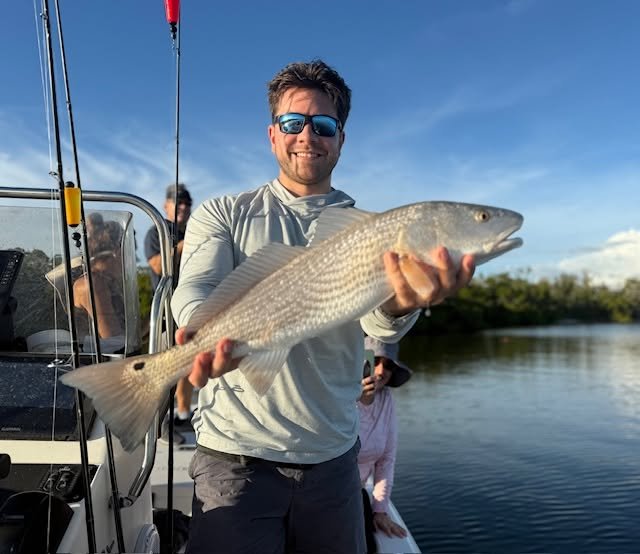
Estero Bay is a designated state aquatic preserve, which has helped maintain the water quality and habitat integrity that supports the bay’s diverse inshore fishery. The bay’s grass flats hold redfish and spotted sea trout throughout most of the year, with the patterns and techniques mirroring those found throughout the broader Southwest Florida inshore fishery — sight-fishing for tailing reds on falling tides, working popping corks over productive grass edges for trout, targeting the mangrove shorelines with live or artificial presentations for snook.
The dock structure throughout the bay’s numerous residential and marina areas provides sheepshead and mangrove snapper opportunities that many visiting anglers overlook entirely in favor of the more obvious Gulf-facing fishing opportunities. These bay-side structures tend to receive considerably less fishing pressure than the corresponding structures on the Gulf side, which sometimes translates into less-educated, more catchable fish.
Nearshore Fishing: The Zone Just Beyond the Beach
The nearshore Gulf bottom off Fort Myers Beach supports its own distinct fishing community in the zone from roughly two miles to fifteen miles offshore, where the flat, featureless sandy bottom gives way to scattered limestone outcroppings, artificial reef material, and the occasional wreck that provides the hard structure necessary to support grouper, snapper, and other bottom-oriented species.
Lee County has an active artificial reef program that has deployed material ranging from concrete rubble to purpose-built reef structures throughout the nearshore Gulf zone, and these artificial reefs are among the most consistently productive nearshore bottom fishing spots in the region. Gag grouper, red grouper, red snapper, lane snapper, and vermilion snapper all use these structures, along with the full suite of species that follow reef systems throughout the Gulf.
For visitors interested in the full range of what Fort Myers Beach’s fishing landscape has to offer — from the public pier to the surf to the bay flats to the nearshore reefs — the dedicated resource on Fort Myers Beach fishing charters covers the specific options for accessing each of these environments, including the charter and guide services that specialize in the different water types and target species available from this particular base of operations.
Seasonal Calendar for Fort Myers Beach Fishing
Winter (December–February): Surf pompano runs late in the period. Sheepshead dominate the pier pilings and bridge structure. Spanish mackerel present in the nearshore zone on calm days. Bay side offers trout and redfish on milder weather windows.
Spring (March–May): Cobia appear along the beach and near the passes, often visible from the pier and accessible from boats nearby. Spanish mackerel runs peak. Snook begin their migration toward the beach and passes for spawning. Tarpon arrive in the passes in building numbers through May.
Summer (June–August): Tarpon are accessible from the pier and nearshore on the beach corridor. Beach snook season peaks (catch-and-release during the June-July Gulf coast closure). Spanish mackerel remain strong. Afternoon thunderstorms are daily considerations.
Fall (September–November): One of the most productive seasons for the full range of species. Pompano runs return. Spanish mackerel are strong. Redfish and trout are active on the bay flats. The summer heat has broken and conditions become progressively more comfortable.
Why Fort Myers Beach Fishing Rewards Creative Anglers
What ultimately distinguishes Fort Myers Beach as a fishing destination is the diversity of its accessible environments. Few beach communities anywhere on the Gulf Coast offer the combination of a productive public pier, accessible passes with strong tidal structure, a designated aquatic preserve bay system, nearshore artificial reefs, and the seasonal migration corridors of major game species all within the same compact geographic area. Anglers who approach this destination with genuine curiosity about the full range of what’s available — rather than simply defaulting to the nearest pier or the most obvious beach access point — consistently discover a depth and variety of fishing opportunity that exceeds what the resort-focused surface impression of Fort Myers Beach might suggest.
The Bridge Structures: Underutilized Fishing Platforms
Among the often-overlooked fishing locations around Fort Myers Beach, the bridge structures deserve specific attention. The Matanzas Pass Bridge and the associated bridge approaches create substantial hard structure in the tidal current flowing between the Gulf and Estero Bay — structure that holds sheepshead, mangrove snapper, and snook in numbers that the relatively light fishing pressure these bridges receive doesn’t fully reflect. Fishing the bridge shadow lines during a strong outgoing tide, with fresh shrimp or fiddler crabs presented tight against the concrete, consistently produces fish that most beach visitors drive over without ever considering as a fishing opportunity. The timing matters enormously here — the maximum current through the bridge, occurring roughly two hours into each tidal phase, concentrates both bait and predators most effectively and produces the best results for anglers willing to experiment with different positions along the bridge approach.
Integrating Fort Myers Beach Fishing With the Broader Regional Experience
Fort Myers Beach works best as a fishing destination when it’s understood not as an isolated fishing location but as a gateway into the broader Southwest Florida fishing environment that surrounds it. The passes at either end of Estero Island connect directly to both the open Gulf and the protected back-bay systems, giving boat-based anglers access to a remarkably diverse range of fishing environments within a short run of any Fort Myers Beach departure point. A morning that begins with snook and redfish in the Estero Bay grass flats can transition to nearshore reef fishing for grouper and snapper, finishing with a run through San Carlos Pass to check for tarpon rolling in the river mouth — all from the same base of operations, all within a reasonable half-day timeframe. This geographic efficiency is part of what makes Fort Myers Beach, for all its resort-destination reputation, a genuinely well-positioned base for serious fishing exploration.
