

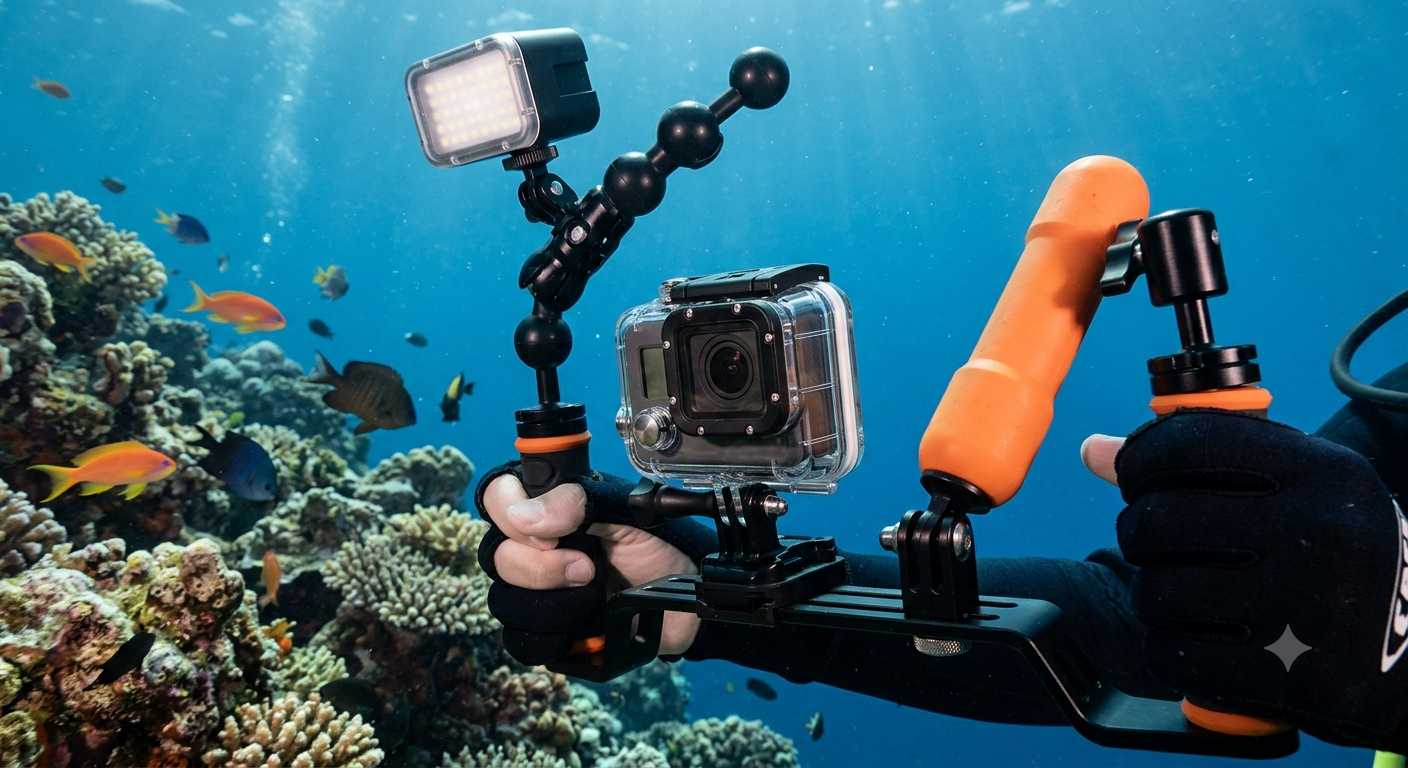
Plunging into the ocean at midnight to capture the magical glow of marine bioluminescence sounds like a dream, but this dream can quickly be thrown into disarray and turn into disappointment if your camera setup isn’t up to the mark for handling the unique physics of the deep-sea light.
Standard camera flashes simply throw too much raw white light into the water, which instantly washes out the delicate neon greens and electric reds radiating from the coral reef. Trying to shoot these faint, glowing organisms without specialized gear leaves one with nothing but blurry, dark, and utterly disappointing images.
That’s why to turn a frustrating midnight swim into a gallery of stunning, high-contrast shots, one must understand how to select and assemble the perfect underwater photography equipment.
In A Nutshell
- Wavelength Customization: Learning how blue excitation lights and barrier filters work together to capture the reef’s hidden fluorescence.
- Strobe and Beam Management: Choosing high-powered external flashes that can support specialized filtration without draining your battery.
- Optical Precision and Housing: Figuring out how to maintain a perfectly sealed, easily adjustable camera system in total pitch-black conditions.
How To Choose Underwater Photography Equipment For Fluo-Dives?
● Mastering Light Filtration to Capture Faint Coral Glows
Taking the camera down into the ocean for a dive means completely overhauling how you handle the lighting. Because the natural neon glow of sea creatures is incredibly soft, the camera sensor will easily get overwhelmed by the harsh bouncing glare of your torches.
To fix this, you must attach a specialized blue excitation filter over your strobes and a matching yellow barrier filter right in front of the camera lens. The yellow glass blocks out the distracting blue background light, allowing only the brilliant green and orange fluorescent wavelengths to hit the camera sensor.
Getting this specific filter combination dialed in perfectly is the foundation of configuring functional underwater photography equipment for any night shoot.
● Selecting High-Powered Strobes with Smooth Attachment Systems
Since filters naturally absorb a massive percentage of your light’s raw power, relying on a basic built-in camera flash simply will not cut it. Look for external strobes or high-lumen video lights that offer exceptionally high output to compensate for that heavy filter loss.
When browsing through different gear setups, pay close attention to how the filter covers snap onto the light heads. Fumbling with loose, poorly designed plastic plates in the pitch black is a recipe for dropped gear and missed shots.
A safe and rugged mounting system secures the light modifiers into a locked position so that the underwater photography equipment will provide a reliable, unwavering beam across the reef.
● Prioritizing Tactile Ergonomics and Heavy-Duty Housing Latches
Working in complete darkness means muscle memory has to take over when adjusting camera settings on the fly. A high-quality underwater housing unit should feature oversized, raised buttons and smooth dials that can be easily operated even while wearing thick neoprene diving gloves.
If the controls are too small or clustered too tightly together, you will constantly change the wrong settings and miss the brief window when a glowing creature appears. In addition, strong mechanical latches will keep the expensive camera body safe from saltwater leaks under high pressure.
Spending on a highly ergonomic and durable shell will ensure your underwater photography equipment operates as a seamless extension of your hands while completely protecting the delicate electronics.
Conclusion
Fighting with underpowered flashes or cheap, ill-fitting filters will only lead to grainy images and a lot of frustration on the dive boat.
Furthermore, if you want to drop the frustrating guesswork and start bringing home pristine, professional-grade shots of the sea’s nocturnal colors, upgrading to high-performance UV light photography equipment is the way to go for ensuring that the night diving adventures are recorded with total clarity.
