

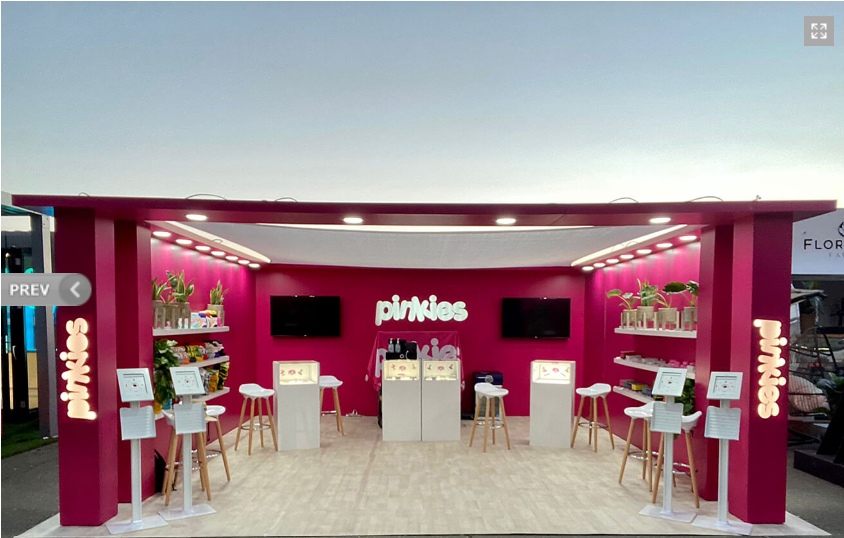
A trade show floor is a battlefield for attention. Hundreds of brands compete for a few seconds of visibility, while attendees move from one display to the next, deciding almost instantly where to stop. The problem is that a booth designed to do everything in one undifferentiated space often ends up accomplishing very little.
A product demonstration needs energy and visibility. A sales meeting requires privacy and focus. Lead capture depends on convenience and a clear next step. When all three activities happen in the same area, conversations overlap, traffic becomes difficult to manage, and valuable prospects can leave without taking action.
The solution is strategic zoning.
By dividing a booth into purpose-driven areas, exhibitors can guide visitors through a more organized experience, from initial attraction to product engagement, meaningful conversation, and lead conversion. This approach requires more than placing furniture in different corners. It involves understanding visitor behavior, traffic flow, spatial psychology, and the objectives of the exhibit.
Why Zoning Matters in a Trade Show Booth?
Trade show attendees do not all enter a booth with the same intention. Some are casually browsing. Others are actively researching products. Decision-makers may want a private conversation, while technical buyers may need an in-depth demonstration before considering a purchase.
A single open space cannot effectively serve all these needs at the same time.
Strategic zoning creates a visual and functional hierarchy within the booth. Each area has a specific purpose, allowing visitors to move naturally through the experience. A well-planned layout can:
- Attract attention from the aisle.
- Encourage visitors to interact with products.
- Prevent sales conversations from being interrupted.
- Make lead capture more efficient.
- Improve staff coordination.
- Create a more professional brand experience.
This is one reason experienced trade show booth design companies focus heavily on visitor flow during the planning stage. The objective is not simply to make a booth look attractive. The space must also support the entire marketing and sales process.
Start With the Visitor Journey
Before deciding where to place a product display or meeting table, map the visitor journey.
A typical trade show interaction may follow this sequence:
Attraction → Exploration → Demonstration → Conversation → Lead Capture → Follow-Up
The booth should support this progression without making visitors feel forced through a rigid path.
The front section should generally remain open and inviting. This is where attendees first encounter the brand. Strong visual messaging, prominent product features, digital displays, or interactive elements can create an initial reason to stop.
Once a visitor enters, the layout should provide intuitive access to the next stage of engagement. Product demos can be positioned where they are visible but do not obstruct the main walkway. Sales conversations should be moved into a quieter area. Lead capture should be placed at a convenient transition point rather than hidden behind a counter.
The best layouts feel natural because visitors understand where to go without needing constant direction from staff.
Zone 1: The Product Demonstration Area
Product demonstrations are often the most dynamic part of a booth. They need to attract attention, communicate value quickly, and provide enough space for visitors to understand how a product works.
The demonstration area should be visible from the aisle, but visibility should not come at the expense of functionality.
Design for Visibility
If attendees cannot see the demonstration taking place, they may never realize there is a reason to enter the booth. Positioning the demo area near the front or along a high-traffic edge can help create curiosity.
However, the display should not create a bottleneck. If people gather around the demonstration, there should be enough room for others to enter or move through the booth.
Create a Clear Viewing Experience
The demonstration area should accommodate different levels of engagement. Some attendees may only watch for 30 seconds, while others may stay for 10 or 15 minutes.
Consider:
- Standing viewing space for casual visitors.
- Seating for longer demonstrations.
- Screens positioned at comfortable viewing angles.
- Adequate lighting for physical products.
- Storage for demo materials and equipment.
A successful product demo should also communicate a clear message. Rather than showing every feature, focus on the problems the product solves and the outcomes it creates.
Zone 2: The Sales Meeting Area
Once a visitor has demonstrated serious interest, the conversation often needs to move beyond the open demonstration area. Discussing pricing, contracts, implementation timelines, or business challenges in a noisy public space can reduce the quality of the interaction.
This is where a dedicated sales meeting zone becomes valuable.
Choose the Right Level of Privacy
The sales meeting area does not necessarily need to be completely enclosed. In fact, a fully enclosed room may make the booth feel inaccessible.
Depending on the objectives of the exhibit, the zone may include:
- Semi-private meeting tables.
- High-top tables for short conversations.
- Enclosed conference rooms for confidential discussions.
- Acoustic partitions.
- Architectural screens.
- Integrated seating areas.
The right choice depends on the expected length and nature of the conversation.
A high-top table may be suitable for a 10-minute qualification discussion. A fully enclosed meeting room may be more appropriate for an existing client, investor, or enterprise buyer discussing sensitive business information.
Separate Conversation from Distraction
The meeting area should be positioned away from the loudest elements of the booth. Large video walls, live product demonstrations, and high-energy presentations can create visual and acoustic distractions.
A thoughtful layout can use architectural elements to create separation without making the space feel closed off. Slatted walls, overhead structures, branded partitions, and changes in flooring can visually define the area while preserving the booth’s openness.
The goal is to create a setting where the sales team can listen carefully and the prospect can ask detailed questions without competing with the surrounding activity.
Zone 3: The Lead Capture Area
Lead capture is often treated as an afterthought. A staff member stands behind a counter with a tablet, asks for contact information, and hopes the visitor is willing to complete the process.
This approach creates unnecessary friction.
The lead capture zone should be intentionally designed as the next step in the visitor journey.
Make the Process Fast
Trade show visitors are busy. A lead form that takes several minutes to complete can cause prospects to abandon the process.
The lead capture system should collect only the information necessary for meaningful follow-up. Depending on the business, this might include:
- Name
- Company
- Job title
- Email address
- Area of interest
- Follow-up preference
Digital forms, badge scanning, QR codes, and integrated CRM systems can make the process faster and more accurate.
Position Lead Capture Strategically
The lead capture area can be located near the exit path, close to the sales meeting zone, or integrated into the final stage of a product experience.
For example, a visitor might:
- Stop after seeing a product demonstration.
- Speak with a representative.
- Receive a personalized recommendation.
- Scan a QR code or complete a short form.
- Receive relevant information after the event.
This sequence creates a natural transition rather than making lead capture feel like a separate administrative task.
How to Connect the Three Zones?
Creating three separate areas is not enough. They must work together as one experience.
The most effective booth layouts use visual and operational cues to connect the zones.
Use a Consistent Visual Language
Different zones can have different functions while still feeling like part of the same brand environment. Consistent materials, typography, lighting, signage, and color application can create cohesion.
At the same time, subtle differences can help visitors understand the purpose of each area. For example, brighter lighting and digital content may define the demo zone, while softer lighting and more refined furniture may distinguish the meeting area.
Use Signage to Guide Movement
Visitors should not have to guess what happens next. Simple, strategically placed messaging can help guide them:
- “See It in Action”
- “Explore the Solution”
- “Talk With an Expert”
- “Get Your Personalized Recommendation”
These messages can create a logical progression without overwhelming the visitor with information.
Plan for Staff Movement
The booth must work for the team as well as the visitor.
Staff should be able to move between the demo area, meeting zone, and lead capture station without crossing through active conversations or blocking visitor traffic. Storage should be positioned where team members can access materials without leaving the booth.
This operational planning is one of the less visible but most important aspects of an effective custom trade show booth. A beautiful design that creates staff bottlenecks can quickly become inefficient during a busy event.
Adapt the Layout to Booth Size
Zoning does not require a massive exhibit footprint.
A smaller booth can still create distinct functional areas through smart design decisions. A compact space might use:
- A front-facing product display
- A small consultation table
- A digital lead capture station
A larger booth can incorporate multiple demo stations, enclosed meeting rooms, hospitality areas, and dedicated lead qualification spaces.
The key is to prioritize function over unnecessary features. Every element should support the visitor experience or the exhibitor’s objectives.
Design for Different Visitor Intentions
Not every attendee should be forced into the same experience.
Some visitors want to browse independently. Others want immediate assistance. Some are ready for a sales discussion, while others are still gathering information.
A strong zoning strategy accommodates these different behaviors.
Self-guided digital displays can serve independent researchers. Demonstration areas can engage curious visitors. Sales zones can support high-value prospects. Lead capture points can convert interest into measurable business opportunities.
This flexibility is especially important for exhibitors with complex products or multiple audience segments.
Measure Whether the Zoning Strategy Works
A trade show booth should be evaluated based on more than appearance.
After the event, examine:
- Number of visitors entering the booth.
- Time spent in the demonstration area.
- Number of qualified conversations.
- Meetings scheduled.
- Leads captured.
- Conversion rates by lead source.
- Visitor and staff feedback.
If the demonstration zone attracts attention but few visitors move into sales conversations, the transition may need improvement. If the sales area is constantly occupied while lead capture remains low, the process may be creating friction.
Data can help transform booth design from a subjective creative exercise into a measurable marketing asset.
The Best Booths Are Designed Around Movement
A successful exhibit is not simply a collection of displays, furniture, and branding elements. It is a carefully choreographed environment.
The visitor sees something interesting. The layout makes entering easy. The demonstration creates understanding. The sales zone supports deeper conversation. The lead capture process provides a clear next step.
Each zone has a different job, but the overall experience must feel connected.
When product demos, sales meetings, and lead capture are planned as separate yet integrated functions, a booth becomes far more effective at converting attention into meaningful business opportunities. Working with experienced trade show booth design companies can help exhibitors translate these objectives into a layout that balances branding, traffic flow, engagement, and conversion.
A well-planned custom trade show booth does more than stand out on a crowded floor. It gives every interaction a purpose, and creates a structured path from first glance to qualified lead.
