

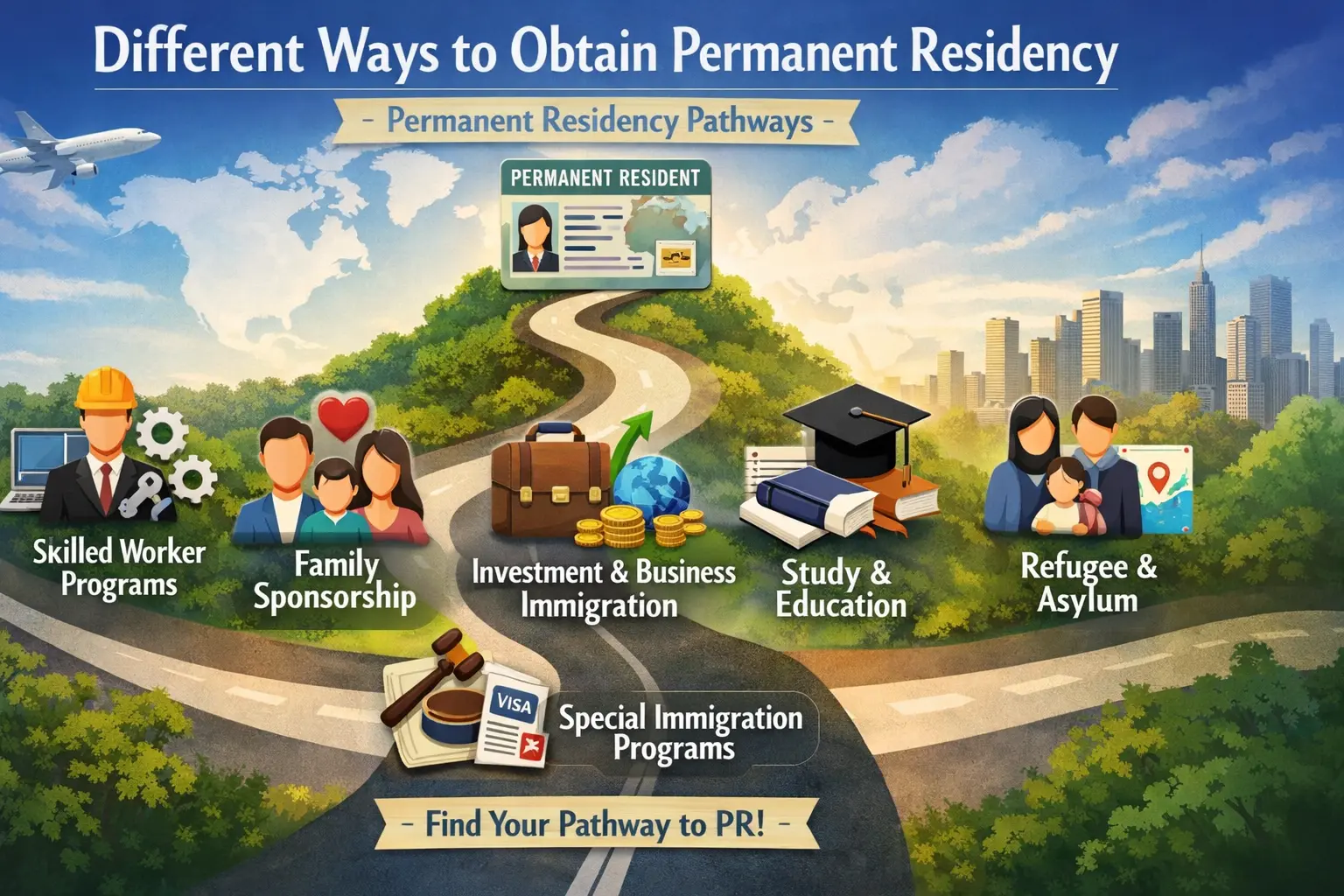
Permanent residency (PR) is a significant immigration status that allows foreign nationals to live and work indefinitely in a country without obtaining citizenship. It often serves as a pathway to citizenship and provides numerous benefits, including employment flexibility, access to public services, and long-term stability. While the specific requirements vary by country, there are several common pathways through which individuals can obtain permanent residency.
Ways to obtain Permanent Residency
1. Family Sponsorship
One of the most common routes to permanent residency is through family sponsorship. Many countries allow citizens and permanent residents to sponsor certain family members, including spouses, children, parents, and, in some cases, siblings.
Family-based immigration programs are designed to reunite families and provide a streamlined process for eligible applicants. Applicants must typically demonstrate a genuine family relationship and meet various documentation and financial support requirements. Processing times can vary depending on the relationship category and country-specific immigration policies.
2. Employment-Based Immigration
Employment-based permanent residency is another widely used pathway. Individuals with specialized skills, professional qualifications, or employment offers from eligible employers may qualify for permanent residency through work-related immigration programs.
In many cases, employers sponsor foreign workers by demonstrating that the position cannot be readily filled by local workers. Certain countries also offer fast-track options for highly skilled professionals, executives, investors, researchers, and individuals with exceptional abilities in fields such as science, technology, arts, or business.
This pathway is particularly beneficial for individuals seeking long-term career opportunities and stability in their chosen destination country.
3. Investment and Entrepreneur Programs
Several countries offer permanent residency options to investors and entrepreneurs who contribute to the local economy. These programs typically require applicants to make a qualifying investment, establish a business, create jobs, or support economic development initiatives.
Investment thresholds and eligibility requirements vary significantly. Some programs focus on direct business investment, while others may involve government-approved investment funds or real estate investments. Applicants are often required to demonstrate the lawful source of their funds and maintain the investment for a specified period.
This route can be an attractive option for business owners and high-net-worth individuals seeking international mobility and long-term residency rights.
4. Refugee and Humanitarian Programs
Individuals fleeing persecution, conflict, or serious human rights violations may qualify for permanent residency through refugee or humanitarian protection programs. Governments and international organizations provide protection to eligible individuals who cannot safely return to their home countries.
After meeting specific residency requirements and maintaining protected status for a designated period, refugees and asylum recipients may become eligible to apply for permanent residency. These programs are subject to strict legal standards and often require substantial evidence supporting the applicant’s claim.
5. Marriage to a Citizen or Permanent Resident
Marriage-based immigration remains one of the most recognized paths to permanent residency. Individuals who marry citizens or lawful permanent residents may qualify for residency benefits, provided the marriage is genuine and not entered into solely for immigration purposes.
Immigration authorities typically conduct thorough reviews, including interviews and documentation requests, to verify the authenticity of the relationship. Conditional residency may initially be granted in some jurisdictions before full permanent residency is approved.
6. Long-Term Residence Programs
Some countries allow individuals who have legally resided within their borders for an extended period to apply for permanent residency. Applicants must generally demonstrate continuous lawful residence, financial self-sufficiency, compliance with immigration laws, and, in certain cases, language proficiency or integration into society.
Long-term residence pathways are particularly relevant for temporary workers, students, and other visa holders who have established strong ties to the country over several years.
Conclusion
Obtaining permanent residency can open the door to greater security, expanded opportunities, and a clear path toward long-term settlement. Whether through family sponsorship, employment, investment, humanitarian protection, marriage, or long-term residence, each pathway involves distinct eligibility requirements and legal procedures.
Given the complexity of immigration laws and the importance of submitting a well-prepared application, seeking experienced legal guidance from Immigration Lawyers in Perth WA can significantly improve the chances of a successful outcome. Consulting with a qualified immigration attorney can help applicants understand their options, navigate procedural requirements, and pursue the most appropriate pathway to permanent residency.
