

Manufacturers ship millions of containers worldwide every day. The majority are already ready to build, costing a fortune in shipping and taking up a lot of warehouse space.
This is a systematic waste of money that goes around to traditional approaches. The pre-assembled containers take up 5-6 times more space for shipping. They weigh much more. They use up costly warehouse space. They add to inefficiencies across the supply chain.
This is completely changed when it comes to shipping flat-pack products. Flat packing in shipping containers reduces manufacturing costs by 40% or more while maintaining the same level of product protection and brand presentation.
Knowing this cost reduction brings opportunities to make significant profit improvements.
Flat-pack shipping economics is a must-know.
Flat-pack shipping involves packing units into flat packs for assembly at a destination facility.
This simple idea leads to compounding cost savings across different areas. Shipping costs decrease. Warehouse fees plummet. The efficiency of labor in assembling improves. Inventory management improves. The cumulative effect provides 40% cost saving with a direct impact on profitability.
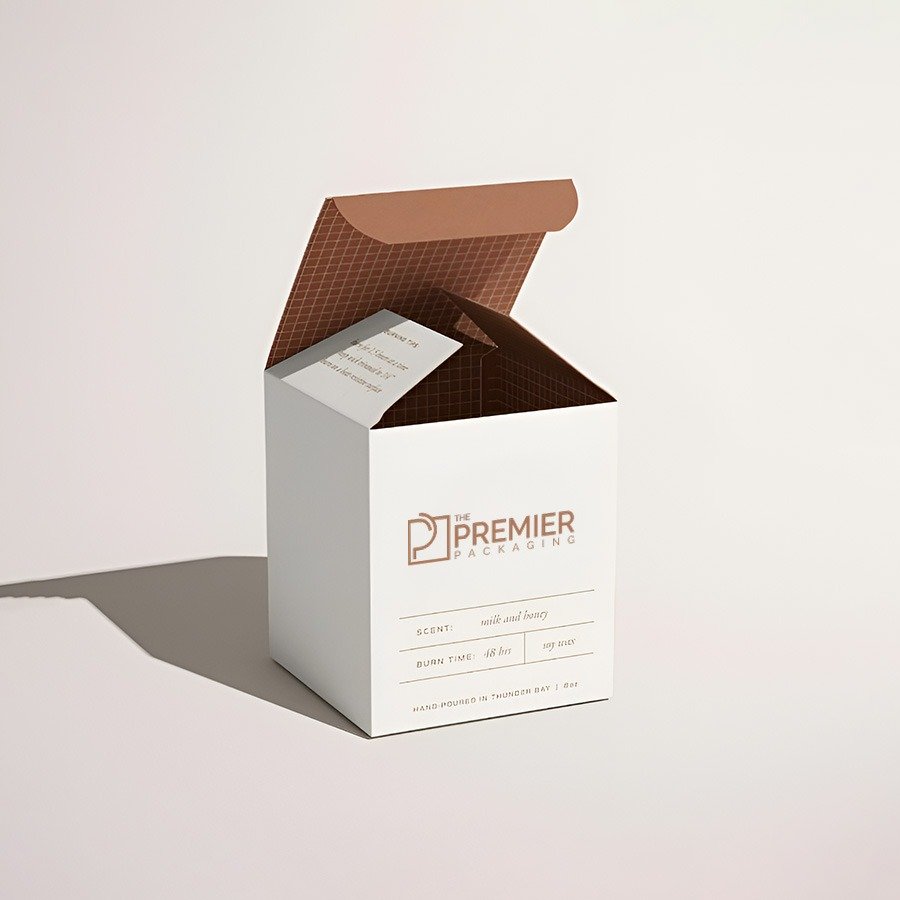
A good example of the benefits of flat-pack shipping is the Custom Tuck boxes. The boxes are shipped completely flat and will save a lot of space, but offer a superior level of protection and premium look when they are assembled.
The Volume Mathematics
Pre-assembled containers take up a lot of space. Each pre-assembled rigid box is about 0.15 cubic feet.
Determine the effect on major deliveries. The warehouse and shipping space needed for 1000 boxes is 150 cubic feet. This volume utilizes truck capacity, as do several other shipments.
A flat-pack container takes up only 85-90% of the space of a pre-assembled container. The flat containers are only 15-20 cubic feet for the same thousand containers. This remarkable drop changes the economics of shipping.
This is between 15,000 cubic feet and 2,000 cubic feet, which is the difference for manufacturers shipping 100,000 units per month. This amounts to 13,000 cubic feet of waste per month. This amounts to huge expenditure over the course of a year.
Shipping Cost Reduction Mechanisms are methods for reducing shipping costs.
There are several ways flat-pack shipping saves money, and they all work together.
Weight Reduction
There is a considerable amount of air space in pre-assembled containers. Empty cavities are weight for weight unprofitable. This wasted weight can be avoided by using flat containers. The average weight loss is 30-40%.
If the brand is shipping 50,000 units per month, a 40% weight reduction equates to 2-3 tons of shipping weight reduction per month. Depending on the freight’s $2-3 per pound rate, this saves $ 4,000-$ 9,000 per month.
Shipping Container Efficiency
Standard shipping containers are able to fit an infinite amount of flat containers! Pre-assembled boxes would fit 200 units/pallet while flat containers fit 2,000+ units/pallet all on the same pallet.
This efficiency extends to entire shipments. For example, 10 full truckloads for monthly deliveries may now be just 2 flat truckloads. It’s a significant price difference.
Warehouse Space Optimization
Holding inventory requires large storage facilities, which can set up to be very costly. The average price is $12-20 per square foot monthly for most facilities. The 5-10 times more space needed for pre-assembled inventory compared to flat-packed inventory.
A brand with 200,000 units of pre-assembled containers may take up 400 sq. ft. of space. The same inventory in flat pack format will fill 40-80 square feet. This translates to a monthly savings of $5,400 – $5,700 at $15.00 per square foot.
Real-World Cost Breakdown
Imagine a cosmetics company that sells 100,000 products each month.
Pre-Assembled Model
Shipping cost: 100,000 units at 0.5 lbs each = 50,000 lbs
Freight cost at $2.50/lb = $125,000 monthly
The monthly price hit $6,000 for 400 sq ft of warehouse space at $15 per sq ft.The monthly price reached $6,000 for 400 sq ft of warehouse space, at $15 per sq ft.
Total monthly cost: $131,000
Flat-Pack Model
Shipping cost: 100,000 units at 0.3 lbs each = 30,000 lbs
Freight cost at $2.50/lb = $75,000 monthly
The monthly cost of warehouse storage is $750.The cost to store items in a warehouse is $15 per square foot, or $750 per month for 50 square feet.
Assembly labor: $2,000 monthly
Total monthly cost: $77,750
Monthly savings: $53,250 (40.6% reduction)
Annual savings: $639,000
These numbers reflect real savings, without compromising on quality, protection or brand presentation. These savings come from Custom Tuck boxes without compromising their premium appearance.
Assembly Efficiency Benefits
These are flat-pack containers that can be easily assembled in a short time with little effort. Modern Tuck boxes feature an intuitive folding mechanism that requires no training.
The average assembly time per container is 5-10 seconds. One worker can build 300-400 containers an hour. Such an efficiency translates into minimal assembly costs even on large scales.
It would be very costly to have to hire labor for pre-assembly at manufacturing facilities. Low labor costs are achieved through on-demand assembly at fulfillment centers. Distributed assembly is very economically advantageous.
Consistently high quality and protection.
Cost reduction doesn’t compromise product protection. When well-designed, flat-pack containers offer the same protection as pre-assembled containers.
The strength of the corrugated material remains unchanged. Folding design doesn’t compromise structural integrity. There is no difference in protection for the contents between pre-assembled and flat containers.
This concept is executed perfectly in the Custom Tuck boxes. These, when assembled, are equivalent in strength and protection to pre-assembled options but cost 40% less.
Implementation Strategy
When converting to flat-pack shipping, it takes strategy.
Supplier Coordination
Choose manufacturing partners who have a proven track record in flat-pack design. Ensure designs allow for rapid assembly. Ensure quality control meets high quality expectations.
Facility Preparation
Set up assembly locations at distribution centers. Ensure staff are trained in assembly procedures. Implement quality control verifying proper assembly.
Inventory Management
Product line changes phase transition. Do not interfere with the existing operations. Ensure that performance is carefully monitored during transition.
Measuring Implementation Success
Identify key metrics for realizing cost reductions.
Shipping Cost Metrics
Track pounds shipped, freight cost per unit and shipping expense trending. Determine actual weight loss achieved.
Warehouse Metrics
Track square footage used, rent costs and inventory turn. Record space saving enhancements.
Assembly Metrics
Monitor and record the quantity of labor hours needed per unit assembled, labor cost per unit assembled and quality concerns. Check the targets for the assembly’s efficiency.
Scaling Advantages
The larger the quantity, the greater the savings. Brands shipping larger quantities realize higher unit savings due to manufacturing efficiencies and freight consolidation.
The savings for small brands that ship 10,000 units per month are 30-35%. For mid-size brands shipping 100K units 40-45% is saved. The 45-50% savings are realized by enterprise brands shipping millions.
Future Trend Considerations
More brands are catching on to the “flat-pack economics” and industry adoption grows. Three-quarters of ecommerce brands have already made the switch. This is the trend going forward as manufacturing efficiency improves.
Further advances in automation will be made for handling flat-packs. Automated assembly systems will enable even greater savings, and labor savings are important as well.
Final Thoughts
Flat-pack shipping is essentially an essential cost-saving which can be done without sacrificing quality. This 40% cost cut changes the economics of manufacturing and shipping.
The maths make for a compelling case. The implementation is simple. The results are impactful.
Efficient brands acknowledge flat-pack shipping as a must. The cost advantage compounds year after year, and builds up significant competitive positioning.
