

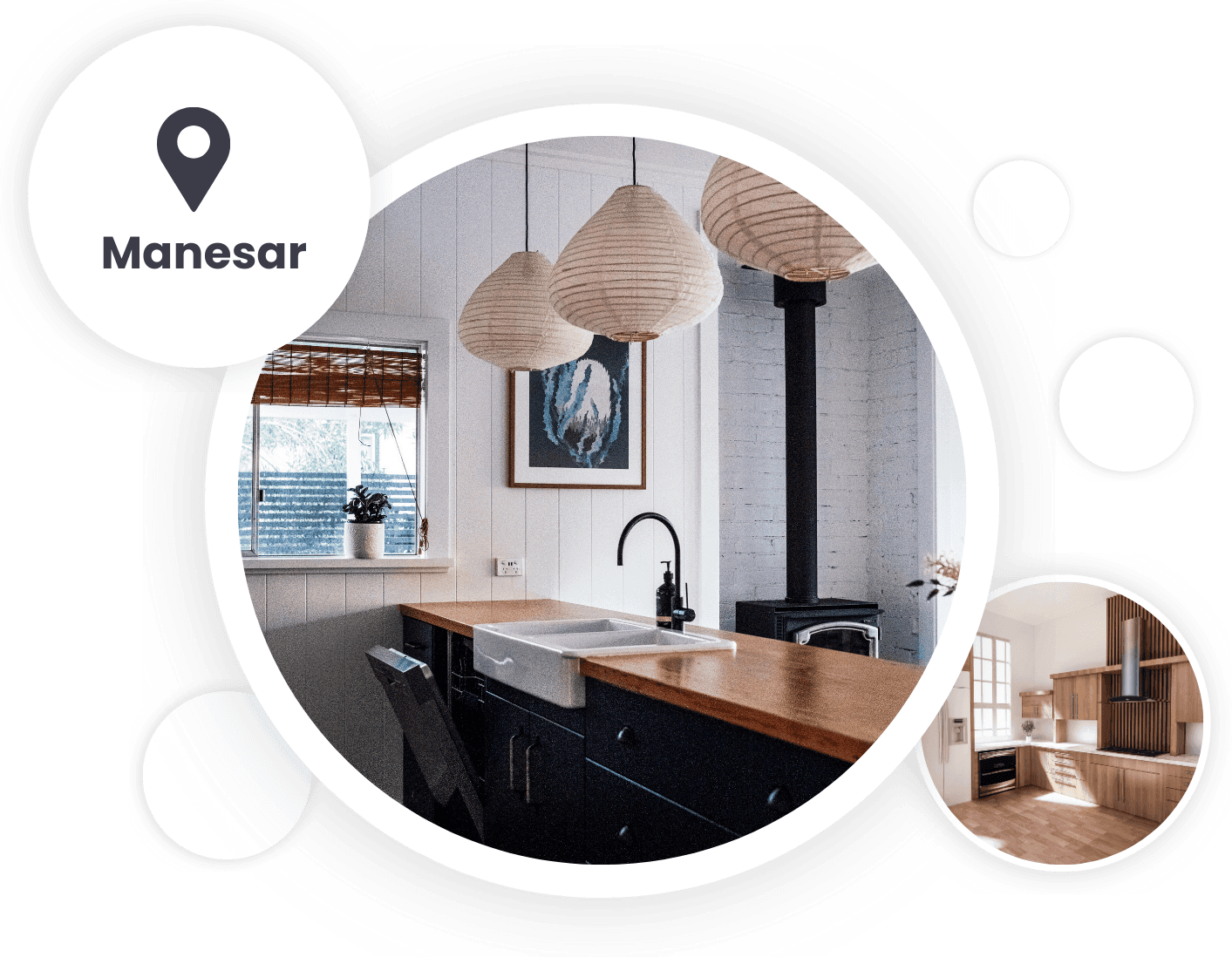
Manesar has undergone a transformation over the past decade that is visible in its skyline. The construction cranes that once marked only the industrial zones of IMT Manesar are now a feature of the residential corridors along NH-48, where high-rise group housing projects have been delivered, occupied, and are now entering a phase of active interior customization by homeowners who acquired units off-plan and are now designing their homes from scratch.
This transition, from construction to occupation to interior fit-out, has created a distinct demand cycle for interior designers in Manesar that differs meaningfully from the more mature residential design markets in central Gurgaon or Delhi. Understanding how this demand is evolving matters for anyone planning to engage an interior designer in this geography.
What Has Changed in Manesar’s Interior Design Demand
Five years ago, the residential design market in Manesar was largely served by contractors who offered design as a component of construction work. The demand was primarily functional: fit out the apartment, install the kitchen, add storage, finish the walls. The aspirational interior design that characterized central Gurgaon’s design market, with separate design professionals, 3D rendering, and material selection consultations, was not consistently available or in demand in Manesar.
That has shifted. The demographic profile of buyers in Manesar’s newer residential projects includes a significant proportion of professionals who work in the Gurgaon-Manesar industrial and technology corridor and who have the income and design awareness to make considered interior design decisions. These buyers are approaching their homes the way Gurgaon buyers began approaching theirs a decade ago: with specific reference imagery, material preferences, and willingness to invest in professional design services rather than defaulting to contractor-driven execution.
Who Is Driving This Trend
According to ANAROCK Property Consultants’ NCR market data, the Sohna Road and Dwarka Expressway corridors, which include the Manesar area, have seen consistent absorption of mid to upper-mid residential inventory over the past three years, with buyer profiles skewing toward working professionals in the 30 to 45 age bracket. This demographic has higher design expectations and more reference points from international and premium domestic interior design content than earlier generations of first-time homebuyers. Their brief to interior designers reflects this: they want designed homes, not just fitted-out homes.
The secondary driver is the delivery of larger unit types. Projects in Manesar have included a meaningful proportion of 3 BHK and 4 BHK configurations alongside the 2 BHK units that dominated earlier waves of NCR residential development. Larger units support higher interior design investment in absolute terms, and they also create more complex design briefs that contractors without design capability are less equipped to handle.
What to Do and What to Avoid
For homeowners in Manesar engaging interior designers for the first time, the trend context matters for one specific reason: the supply of interior design services in the area is expanding rapidly to meet the demand growth, and as in any rapidly expanding supply market, the quality range is wide. The designers who have built their practice steadily in the Gurgaon-Manesar corridor over the past five or more years have developed the local contractor relationships and practical knowledge of the area’s building stock that newer entrants are still developing.
What to avoid is selecting an interior designer in Manesar based primarily on social media portfolio quality. Portfolio curation on Instagram and YouTube has become a marketing skill that is not directly correlated with execution quality. Designers who can present a visually compelling portfolio online may or may not have the contractor management capability that determines whether the project is delivered at the quality shown in the images.
What to do is ask specifically about recent completed projects in the Manesar area, request references from clients in the same project or locality type, and ask about the designer’s contractor network in Manesar specifically. A designer whose contractor relationships are primarily in central Gurgaon will face supply chain and supervision logistics in Manesar that a designer with established local relationships will not.
Practical Steps for Engaging Interior Designers in Manesar
1. Define your project scope in detail before approaching designers: which rooms, what functional requirements, approximate budget range. A specific brief produces more accurate proposals and saves comparison time.
2. Shortlist two to three designers with demonstrated Manesar or Sohna Road area experience. Local knowledge of building typologies and contractor quality is a practical advantage.
3. Request a detailed proposal that includes a scope of work breakdown, design process description, supervision commitment, and payment schedule linked to completion milestones.
4. Visit at least one completed project in person before signing. Photographs do not convey construction quality, storage functionality, or the feel of a finished space accurately.
The Direction of Interior Design in Manesar
The interior design market in Manesar is in a growth phase that will look, in five years, like what central Gurgaon’s design market looks like today: a range of established practices with local reputations, clear specializations, and demonstrated track records. The homeowners who engage professional designers during this phase benefit from a market where the best practitioners are building their local reputations actively and have strong personal incentive to deliver well. The growth dynamic is working in the informed client’s favor.