

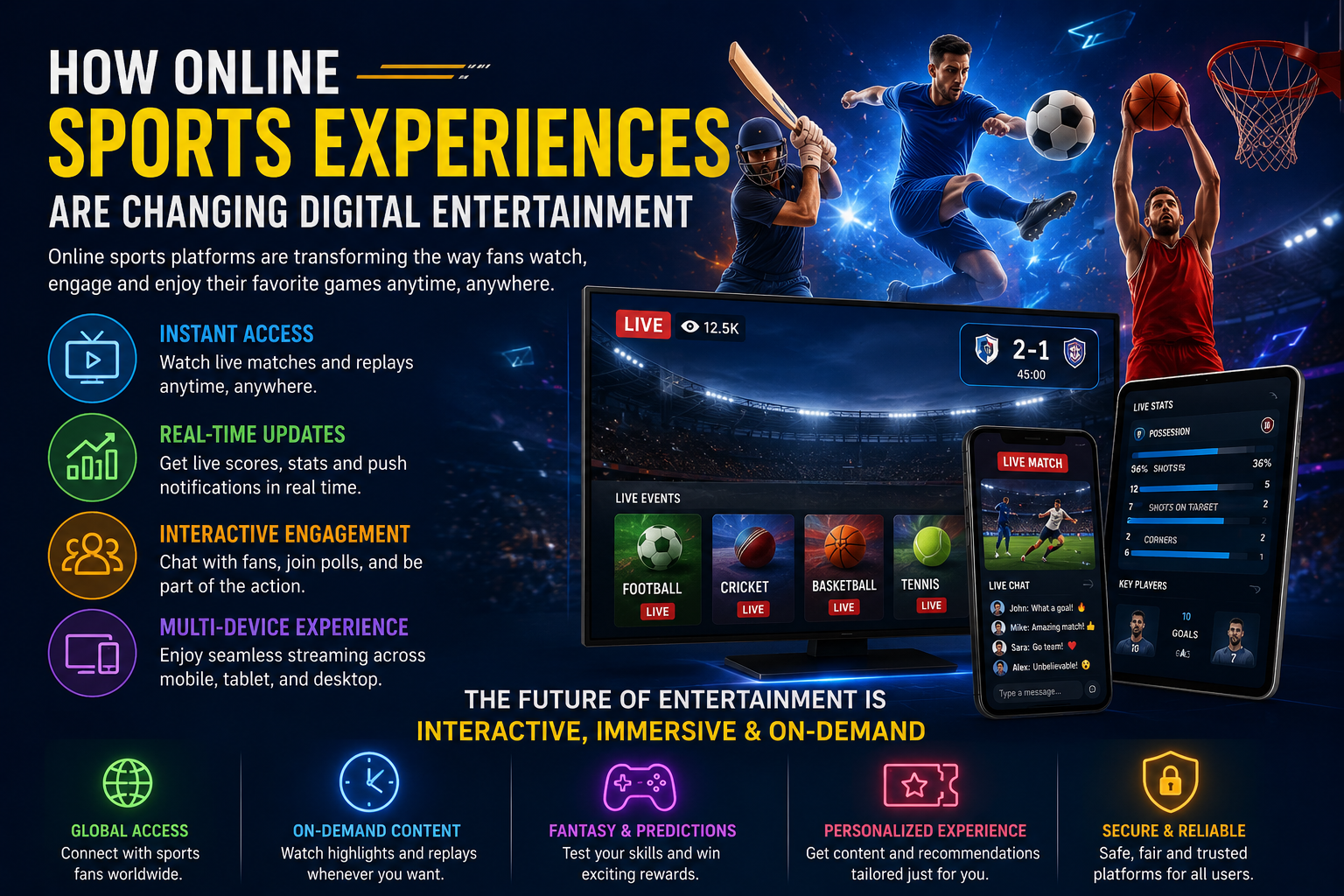
The digital entertainment industry has experienced a major transformation over the last decade, and online sports experiences are now playing a significant role in that evolution. What was once limited to watching matches on television has expanded into a fully interactive digital ecosystem that connects fans, technology, gaming, streaming, and online communities in entirely new ways.
Today’s sports fans are no longer passive viewers. They want real-time interaction, personalized content, instant updates, and immersive entertainment experiences that go beyond the traditional broadcast. Online sports platforms have successfully adapted to these changing expectations, creating a new era of digital entertainment that continues to grow rapidly across the world.
From live streaming and fantasy leagues to social engagement and virtual experiences, online sports entertainment is reshaping how people consume content online. This shift is influencing not only sports fans but also content creators, media companies, advertisers, and technology platforms.
The Shift From Traditional Viewing to Interactive Experiences
In the past, sports entertainment was mostly a one-way experience. Fans watched games on television, listened to commentary, and waited for highlights in newspapers or sports shows. The interaction between fans and sports content was limited.
The rise of online platforms has completely changed this model. Fans can now:
- Watch live games on mobile devices
- Participate in live chats during matches
- Access instant statistics and updates
- Share reactions on social media
- Join online sports communities
- Follow personalized content feeds
This level of interactivity has made sports entertainment more engaging than ever before. Users are no longer just viewers; they are active participants in the digital sports environment.
The Growth of Sports Streaming Platforms
One of the biggest changes in digital entertainment is the popularity of online sports streaming. Traditional television networks are no longer the only option for watching sports events. Streaming platforms now allow fans to watch games anytime and anywhere.
This flexibility has changed user behavior significantly. Modern audiences prefer convenience and mobile accessibility over fixed television schedules. Sports streaming platforms provide:
- High-definition live broadcasts
- Multi-device support
- Replay features
- Personalized viewing experiences
- Real-time notifications
As internet speeds improve globally, streaming continues to dominate digital sports entertainment. Younger audiences especially prefer online access because it fits their fast-paced digital lifestyle.
Social Media Has Expanded Sports Engagement
Social media platforms have become a major part of the sports entertainment ecosystem. Fans now engage with sports content long before and after the actual game. Platforms like Betricks7 help users stay connected through live updates, sports discussions, interactive content, and online fan communities that continue the excitement beyond match day.
Athletes, teams, sports influencers, and media pages constantly share:
- Match previews
- Training videos
- Behind-the-scenes content
- Live reactions
- Fan polls
- Interactive discussions
This continuous engagement keeps fans connected around the clock. Sports are no longer limited to game day; they have become an ongoing digital conversation.
Online sports experiences thrive because social media allows fans to feel personally connected to their favorite teams and players.
Fantasy Sports Have Created New Digital Communities
Fantasy sports platforms have added another layer to online sports entertainment. Instead of simply supporting a team, users now build fantasy teams, analyze player performance, and compete with others online.
Fantasy sports encourage:
- Strategic thinking
- Daily engagement
- Community participation
- Competitive interaction
This has transformed sports viewing into a more immersive activity. Fans now pay attention to player statistics, injuries, and match performance in greater detail.
Fantasy sports communities also help users connect with people who share similar interests, strengthening digital social interaction.
Mobile Technology Is Driving Sports Accessibility
Smartphones have become one of the biggest reasons behind the growth of online sports experiences. Fans no longer need televisions or desktop computers to follow sports content.
Through mobile apps, users can:
- Watch live matches
- Receive instant notifications
- Follow live scores
- Join fan discussions
- Access highlights within seconds
Mobile accessibility has made sports entertainment more convenient and personalized. People can stay connected to sports while traveling, working, or relaxing at home.
This constant accessibility keeps users engaged for longer periods and increases the popularity of digital sports platforms.
Personalized Content Is Enhancing User Experience
Modern online sports platforms use algorithms and user data to personalize content. Instead of showing generic information, platforms now recommend:
- Favorite teams
- Preferred sports
- Personalized highlights
- Suggested videos
- Match reminders
This personalization improves user satisfaction because fans receive content that matches their interests.
Digital entertainment platforms understand that users are more likely to stay active when experiences feel customized and relevant.
Esports and Traditional Sports Are Blending Together
Another major trend changing digital entertainment is the connection between esports and traditional sports culture. Many sports organizations now invest in esports competitions, gaming partnerships, and virtual fan experiences.
Younger audiences often consume both esports and traditional sports content, creating a new hybrid entertainment market.
Esports tournaments now attract millions of viewers online, and sports gaming communities continue to expand globally. This crossover between gaming and sports entertainment is creating entirely new digital experiences for users.
Live Interaction Is Increasing Fan Engagement
Modern sports audiences want more than passive entertainment. They expect interaction during live events.
Online sports platforms now include features such as:
- Live chats
- Fan reactions
- Polls and predictions
- Interactive commentary
- Real-time discussions
These features make fans feel involved in the experience rather than simply watching from a distance.
Interactive engagement also increases the amount of time users spend on sports entertainment platforms, helping companies build stronger digital communities.
Data and Analytics Have Become Entertainment Features
Sports statistics are no longer limited to analysts and commentators. Today’s fans actively consume detailed data and performance analytics as part of the entertainment experience.
Online platforms now provide:
- Player performance breakdowns
- Match predictions
- Heat maps
- Tactical analysis
- Real-time statistics
For many users, analyzing sports data has become just as entertaining as watching the game itself.
Advanced analytics also create opportunities for deeper fan understanding and smarter sports discussions.
Virtual Reality and Augmented Reality Are Changing Viewing Experiences
Emerging technologies such as virtual reality (VR) and augmented reality (AR) are beginning to influence sports entertainment in exciting ways.
These technologies can provide:
- Virtual stadium experiences
- Interactive 3D viewing
- Immersive match simulations
- Enhanced player statistics overlays
Although still developing, VR and AR have the potential to completely transform how fans experience sports online in the future.
The combination of sports and immersive technology could create a much more realistic and engaging digital entertainment environment.
Online Sports Platforms Are Creating Global Fan Communities
One of the most powerful effects of online sports experiences is global connectivity. Fans from different countries can now interact instantly through online communities and social platforms.
This has created:
- International fan groups
- Global sports discussions
- Cross-cultural engagement
- Worldwide sports trends
Digital sports entertainment removes geographical barriers and allows fans to share their passion regardless of location.
Sports communities are now more connected than ever before.
Content Creators and Influencers Are Expanding Sports Entertainment
Sports influencers, YouTubers, podcasters, and digital creators are becoming an important part of the sports entertainment industry.
These creators produce:
- Match analysis videos
- Fan reaction content
- Sports commentary
- Predictions and discussions
- Entertainment-focused sports content
Many users now consume sports entertainment through creators rather than traditional media networks.
This shift highlights how online platforms are decentralizing digital entertainment and giving independent creators more influence.
Advertising and Sponsorship Models Are Evolving
As sports entertainment moves online, advertising strategies are also changing. Digital platforms now offer highly targeted marketing opportunities based on user behavior and interests.
Brands can connect with sports audiences through:
- Sponsored content
- Interactive ads
- Influencer partnerships
- Personalized campaigns
Online sports experiences generate large amounts of user engagement, making them valuable spaces for advertisers.
This digital transformation is reshaping how companies market products to sports fans.
Real-Time Content Keeps Users Constantly Engaged
Unlike traditional media, online sports platforms operate continuously. Fans can access updates every minute of the day.
Real-time digital content includes:
- Breaking news
- Injury updates
- Transfer rumors
- Match previews
- Instant highlights
This nonstop flow of information keeps audiences constantly connected to sports entertainment.
The speed of digital content delivery has significantly changed audience expectations.
Online Sports Experiences Appeal to Younger Audiences
Younger generations prefer interactive and digital-first entertainment experiences. Traditional television broadcasts often feel too limited for audiences who grew up with smartphones and social media.
Online sports platforms match modern viewing habits by offering:
- Short-form content
- Mobile streaming
- Interactive features
- Personalized recommendations
As younger audiences continue shaping entertainment trends, online sports experiences will likely become even more dominant in the future.
Challenges Facing Online Sports Entertainment
Despite its growth, online sports entertainment also faces several challenges.
Some common concerns include:
- Privacy and data security
- Fake news and misinformation
- Excessive screen time
- Technical streaming issues
- Subscription fatigue
Platforms must continue improving user protection, content quality, and accessibility to maintain long-term audience trust.
Balancing innovation with responsible digital practices will be important for the future of the industry.
The Role of Artificial Intelligence in Sports Entertainment
Artificial intelligence is becoming increasingly important in digital sports experiences. AI helps platforms analyze user behavior, personalize recommendations, and improve engagement.
AI-powered systems can:
- Suggest relevant content
- Predict user preferences
- Improve streaming quality
- Automate highlights
- Enhance customer support
As AI technology improves, sports entertainment platforms will become even more personalized and efficient.
This will further transform the relationship between users and digital sports content.
The Future of Digital Entertainment and Sports
Online sports experiences are expected to continue influencing digital entertainment for many years. Advances in streaming, artificial intelligence, virtual reality, and social interaction will likely create even more immersive experiences.
Future developments may include:
- Fully interactive live broadcasts
- AI-generated sports commentary
- Virtual fan stadiums
- Personalized sports entertainment ecosystems
- More advanced mobile integration
The line between sports, gaming, social media, and digital entertainment will continue to blur as technology evolves.
Conclusion
Online sports experiences have fundamentally changed the digital entertainment industry. What began as simple online streaming has evolved into a highly interactive ecosystem that combines technology, social engagement, gaming, personalization, and real-time content.
Today’s sports fans expect convenience, interaction, and immersive experiences that traditional entertainment models cannot always provide. Online platforms have responded by creating dynamic digital environments that keep audiences connected around the clock.
From fantasy sports and mobile streaming to social media engagement and virtual experiences, sports entertainment is now deeply integrated into the broader digital culture.
As technology continues to evolve, online sports experiences will play an even greater role in shaping the future of entertainment worldwide. Users are no longer simply watching sports — they are actively participating in an ever-expanding digital sports universe.
