


Even though every project starts out with numbers, the work of insurance is much more complex than simple pricing. In addition to protecting the contractor, a good estimate also helps property owners and provides insurance companies with detailed information regarding the damage. The estimate of many contractors is incomplete or confusing. This leads to them losing money. Estimates are reviewed by insurance adjusters every month. They must be clear, concise, and accurate.
A general contractor is required to write an estimate that explains in full detail each step involved in the repairs. Before they approve claims, insurers want to see proof; organised and precise pricing information, as well as detailed documentation. Unreliable estimates lead to delays, disagreements, and problems with payment that can damage the whole project. Smart contractors are well aware of the process, as strong estimates boost trust and speed up approval.
Professional contractors use proven systems that remove confusion from the claim process. Many successful builders work with experienced estimating companies because expert estimating creates accurate reports with fewer mistakes. Clear communication and detailed pricing separate average contractors from trusted industry leaders.
The art of insurance estimating goes beyond simply writing numbers. The goal of insurance estimating, however, is to prove value, protect profits, and show damage. Contractors who are adept at this build stronger businesses and enjoy better long-term relationships with clients.
Then, You Need To Understand The Damage
The contractor must thoroughly inspect the property prior to preparing an estimate. Measurements, photographs, and detailed notes are needed for each damaged area. Missing damage creates major payment issues later during construction work.
An inspection of the entire structure is necessary, including roofs (including walls), floors, windows, and plumbing systems as well. Since water damage can often be found behind walls and beneath flooring, it’s important to do a thorough check. Professional contractors produce room-by-room reports throughout the inspection process. The insurance adjuster can review an estimate that is more accurate and organised.
Use Professional And Clear Language
Each estimate is better if it’s written simply and directly. When language is unclear, it can lead to confusion and unwanted questions from adjusters. If you want to give a clear estimate, for example: “Remove damaged plaster from the wall of your living room and paint it again.” You will get an accurate quote without being confused. For each item of repair, please explain the following:
- What is damage
- What repairs will be needed
- Materials needed
- It is estimated that the average worker spends about 3.5 hours per day on labour.
Measure With Accurate Measurements
Each estimate starts with the right measurements. Inaccurate quantities can lead to wrong pricing, delays, and rejected insurance claims. That’s why many contractors rely on modern estimating software and experienced Xactimate professionals to prepare accurate damage assessments and repair estimates. Skilled Xactimate estimators help contractors create insurance-compliant estimates using industry-approved pricing databases and detailed scope measurements. Contractors should be able to:
- Square footage
- Linear footage
- Ceiling height
- Roof dimensions
- The sizes of the windows
- Door openings
Do Not Forget To Break Down Each Cost
A professional insurance estimate always includes detailed pricing. Bulk-sum pricing is a source of distrust for adjusters who want full transparency. The details of the structure allow insurance companies to better track their dollars. This helps protect contractors from potential disputes. The estimate must be divided into:
- The cost of labour
- Material cost
- Fees and charges
- Waste removal
- Permit fees
- Emergency Services
Add Supporting Documents
Insurers are willing to trust estimations that have supporting documentation. Evidence-based estimates are accepted more by insurers. It is important to show both the damage in detail and also the wider area. The clearer the documentation, the faster you can approve your project. Some helpful documents include:
- Damaged photos
- Lists
- Inspection reports
- Moisture readings
- Roofing diagrams
- Safety alerts
Follow The Insurance Pricing Standards
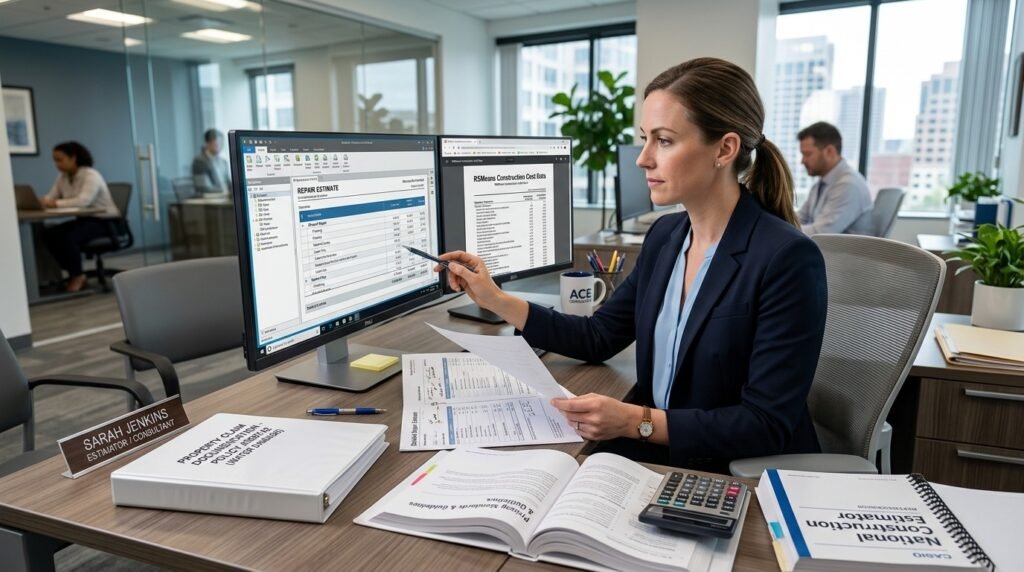
Companies that provide insurance compare prices of contractors to databases with current market rates. When pricing exceeds market prices, it immediately raises concern. Contractors must carefully review local pricing prior to providing estimates. Insurers are more likely to trust contractors who offer realistic prices.
Pro software for estimating often automatically updates prices based on local labour and product rates. This system ensures contractors are accurate even when market conditions change.
Write Down Detailed Line Items
Details in line items will improve your estimate’s quality. General descriptions are weak, incomplete, and make the estimate appear insufficient. These strong lines include:
- Material
- Material quantity
- The labour hours
- Installation method
- Cleanup Process
Take, for instance:
The kitchen floor should be replaced with new waterproof laminated flooring. There is plenty of clarity and detail in this description.
Explain Hidden Damage Clearly
In many cases, hidden damage is the cause of insurance claims. Contractors have to accurately and clearly explain the possible damage. Water leaks are not only visible. Fire damage and storm damage can also spread to areas beyond what is initially seen. Contractors need to record these issues during an inspection.
A professional estimate may include notes like ‘Additional water damage could exist behind damaged drywall after the removal process. This clause protects both contractors and owners of property.
Keep Communication Professional
In order to estimate insurance, it is important that you communicate professionally at every step. Contractor credibility is damaged when contractors use emotional and angry words. During conversations with adjusters, strong contractors will remain organised and calm. Professionalism can result in faster approvals as well as smoother negotiations. The tone of every estimate, email, and phone call needs to be professional.
Consider Reviewing The Estimate Prior To Submission
Mistakes in an estimate create serious delays. Contractors must ensure that all details are reviewed before submitting documents to insurance companies. It is important to make a first-class impression with a clean, organised estimate. Final checks should be made:
- Measurements are accurate
- Accurate pricing
- Proper spelling
- Complete line items
- Photographs for supporting text
- Correct Contact Information
Use Technology For Improved Accuracy
Modern software that improves accuracy and speed is available. Digital systems are more accurate and can produce reports faster. Tech gives contractors an edge in insurance work. These popular tools can help contractors estimate costs:
- Create diagrams
- Add Pricing Databases
- Uploading photos
- Track claim updates
- Generating professional reports
Transparency Builds Trust
Insurers respect contractors who give honest and transparent info. Hidden charges and excessive damage reports are detrimental to long-term partnerships. The best contractors will be transparent with their prices and answers to questions. It is important to establish trust with clients and customers in order to increase the likelihood of repeat work. The homeowner and the insurance adjuster will value an estimator that is accurate every time.
Conclusion
A good insurance estimate increases a contractor’s credibility and helps to protect profits. Construction contractors are required to maintain professionalism, precision, and organisation throughout the estimating phase.
The estimate should be accurate, clearly explain the extent of damage, and have strong supporting documentation. In the end, those contractors who know how to estimate insurance claims will see their businesses grow. Pro estimating does not mean just filling out forms. Professional estimating allows contractors to distinguish themselves from those who are struggling.
FAQs
What Should The Contractor Include In His Insurance Estimate?
In every estimate, a contractor must include all the necessary information, including labour rates, material costs, measurements, and photos.
Why Do Insurance Companies Refuse Contractor Estimates
If you have a poor estimate, incomplete details, incorrect pricing, bad documentation, or unclear descriptions, insurance companies may reject it.
What Is The Importance Of Xactimate For Insurance Estimating?
Xactimate enables contractors to estimate using pricing models that insurance companies are familiar with and trust.
