

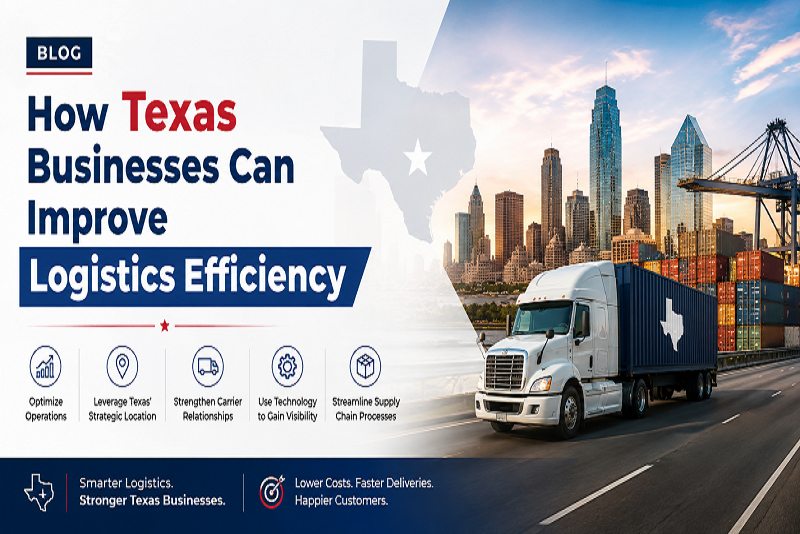
Efficient logistics operations are essential for companies that want to remain competitive in today’s fast-moving marketplace. From managing inventory to ensuring on-time deliveries, every part of the supply chain affects customer satisfaction and profitability. By investing in smarter logistics efficiency solutions, Texas businesses can reduce costs, improve service quality, and strengthen overall operational performance.
Why Logistics Efficiency Matters
Logistics efficiency plays a critical role in business success. Delayed deliveries, inventory shortages, transportation issues, and poor communication can negatively impact both customers and profitability.
For businesses operating across Texas, efficient logistics is especially important due to the state’s large geographic size and growing economic activity. Improving logistics processes can help companies serve customers more effectively while maintaining control over operational costs.
Optimize Delivery Routes
One of the most effective ways to improve logistics efficiency is through route optimization. Poorly planned routes can lead to unnecessary fuel expenses, longer delivery times, and reduced productivity.
Modern routing software helps businesses identify the most efficient delivery paths based on traffic patterns, delivery schedules, and geographic locations. Optimized routes allow drivers to complete more deliveries while reducing transportation costs.
Invest in Logistics Technology
Technology has become a major driver of logistics performance. Real-time tracking systems, transportation management software, and automated reporting tools provide greater visibility throughout the supply chain.
Businesses can monitor shipments, identify potential delays, and communicate more effectively with customers. Improved visibility helps decision-makers respond quickly to changing conditions and maintain smooth operations.
Strengthen Inventory Management
Inventory management directly impacts logistics efficiency. Excess inventory can increase storage costs, while insufficient inventory can result in stockouts and delayed customer orders.
Accurate forecasting and inventory tracking help businesses maintain appropriate stock levels while reducing waste and unnecessary expenses. Better inventory control also improves order fulfillment speed and accuracy.
Partner with Reliable Logistics Providers
Choosing the right logistics partner can significantly improve efficiency. Experienced transportation providers offer specialized expertise, advanced technology, and scalable delivery solutions that support business growth.
Whether a company requires freight transportation, same-day delivery, warehousing, or final mile delivery, a dependable logistics provider can help streamline operations and improve service quality.
Improve Communication Across the Supply Chain
Communication is often overlooked but remains a critical factor in logistics efficiency. Poor communication can lead to missed deliveries, inventory errors, and customer dissatisfaction.
Businesses should establish clear communication channels with suppliers, transportation partners, warehouse teams, and customers. Consistent information sharing helps prevent disruptions and supports smoother operations.
Monitor Key Performance Indicators
Tracking performance metrics helps businesses identify strengths and areas for improvement. Common logistics key performance indicators include on-time delivery rates, transportation costs, inventory turnover, order accuracy, and customer satisfaction scores.
Regular performance reviews allow businesses to make data-driven decisions that improve efficiency and reduce operational risks.
Utilize Warehousing Strategically
Strategically located warehouses can reduce transportation distances and shorten delivery times. Businesses serving customers across Texas may benefit from placing inventory closer to major population centers.
Efficient warehousing supports faster order fulfillment while lowering shipping expenses and improving customer service.
Focus on Continuous Improvement
Logistics efficiency is not a one-time achievement. Customer expectations, market conditions, and technology continue to evolve. Businesses that regularly evaluate their processes and adopt new strategies are better positioned for long-term success.
By continuously improving logistics operations, Texas businesses can enhance customer experiences, increase profitability, and maintain a competitive advantage.
Short Summary
Texas businesses can improve logistics efficiency by optimizing delivery routes, using technology, strengthening inventory management, partnering with reliable logistics providers, and monitoring performance metrics. These strategies help reduce costs, improve customer satisfaction, and support long-term business growth
