

Mobile home park ownership in East Tennessee is experiencing a period of significant transition. After decades of relative stability in which parks operated with minimal intervention — collecting lot rents, managing basic utilities, and leaving residents largely to manage their own homes — a combination of factors has begun forcing change for park owners across Knox, Blount, Anderson, and surrounding counties. Rising land values have made the underlying real estate increasingly attractive for redevelopment. Aging housing stock has created a widening gap between what the oldest units can generate in lot rent and what their deteriorating condition demands in cost and liability management. And regulatory pressure from county code enforcement has increased measurably over the past five to seven years, with communities that previously flew under the radar now receiving formal notices about substandard structures and deteriorating infrastructure.
For park owners navigating this environment, the decisions about how to manage aging or abandoned manufactured homes on their properties are among the most consequential — and often the least well-informed — decisions they face. This article provides a practical guide to mobile home management and removal decisions for East Tennessee park owners and investors, covering the regulatory context, the financial considerations, and the operational realities of executing individual home removals at a park scale.
The Regulatory Context: What East Tennessee Park Owners Currently Face
Tennessee’s manufactured housing regulatory framework touches mobile home parks at multiple points, and park owners who are not actively familiar with the applicable regulations are operating with significant blind spots that can surface at the worst possible moments.
The Tennessee Manufactured Housing Act establishes the rights and obligations of both residents and park owners in manufactured housing communities. For park owners managing abandoned units — either abandoned by residents who have vacated and left the home behind, or units the park owns and wants to remove — the abandonment and removal process is governed by specific statutory provisions that must be followed in proper sequence to protect the park owner from legal exposure. Removing an abandoned home without following the statutory process can expose a park owner to claims from previous occupants, even when the resident has been gone for months and the home is visibly deteriorated and unusable.
County zoning and code enforcement has become an increasingly active presence in East Tennessee mobile home parks over the past decade. Knox County’s code enforcement division, along with those in Blount, Anderson, and Sevier counties, has issued a growing number of formal notices to park owners about structures that are visibly uninhabitable, present safety hazards to other residents, or violate the park’s original development permit conditions. These notices typically carry compliance deadlines ranging from thirty to ninety days with financial penalties for continued non-compliance.
For park owners who receive code enforcement notices, the practical response window is narrower than the notice period suggests. The process of arranging legally compliant home removal — statutory abandonment processing, permit application, utility disconnection, contractor scheduling — typically takes four to eight weeks regardless of how urgently the park owner wants to move. Initiating the process the day the notice arrives rather than waiting until the deadline is approaching is the only approach that gives the owner a realistic chance of meeting the compliance timeline without penalty exposure.
The Financial Calculus: Individual Removal vs. Portfolio Approach
Park owners managing multiple deteriorated or abandoned homes face a decision that is both financial and operational: handle home removals individually as each reaches a crisis point, or develop a systematic approach that addresses the full portfolio over a defined planning horizon.
Individual home removal is the reactive approach: when a unit reaches crisis — code violation, abandonment, severe structural compromise — it is addressed. This approach minimizes upfront commitment but typically produces the highest per-unit cost, because each removal is mobilized independently with its own equipment transport, permitting overhead, and contractor setup costs. A park owner removing six homes over three years using this reactive approach might spend $18,000 to $24,000 total. The same six homes removed in two coordinated batches — mobilizing equipment twice instead of six times — might cost $12,000 to $16,000 for identical scope.
The portfolio approach requires a condition assessment across all units in the park, prioritization of which homes are approaching end of useful life within the next one to three years, and a planned removal schedule that allows bulk mobilization and contractor relationship development. It requires more upfront planning but reduces per-unit cost by 20 to 40 percent through the economies of scale that concentrated mobilization provides.
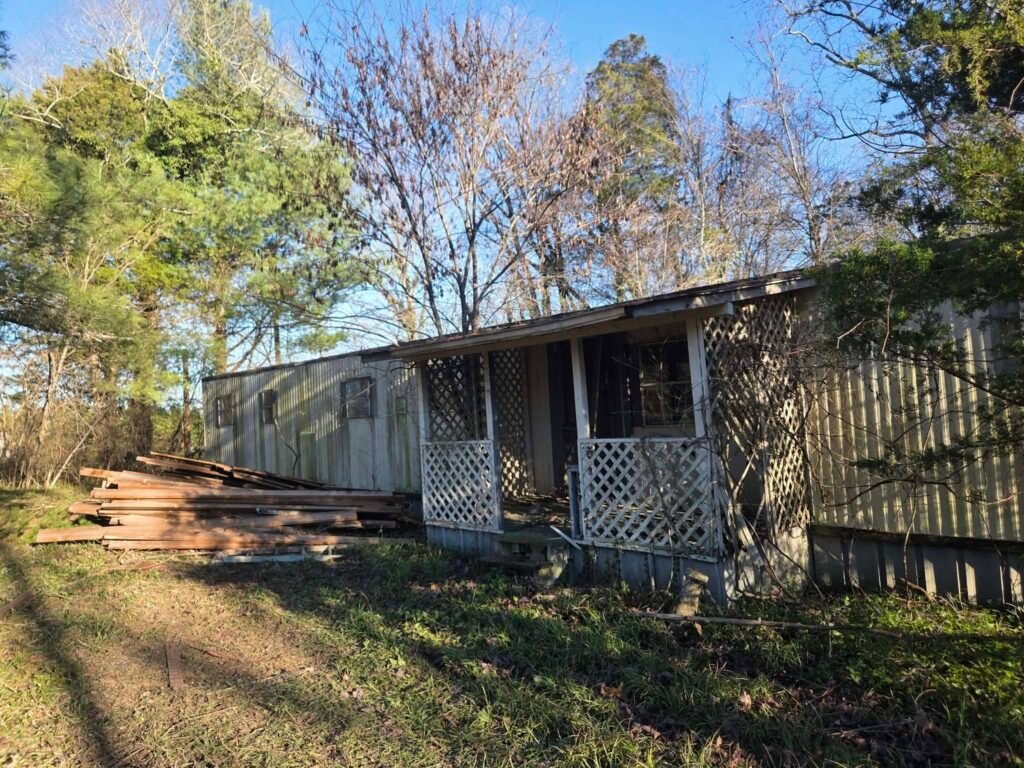
For parks where multiple homes require removal in a given year, building a working relationship with licensed mobile home demolition and removal services in East Tennessee that offer volume pricing for multi-unit projects is worth the investment of time. A contractor who knows your park, its access constraints, its permit environment, and your standards already can execute individual removals far more efficiently than a contractor coming to the site for the first time — and that efficiency translates directly to lower per-unit cost and more reliable scheduling for each subsequent project throughout the year.
Managing the Resident Relationship During Transition
For parks where homes being removed belong to current residents — either because the park is transitioning out of manufactured housing use entirely or because specific lots are being reconfigured — the resident relationship dimension adds significant legal and human complexity to what might otherwise appear to be a straightforward property management decision.
Tennessee law provides specific protections for manufactured home park residents in closure or lot termination situations. The Tennessee Manufactured Housing Act requires advance notice periods of varying length depending on the circumstances of the termination, relocation assistance provisions in certain situations, and specific procedural requirements for handling residents whose homes cannot be economically relocated. Failing to follow these provisions creates legal exposure that can be far more costly than the removal project itself — both in direct liability and in the delay and disruption that legal challenge creates for a redevelopment timeline.
For park owners considering a full closure or significant lot reconfiguration, engaging a Tennessee attorney experienced in manufactured housing law before any notices are sent to residents is an essential first step. The attorney’s guidance on the specific statutory requirements applicable to your park’s situation prevents the procedural errors that delay projects by months and create legal claims that can survive the closure itself.
The Redevelopment Question: Planning What Comes After
For park owners clearing lots for eventual redevelopment — whether to reposition the park, add amenities, or change the land use entirely — the cleared lot is not the end of the project. It is the beginning of the planning process for what comes next, and the decisions made during the removal phase can significantly affect what is possible afterward.
The condition in which a lot is left after manufactured home removal affects its development options in measurable ways. A lot cleared with proper foundation removal, professional grading, and appropriate erosion control is ready for immediate new pad placement, new utility connections, and rapid re-leasing. A lot cleared with foundation remnants left in place, poor grading creating drainage problems, and bare soil that has been eroding for three months requires additional remediation before supporting new development — adding cost and time that compounds against a tight redevelopment timeline.
For parks being considered for conversion to another use — retail, residential subdivision, or commercial development — the environmental condition of the cleared lots matters to any potential buyer or lender conducting transaction due diligence. Documentation of proper hazardous material handling, legal waste disposal, and clean site conditions from the demolition phase becomes part of the property record that supports future transactions and reduces the risk of deals falling apart at the due diligence stage over questions that a thorough documented removal process would have already answered.
Practical Operational Guidance for Multi-Unit Projects
Managing the removal of multiple manufactured homes within a park environment presents operational challenges that differ from single-home removal on private property. Access routes within the park — the internal roads equipment must use to reach individual lots — may have weight limits or width constraints that affect what equipment can be used. Proximity to occupied units requires demolition sequencing that minimizes dust, noise, and disruption to residents whose lots are not part of the current removal scope. Utility infrastructure serving multiple units may require careful coordination to disconnect only the targeted homes without interrupting neighbors.
A pre-project site walk with your demolition contractor — conducted before the first permit is applied for — is the most effective way to surface these operational considerations before they become mid-project problems. Walking the park together, identifying access constraints, discussing sequencing relative to occupied lots, and reviewing the utility infrastructure gives the contractor the information they need to plan accurately and price completely. A contractor who quotes a multi-unit park removal project without a site walk is pricing from assumptions that will not match on-site reality in at least one material way — and the mismatch will show up either in a change order or in execution quality compromise.
For park owners managing ongoing removal needs across multiple seasons, establishing a standing contractor relationship — with agreed pricing for standard removal scopes, a clear process for adding units to an existing project, and regular communication about evolving code enforcement situations in your county — is more efficient than rebidding each project separately. The contractor who understands your park and has a reliable execution history there is worth a modest premium over an unknown contractor who bids lower but whose performance on your specific property cannot be predicted from their general availability and pricing.
