

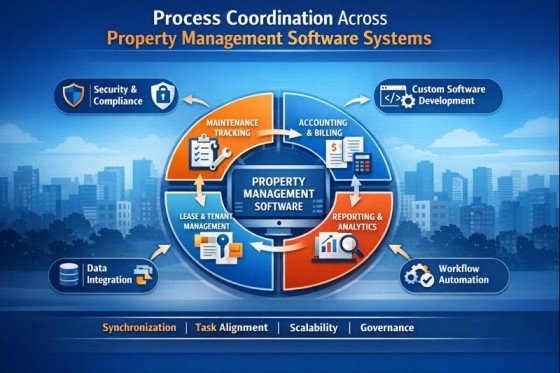
Effective process coordination is a defining requirement for contemporary property operations that rely on multiple digital platforms. As portfolios grow and stakeholder expectations increase, organizations must ensure that information flows accurately between accounting, leasing, maintenance, and reporting systems. Property management software development plays a central role in enabling this coordination by establishing structured workflows, shared data models, and consistent operational logic. When coordination is poorly designed, inefficiencies multiply, decision making slows, and compliance risks increase across the entire operational landscape.
Understanding Process Coordination in Modern Property Systems
Process coordination refers to the structured alignment of activities, data, and responsibilities across interconnected digital tools. In property environments, these processes often span tenant onboarding, lease administration, maintenance scheduling, financial reconciliation, and regulatory reporting. Each function may rely on specialized software, yet operational success depends on how seamlessly these tools interact.
Modern systems are no longer isolated applications. They form ecosystems where data must be shared in near real time and actions in one system trigger outcomes in another. Coordination ensures that changes made in one area, such as lease terms or payment status, are accurately reflected everywhere else without manual intervention. This reduces errors, eliminates duplicated work, and supports consistent operational oversight.
A coordinated approach also clarifies accountability. When workflows are clearly defined across systems, teams understand where responsibilities begin and end. This clarity becomes increasingly important as organizations scale and introduce new technologies into existing environments.
Role of Integrated Platforms in Property Operations Management
Integrated platforms act as the backbone for coordinated operations. They provide standardized interfaces and shared data structures that allow multiple systems to function as a cohesive unit. Rather than replacing all existing tools, integration strategies often focus on connecting them through well-defined processes.
Key benefits of integrated platforms include:
- Centralized access to operational data for multiple departments
- Reduction of manual data entry and reconciliation efforts
- Improved visibility into performance metrics and exceptions
- Faster response times for tenant and stakeholder inquiries
Within this context, property management software development supports integration by defining how systems communicate and by enforcing consistency rules. APIs, middleware layers, and event-driven architectures are commonly used to synchronize actions and data across platforms.
Well-integrated environments also support adaptability. As regulations change or new service models emerge, coordinated platforms can be adjusted without destabilizing core operations.
Data Synchronization Challenges Across Disparate Software Tools
Despite advances in integration technologies, data synchronization remains one of the most complex challenges. Disparate tools often use different data formats, validation rules, and update cycles. Without careful design, these differences can lead to inconsistencies that undermine trust in system outputs.
Common synchronization challenges include:
- Conflicting data definitions for tenants, units, or contracts
- Delayed updates caused by batch processing or manual approvals
- Error propagation when incorrect data is replicated across systems
- Limited auditability of changes made in multiple platforms
Addressing these issues requires a combination of technical and governance measures. Master data management strategies help establish authoritative data sources, while validation rules prevent incompatible updates. Logging and monitoring mechanisms further ensure that discrepancies are detected early and resolved efficiently.
Successful synchronization is less about technology alone and more about disciplined process design that reflects real operational needs.
Workflow Automation and Task Alignment for Property Teams Operations
Workflow automation is a critical enabler of process coordination. Automated workflows translate business rules into repeatable actions that span systems and teams. For example, a completed inspection can automatically generate a maintenance task, update financial forecasts, and notify relevant stakeholders.
Effective task alignment depends on clearly mapping processes before automation is introduced. This involves identifying dependencies, approval points, and exception handling requirements. Poorly designed automation can simply accelerate existing inefficiencies.
Well-aligned workflows typically deliver the following outcomes:
- Consistent execution of routine operational tasks
- Reduced reliance on informal communication channels
- Improved tracking of task status and accountability
- Better use of staff time for higher value activities
When organizations aim to develop property management app solutions or extend existing platforms, workflow design should be treated as a foundational activity rather than an afterthought. Automation succeeds only when it reflects how teams actually work.
Security, Compliance, and Governance in Coordinated Systems Use
As systems become more interconnected, security and governance considerations increase in importance. Coordinated environments expand the potential impact of security breaches or configuration errors, making robust controls essential.
Key governance elements include role-based access controls, data encryption standards, and clear audit trails. These measures help ensure that sensitive information is accessible only to authorized users and that all changes can be traced and reviewed.
Compliance requirements further shape system coordination. Financial reporting standards, data protection regulations, and local tenancy laws all impose constraints on how data is stored and shared. Coordinated systems must enforce these rules consistently across platforms to avoid regulatory exposure.
Strong governance frameworks balance flexibility with control. They allow operational teams to work efficiently while ensuring that organizational and legal obligations are met.
Scalability Considerations in Multi Platform Property Environments
Scalability is a defining concern for organizations managing growing portfolios or expanding into new regions. Coordinated systems must handle increased transaction volumes, additional users, and more complex reporting requirements without degradation in performance.
Scalability considerations include:
- Modular architecture that allows components to scale independently
- Standardized integration patterns that support new system connections
- Performance monitoring to identify bottlenecks early
- Data models designed for long term growth rather than short term needs
Property management software development plays an important role here by anticipating future demands during the design phase. Systems built solely for current requirements often require costly rework as operations expand.
Scalable coordination ensures that growth does not compromise accuracy, responsiveness, or governance standards.
Cost, Resource Planning, and Development Strategy Implications
Coordinated systems influence both direct and indirect cost structures. While integration and customization require upfront investment, they can significantly reduce ongoing operational expenses by eliminating inefficiencies and manual workarounds.
Understanding property management software development cost involves more than estimating initial build expenses. Organizations must also account for maintenance, upgrades, and the internal resources required to manage coordinated environments. Strategic planning helps balance these factors over the system lifecycle.
Development strategies often involve decisions between extending existing platforms and engaging custom software development services for specialized requirements. Each approach carries implications for flexibility, control, and long term sustainability. Clear alignment between operational goals and development strategy is essential to avoid fragmented solutions that undermine coordination.
Future Trends Shaping Coordinated Digital Property Ecosystems
Looking ahead, several trends are shaping how coordination is implemented across digital ecosystems. Increased use of real time data, predictive analytics, and automated decision support is raising expectations for system responsiveness. At the same time, greater emphasis on interoperability standards is reducing barriers between platforms.
Artificial intelligence and machine learning are also influencing coordination by enabling smarter workflows and anomaly detection. These technologies rely on well-structured, synchronized data, reinforcing the importance of strong foundational design.
As ecosystems evolve, coordination will increasingly be viewed as a continuous capability rather than a one time implementation effort.
Conclusion
Process coordination across interconnected systems is essential for maintaining accuracy, efficiency, and accountability in complex operational environments. By aligning data flows, workflows, and governance practices, organizations can reduce friction and support informed decision making. Long term success depends on thoughtful design, disciplined execution, and ongoing evaluation as operational demands evolve. When coordination is treated as a strategic priority, digital ecosystems become more resilient, adaptable, and capable of supporting sustained growth.
