

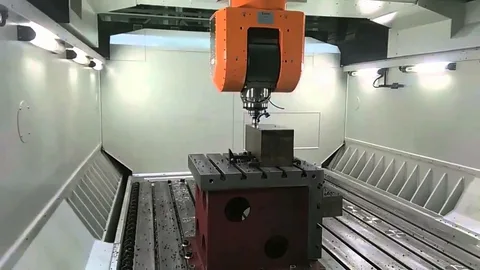
In modern manufacturing, precision, speed, and durability are essential factors for producing high-performance industrial components. One of the most advanced technologies meeting these demands is 5 axis high speed CNC machining. This innovative process allows manufacturers to create complex geometries with exceptional accuracy while maintaining fast production cycles. As industries continue to demand stronger and more reliable components, this machining method has become a cornerstone of advanced engineering production.
Understanding 5 Axis High Speed CNC Machining Technology
5 axis high speed CNC machining is a cutting-edge manufacturing process that allows a cutting tool to move across five different axes simultaneously. Unlike traditional 3-axis machines, this system provides greater flexibility and precision, enabling the production of highly complex shapes in a single setup.
This advanced capability significantly reduces manual repositioning, improving accuracy and minimizing production time. It is widely used in industries where precision and efficiency are critical, such as aerospace, automotive, and medical manufacturing.
Key features include:
- Simultaneous movement across X, Y, Z, and two rotational axes
- Ability to machine complex geometries in one setup
- Reduced production time and setup errors
- High-speed spindle performance for faster material removal
- Improved surface finish quality
The combination of speed and multi-axis movement makes this technology ideal for producing durable industrial parts that require tight tolerances and consistent quality.
Advantages in Producing Durable Industrial Parts
One of the main reasons manufacturers rely on 5 axis high speed CNC machining is its ability to produce extremely durable components. The precision of the process ensures that each part meets strict engineering standards, reducing the risk of structural weaknesses.
Durability is achieved through consistent machining accuracy and reduced human intervention, which eliminates common errors found in manual or less advanced systems. This leads to stronger, longer-lasting industrial components.
Major durability benefits include:
- Uniform material removal for structural integrity
- Reduced micro-defects and machining stress
- Improved wear resistance of finished parts
- Enhanced consistency across large production batches
- Better performance in high-stress environments
Additionally, this machining method supports a wide range of high-strength materials such as titanium, stainless steel, and hardened alloys, making it suitable for demanding industrial applications.
Precision and Efficiency in Manufacturing
Precision is one of the strongest advantages of 5 axis high speed CNC machining. The ability to approach a workpiece from multiple angles ensures that even the most complex designs are executed with extreme accuracy.
Efficiency is equally important, as the multi-axis movement reduces the need for multiple setups. This not only saves time but also reduces production costs and improves workflow efficiency.
Key precision and efficiency benefits:
- Tight tolerance control for complex designs
- Single-setup machining reduces repositioning errors
- Faster production cycles compared to traditional machining
- Reduced material waste through optimized cutting paths
- High repeatability for mass production runs
By combining precision with speed, manufacturers can significantly increase productivity while maintaining top-tier quality standards across all industrial parts.
Industrial Applications and Use Cases
The versatility of 5 axis high speed CNC machining makes it suitable for a wide range of industries. Its ability to produce intricate and durable parts allows engineers to push design boundaries while maintaining reliability.
Industries that demand high performance and precision rely heavily on this technology for mission-critical components.
Common applications include:
- Aerospace components such as turbine blades and engine parts
- Automotive parts including transmission and suspension systems
- Medical devices like implants and surgical instruments
- Energy sector components for turbines and heavy machinery
- Defense and military-grade equipment parts
In each of these industries, durability and precision are non-negotiable, making this machining technology a preferred choice for engineers and manufacturers worldwide.
Material Capabilities and Technological Advancements
Modern 5 axis high speed CNC machining systems are capable of working with a wide variety of advanced materials. This includes metals, composites, and high-performance alloys that are commonly used in industrial environments.
Technological advancements in software and machine control systems have also improved machining accuracy, allowing manufacturers to simulate and optimize tool paths before production begins.
Material and technology advantages include:
- Compatibility with titanium, aluminum, and stainless steel
- Ability to machine composite and heat-resistant materials
- Advanced CAD/CAM integration for precise programming
- Real-time monitoring and adaptive machining adjustments
- Reduced tool wear through optimized cutting strategies
These innovations continue to push the boundaries of what is possible in industrial manufacturing, making components stronger, lighter, and more efficient.
Conclusion
5 axis high speed CNC machining has revolutionized the production of durable industrial parts by combining precision, speed, and versatility in a single advanced system. Its ability to produce complex geometries with minimal setup not only improves efficiency but also ensures exceptional product quality.
As industries continue to evolve and demand higher performance standards, this machining technology will remain essential for manufacturing reliable and long-lasting components. From aerospace to automotive and beyond, its impact on modern engineering is both significant and enduring.
