

Communication technology has evolved rapidly over the past decade, transforming the way people and businesses connect with each other. Traditional SMS messaging, while still widely used, has limitations in terms of multimedia support and interactive features. To overcome these limitations, Rich Communication Services (RCS) has emerged as the next generation of mobile messaging, offering a more engaging, interactive, and feature-rich communication experience.
RCS is designed to upgrade traditional text messaging by combining the simplicity of SMS with the advanced capabilities of modern messaging applications. It enables users and businesses to share rich media, interactive content, and real-time communication directly through the native messaging app on smartphones.
What is Rich Communication Services (RCS)?
Rich Communication Services, commonly known as RCS, is a communication protocol developed to enhance standard SMS and MMS messaging. It provides advanced messaging features such as high-quality image sharing, videos, group chats, read receipts, typing indicators, location sharing, and interactive buttons.
Unlike third-party messaging apps, RCS works through the default messaging application on supported Android devices. This allows users to enjoy advanced messaging experiences without needing to install additional applications.
RCS messaging is supported by mobile carriers and technology companies to create a universal messaging standard that improves communication across devices and networks.
Importance of RCS in Modern Communication
Consumer expectations for communication have changed significantly. People now expect instant, engaging, and visually rich interactions similar to those offered by popular messaging apps. Traditional SMS lacks these modern capabilities, making RCS an important evolution in mobile messaging.
RCS enables businesses to deliver more dynamic and personalized customer experiences. Instead of sending plain text messages, companies can share branded content, product images, videos, clickable buttons, and interactive menus directly within conversations.
For consumers, RCS creates a more enjoyable and convenient messaging experience with enhanced features and real-time interaction capabilities.
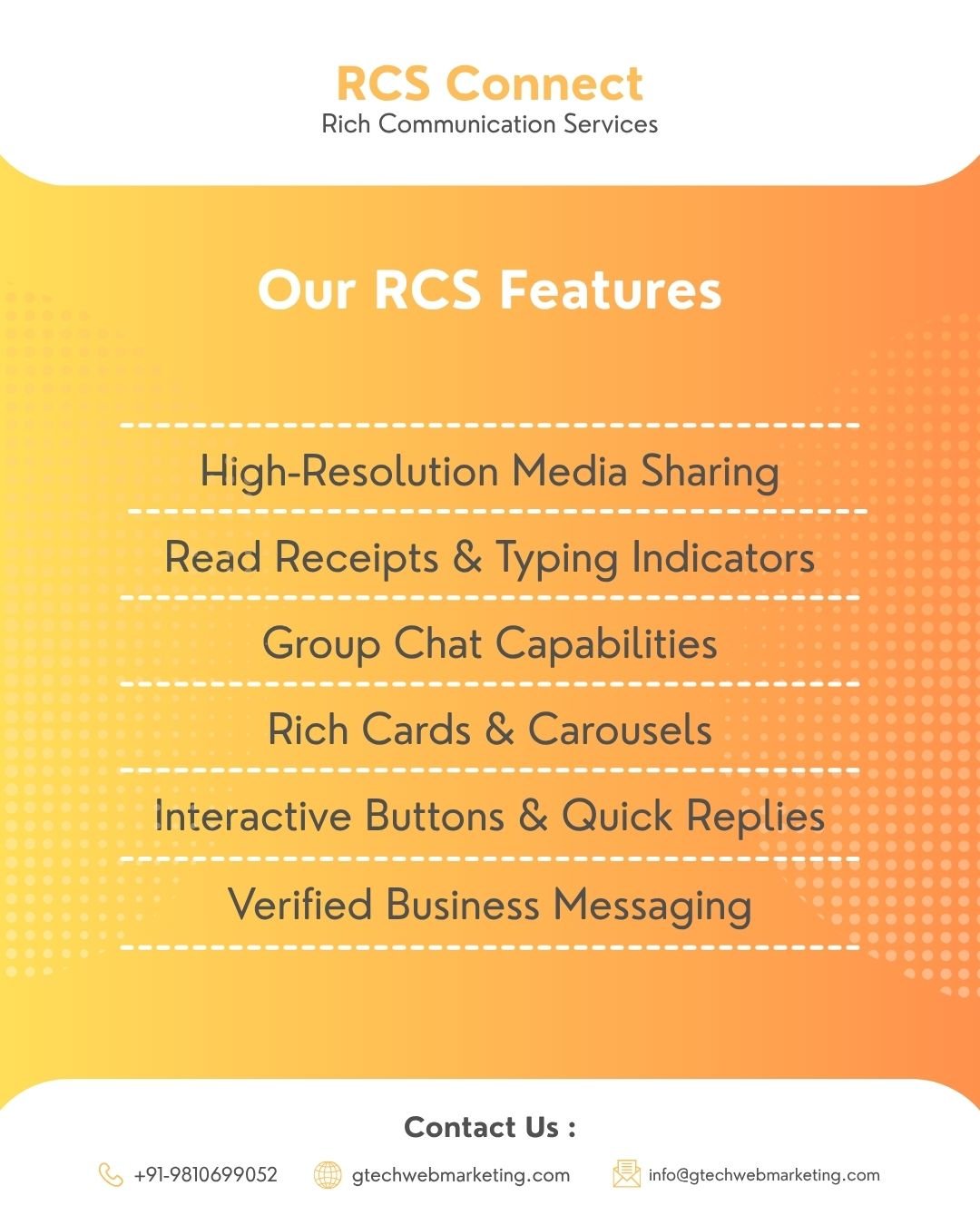
Key Features of RCS
RCS includes several advanced features that improve both personal and business communication.
1. Rich Media Sharing
Users can send high-quality photos, videos, audio files, and documents without the limitations of traditional MMS messaging.
2. Read Receipts and Typing Indicators
RCS shows when messages are delivered, read, and when someone is typing, creating a more interactive communication experience.
3. Group Chats
Users can create and manage group conversations with improved functionality and multimedia support.
4. Interactive Messaging
Businesses can include quick reply buttons, carousels, suggested actions, and interactive menus within messages.
5. Verified Business Messaging
RCS supports verified business profiles that display official company names, logos, and branding, helping customers identify authentic businesses.
6. Location Sharing
Users can share real-time location information directly within conversations for better coordination and communication.
Benefits of RCS for Businesses
RCS has become an increasingly valuable tool for businesses looking to improve customer engagement and communication strategies.
- Enhanced Customer Experience
Interactive and visually appealing messages help businesses create better customer interactions compared to plain text SMS.
- Increased Engagement Rates
Rich media and interactive features encourage customers to engage more actively with business messages.
- Stronger Brand Identity
Verified business profiles with logos and branding help companies establish trust and professionalism.
- Improved Marketing Campaigns
Businesses can create personalized campaigns with multimedia content, product showcases, and direct action buttons.
- Better Customer Support
Interactive messaging allows businesses to provide faster and more efficient customer support experiences.
Common Use Cases of RCS
RCS is widely used across multiple industries for customer communication and engagement.
- Retail businesses use RCS to send product promotions and shopping recommendations.
- Airlines share digital boarding passes, flight updates, and travel alerts.
- Banks provide account notifications and fraud alerts through secure messaging.
- Healthcare providers send appointment reminders and health information.
- E-commerce companies offer order tracking and delivery updates.
RCS is also used for customer surveys, event invitations, booking confirmations, and conversational commerce experiences.
Challenges Facing RCS Adoption
Although RCS offers many benefits, there are still some challenges associated with its adoption. One major challenge is device and carrier compatibility. While many Android devices support RCS, support on some platforms remains limited.
Internet connectivity is also required for RCS messaging, unlike traditional SMS, which works through cellular networks alone. Additionally, businesses may need technical integration and support from messaging providers to implement RCS solutions effectively.
Despite these challenges, adoption continues to grow as more mobile carriers and smartphone manufacturers support RCS technology.
The Future of RCS
The future of RCS looks promising as businesses increasingly focus on conversational and interactive communication. With advancements in artificial intelligence and automation, RCS is expected to deliver even more personalized and intelligent customer interactions.
RCS Business Messaging is becoming a powerful alternative to traditional SMS marketing by combining rich media, interactivity, and secure communication in one platform. As global adoption increases, RCS may become the standard for next-generation mobile messaging.
The integration of chatbots, AI assistants, and payment systems within RCS conversations is also expected to drive the growth of conversational commerce and digital customer engagement.
Conclusion
Rich Communication Services (RCS) is transforming mobile messaging by bringing advanced features and interactive communication to traditional SMS experiences. With capabilities such as multimedia sharing, read receipts, interactive buttons, and verified business messaging, RCS offers a more engaging and modern way to communicate.
For businesses, RCS provides opportunities to improve customer engagement, strengthen branding, and deliver personalized communication experiences. As technology continues to evolve, RCS is expected to play a major role in the future of business messaging and digital communication worldwide.
