

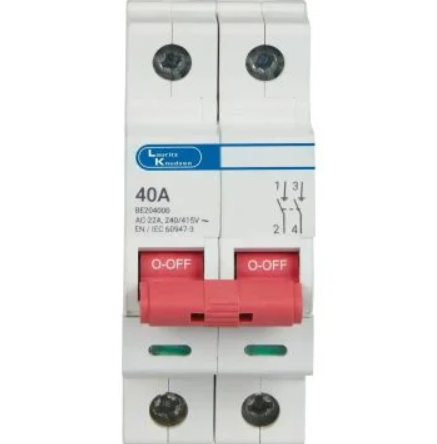
Electrical isolation is a fundamental safety requirement of every installation that must be serviced, maintained, or modified. Before any work can be performed on electrical equipment, the supply to that equipment must be safely isolated to prevent any possibility of accidental energization during the work. An isolator is the device that provides this isolation function, and the selection of the correct isolator for each application is as important to installation safety as any other protective device choice. Lauritz Knudsen Smartshop provides a comprehensive range of isolators, including the widely used 32A isolator, for every residential, commercial, and industrial isolation requirement.
What Is an Electrical Isolator
An electrical isolator is a switching device designed to disconnect an electrical circuit from its power source in a way that provides a clearly visible and verifiable open gap between the supply and the isolated circuit. Unlike a circuit breaker, an isolator is not designed to switch load current but to provide secure electrical isolation when the circuit is already de-energized.
Isolator Versus Circuit Breaker
A circuit breaker is designed to make and break load current and to interrupt fault currents. An isolator is designed specifically for isolation purposes and may not be capable of safely making or breaking significant load currents. Using an isolator to switch a loaded circuit can damage the isolator contacts, create dangerous arcing, and compromise the safety of the isolation function. Correct electrical safety procedures require de-energizing the circuit before operating an isolator.
Visible Isolation
A key feature of an isolator is that its open position must be clearly visible and verifiable. This requirement is met through design features including transparent isolator windows through which the open contacts can be seen, clear mechanical indication of the handle position, and padlocking facilities that allow a locked-open isolator to be secured against unauthorized re-energization during maintenance.
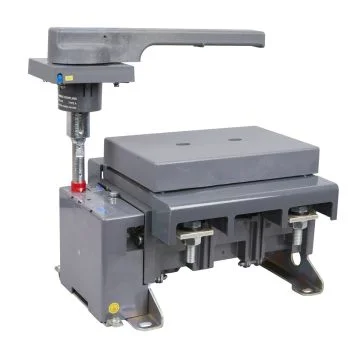
Padlocking and Lockout-Tagout
Isolators designed for industrial and commercial applications include provision for padlocking in the open position as part of a lockout-tagout safety procedure. This allows maintenance personnel to physically lock the isolator open and retain the key, providing personal assurance that the circuit cannot be re-energized until they remove the lock after completing their work.
The 32A Isolator
The 32A isolator is one of the most widely specified isolator ratings in Indian residential and commercial electrical installations. At this current rating, the isolator provides safe isolation capability for circuits including air conditioning units, large kitchen appliances, electric water heaters, and other fixed high-power loads.
Applications of the 32A Isolator
A 32A isolator is commonly installed adjacent to outdoor air conditioning units to provide local isolation for seasonal maintenance without requiring access to the distribution board. It is also used as a local isolation point for water heaters in bathrooms and kitchens, for fixed cooking appliances, and for any other 32 amp circuit load that requires regular local isolation for maintenance or safety compliance.
Double Pole 32A Isolator
A double pole 32A isolator disconnects both the live and neutral conductors of a single-phase circuit simultaneously, providing complete isolation of the circuit. This is the preferred configuration for safety purposes because it ensures that neither conductor of the protected circuit remains energized after isolation, eliminating any risk of shock from contact with the neutral conductor.
32A Isolator Installation Requirements
A 32A isolator must be installed within sight of the equipment it isolates, or where it is not within sight it must be capable of being locked in the open position. The isolator must be accessible and operable by the maintenance personnel who will use it, and it must be rated for the continuous current and voltage of the circuit it is installed in.
Rotary Isolators
Rotary isolators use a rotating handle or cam mechanism to open and close the isolation contacts. They are compact, robust, and widely used in panel-mounted and wall-mounted applications for both single-phase and three-phase isolation requirements.
- Rotary isolators from Lauritz Knudsen SmartShop are available in multiple current ratings covering both standard residential applications and higher current industrial isolation requirements.
- Padlocking facilities are integrated into the rotary isolator design, enabling lockout-tagout compliance in industrial and commercial maintenance environments.
- Front and side mounting options provide installation flexibility within control panels, distribution boards, and enclosures of different configurations.
Load Break Switches as Isolators
Lauritz Knudsen Smartshop also provides load break switches that combine isolation capability with the ability to make and break load current. These devices are appropriate for applications where the isolator must be capable of switching under load, such as main incomer switches for distribution boards and motor isolation switches.
Three Phase Isolators for Motor Applications
Three phase isolators from Lauritz Knudsen Smartshop provide the isolation capability required for maintenance of three-phase motors and associated motor control equipment. Correct installation and use of three-phase isolators is a key element of electrical safe working practice.
Motor Isolation Procedure
To safely isolate a three-phase motor for maintenance, the three-phase isolator in the supply circuit must be opened and locked in the open position using a padlock. The absence of voltage must then be confirmed at the motor terminal box using an approved voltage indicator before any work commences on the motor or its connected mechanical system.
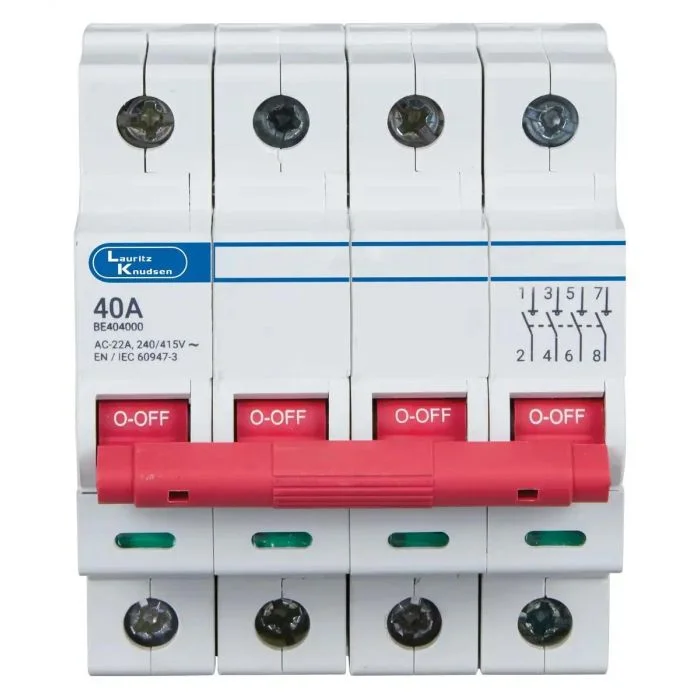
Four-Pole Isolators for Generators
Generator supply circuits require four-pole isolation to disconnect all four conductors including the neutral simultaneously. This is particularly important in generator applications where the neutral conductor may be live relative to earth even when the main supply is isolated, creating a shock hazard if only three-pole isolation is provided.
Conclusion
Isolators and the 32A isolator in particular are essential safety devices in every correctly designed electrical installation. Lauritz Knudsen SmartShop provides the complete range of isolators for residential, commercial, and industrial applications, backed by 70 years of electrical engineering heritage that makes Lauritz Knudsen SmartShop India’s most trusted name in electrical safety products.
