

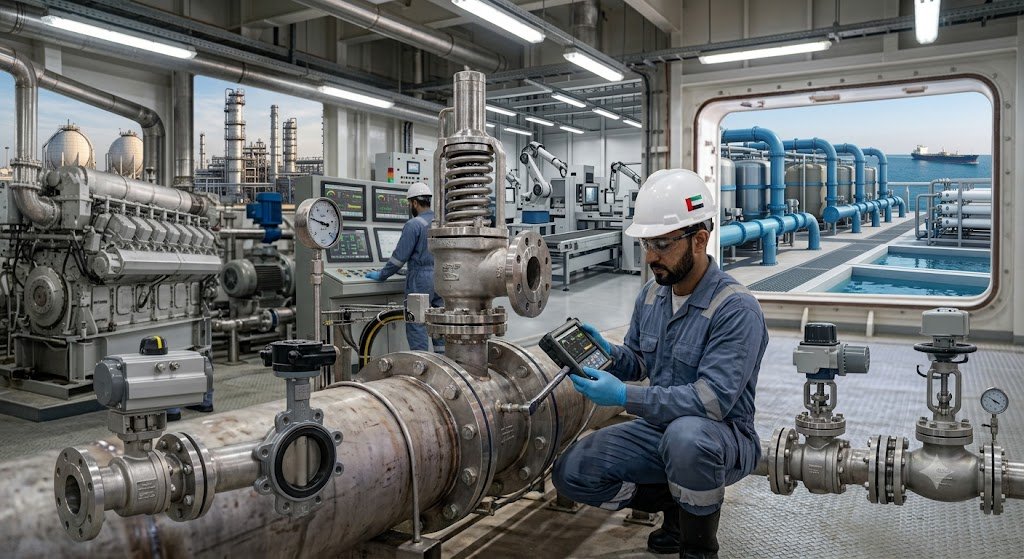
Walk through any refinery, water treatment plant, or manufacturing facility, and you’ll find an extensive network of pipes carrying liquids, gases, and steam. Hidden within those systems are components that quietly keep everything operating safely and efficiently—the industrial valve.
Although valves rarely receive the spotlight, they perform some of the most critical tasks in industrial operations. They regulate flow, isolate equipment for maintenance, control pressure, and protect valuable assets from damage. Selecting the right valve for the right application isn’t simply an engineering decision; it directly affects productivity, safety, maintenance costs, and operational reliability.
Across the UAE, where industries continue to expand through major infrastructure, energy, and manufacturing projects, industrial valves have become essential to maintaining efficient and dependable operations.
Why Industrial Valves Are Essential
Every industrial process depends on precise fluid control. Whether transporting crude oil, treating seawater, producing chemicals, or manufacturing consumer products, operators need accurate control over flow rates and pressure.
An industrial valve provides that control by opening, closing, or regulating the movement of liquids and gases within a piping system. Without properly selected valves, industrial processes would become difficult to manage, increasing the risk of equipment failures, leaks, and production interruptions.
Modern valve technologies also support automation, allowing facilities to monitor and control operations remotely while improving efficiency.
Oil and Gas: Managing High-Pressure Operations
The UAE’s oil and gas industry relies heavily on industrial valves throughout upstream, midstream, and downstream operations.
Valves are used in:
- Crude oil production
- Natural gas processing
- Pipeline transportation
- Refining operations
- Storage terminals
- Offshore platforms
These applications often involve high temperatures, corrosive fluids, and extreme operating pressures. As a result, valves must deliver reliable sealing performance while withstanding demanding environmental conditions.
Ball valves, gate valves, globe valves, butterfly valves, and safety valves each serve different purposes depending on the process requirements.
Reliable valve performance helps reduce downtime while protecting expensive equipment and ensuring worker safety.
Water Treatment: Delivering Clean and Reliable Water
Water treatment facilities require precise flow management from the moment raw water enters the plant until treated water reaches consumers.
An industrial valve helps control numerous treatment stages, including:
Raw Water Intake
Large-diameter valves regulate incoming water from reservoirs, rivers, or desalination systems.
Filtration Systems
Valves isolate individual filters for cleaning and maintenance without interrupting the overall treatment process.
Chemical Dosing
Accurate valve control ensures treatment chemicals are introduced at the correct flow rates, improving water quality and operational efficiency.
Distribution Networks
Pressure-reducing and isolation valves maintain consistent water delivery across municipal and industrial supply systems.
Given the UAE’s significant investment in desalination and water infrastructure, reliable valve systems remain critical to ensuring uninterrupted water availability.
Manufacturing: Supporting Continuous Production
Manufacturing facilities depend on stable and predictable production processes.
Whether producing food, pharmaceuticals, chemicals, plastics, metals, or construction materials, valves regulate countless production operations.
Typical manufacturing applications include:
- Steam distribution
- Cooling systems
- Compressed air networks
- Hydraulic systems
- Chemical processing
- Process water circulation
A properly selected industrial valve allows operators to maintain consistent production conditions while minimizing product waste and equipment wear.
For facilities operating multiple production shifts, dependable valve performance also reduces the likelihood of costly production stoppages.
Automation Is Changing Valve Operations
Industrial automation has transformed how facilities manage valve systems.
Modern actuated valves integrate with PLCs, SCADA systems, and centralized control rooms, allowing operators to monitor equipment remotely and respond quickly to changing process conditions.
Automation provides several operational advantages:
- Faster process adjustments
- Improved accuracy
- Reduced manual intervention
- Better workplace safety
- Continuous performance monitoring
Many facilities across the UAE are adopting automated valve systems as part of broader digital transformation initiatives focused on improving operational efficiency.
Choosing the Right Valve for Each Application
No single valve type works for every industrial process.
Engineers typically consider several factors before selecting a valve, including:
- Operating pressure
- Fluid characteristics
- Temperature range
- Flow requirements
- Corrosion resistance
- Maintenance accessibility
- Automation compatibility
Making the correct selection improves both equipment performance and long-term operating costs.
Working with experienced valve suppliers also helps ensure compliance with international engineering standards.
Why Preventive Maintenance Matters
Even the highest-quality valves require routine maintenance to maintain reliable performance.
Regular inspections help identify issues such as seal wear, corrosion, leakage, and actuator problems before they lead to equipment failure.
Preventive maintenance programs often include:
- Visual inspections
- Functional testing
- Pressure verification
- Lubrication
- Component replacement
- Performance monitoring
Facilities that prioritize preventive maintenance typically experience fewer emergency shutdowns and longer equipment life.
Conclusion
Industrial operations rely on precision, consistency, and reliability—and the industrial valve plays a central role in achieving all three. From controlling high-pressure pipelines in oil and gas facilities to regulating water treatment processes and supporting continuous manufacturing, these valves are fundamental to efficient industrial performance.
For businesses across the UAE, selecting the right industrial valve and maintaining it properly isn’t simply about keeping equipment operational. It’s about improving safety, reducing downtime, increasing productivity, and supporting long-term operational success.
As industrial facilities continue to embrace automation and smarter process management, dependable valve systems will remain one of the most valuable investments for achieving reliable, efficient, and sustainable operations.
Frequently Asked Questions
What industries commonly use industrial valves?
Industrial valves are widely used in oil and gas, water treatment, manufacturing, chemical processing, power generation, marine operations, food processing, and pharmaceutical industries.
Which valve type is best for high-pressure applications?
The ideal valve depends on the specific application. Ball valves, gate valves, globe valves, and safety valves are commonly selected for high-pressure systems based on process requirements.
Why is valve maintenance important?
Routine maintenance improves reliability, reduces unexpected failures, extends equipment life, and helps maintain safe industrial operations.
