

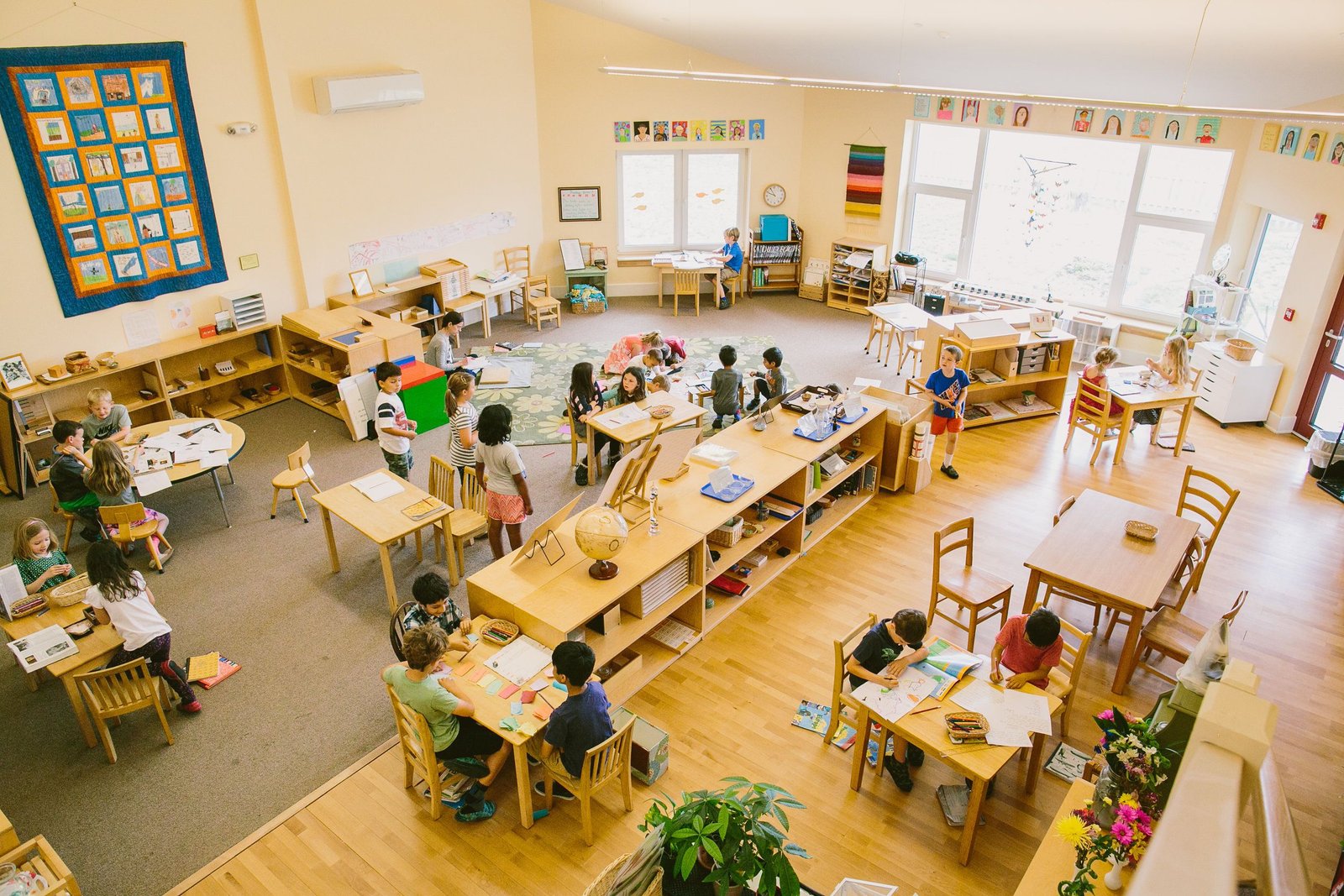
Every parent wants their child to grow up confident, kind, curious, and capable. But what does that actually look like inside a classroom? In Montessori education, there is a clear answer — and it starts with four powerful ideas.
The 4 C’s in Montessori — Critical Thinking, Collaboration, Communication, and Creativity — are not just buzzwords. They are the four pillars that shape how children learn, interact, and grow every single day. Understanding them can help you see why Montessori feels so different from traditional schooling, and why that difference matters.
What Are the 4 C’s, Exactly?
Schools everywhere are talking about preparing children for the future. But the future does not just need children who can memorize facts — it needs people who can think deeply, work together, speak clearly, and imagine new possibilities.
These four skills are what the 4 C’s represent. Here is a simple breakdown of each one:
01 Critical Thinking
The ability to ask good questions, look at problems from different angles, and come to thoughtful conclusions on your own.
02 Collaboration
The ability to work well with others — sharing, listening, leading, and solving problems as a team.
03 Communication
The ability to express thoughts clearly — whether through speaking, writing, or simply listening and responding with respect.
04 Creativity
The ability to come up with fresh ideas, find new solutions, and express oneself in original and imaginative ways.
These are not brand-new ideas. Montessori classrooms have been naturally building these skills for over a hundred years — long before modern education started catching up.
How Montessori Builds Each Skill
What makes Montessori special is that these skills are not taught through lectures or worksheets. They grow naturally through the way the classroom is designed, the freedom children are given, and the relationships they build with each other.
Critical Thinking — Learning by Doing
In a Montessori classroom, children are rarely given the answer. Instead, they are given the tools to find it themselves. A child curious about how plants grow might set up a small experiment — trying different soils, tracking sunlight, watering at different times, and recording what happens.
This is not just science. It is critical thinking in action. The child is observing, questioning, testing, and concluding. This habit of thinking carefully does not stay in the classroom — it follows them everywhere.
Collaboration — Learning from Each Other
Montessori classrooms mix children of different ages together. A six-year-old might sit beside a nine-year-old on a shared project. The older child explains, the younger child learns, and both grow.
This is one of the most natural ways to build collaboration. Children learn to share responsibilities, communicate expectations, and help each other through difficulty — without a teacher telling them exactly what to do.
Children who learn to work alongside others — not just next to them — carry that skill into every team, classroom, and workplace they ever join.
Communication — Finding Your Voice
Montessori places a strong emphasis on respectful, clear communication. Children are encouraged to speak their thoughts, listen actively, and resolve disagreements with words rather than frustration.
From storytelling activities to presenting a mini project to the class, children regularly practice expressing themselves. Over time, this builds genuine confidence — not the performance kind, but the real kind that comes from knowing you can be heard and understood.
Creativity — Room to Imagine
The Montessori environment is built for open-ended exploration. Art supplies, music, imaginative play, and hands-on materials are always available. Children are not told what to create — they choose.
This freedom is important. Creativity grows when children are not afraid of making the “wrong” thing. When mistakes are treated as part of the process, children become more willing to take risks, try new approaches, and come up with ideas no one expected.
Why These Skills Matter in Real Life
It is easy to look at a child building a block tower and think “that is just play.” But when you understand the 4 C’s, you start to see it differently. That child is solving a structural problem (critical thinking), deciding how tall to build it (creativity), asking a friend for another block (communication), and working out who holds the base (collaboration).
Every small moment in a Montessori classroom is quietly building skills that matter far beyond school.
What Children Carry Forward
- Adaptability: They know how to face problems without giving up, because they have been solving them since they were three years old.
- Leadership: Having mentored younger children and led group projects, they are comfortable taking initiative.
- Strong communication: Years of thoughtful conversation and respectful dialogue build children who can speak and listen well.
- Innovation: A childhood full of open-ended creativity makes them people who naturally think differently and find new ways forward.
How to Support the 4 C’s at Home
The good news is that you do not need a Montessori classroom to reinforce these skills. Simple everyday moments at home can make a big difference.
- Let them make choices
Small decisions — what to wear, which snack to pick, which book to read — build independence and decision-making. Resist the urge to decide for them. - Welcome their questions
When a child asks “why does the sky turn orange at sunset?” try saying “I wonder too — let’s find out together.” Curiosity is the engine of critical thinking. - Let mistakes happen
Do not rush in to fix things for them. When they struggle, offer encouragement instead of solutions. Learning to work through problems is a skill they need to build themselves. - Involve them in everyday tasks
Sorting laundry, setting the table, watering plants — these simple activities build responsibility, focus, and a sense of contribution to the family. - Give them open-ended materials
Art supplies, building blocks, clay, and simple instruments let children create without rules. These are the tools of creativity.
A Simple Way to Think About It
The 4 C’s are not a checklist. They are a way of looking at children — as whole people who are capable of thinking deeply, connecting with others, expressing themselves clearly, and imagining something new.
Montessori education has always understood this. That is what makes it feel less like school and more like life — because life is exactly what it is preparing children for.
If you are considering a Montessori environment for your child, know that every lesson, every material, and every mixed-age conversation is quietly working toward something big: raising a child who is ready not just for the next grade, but for the world.
