

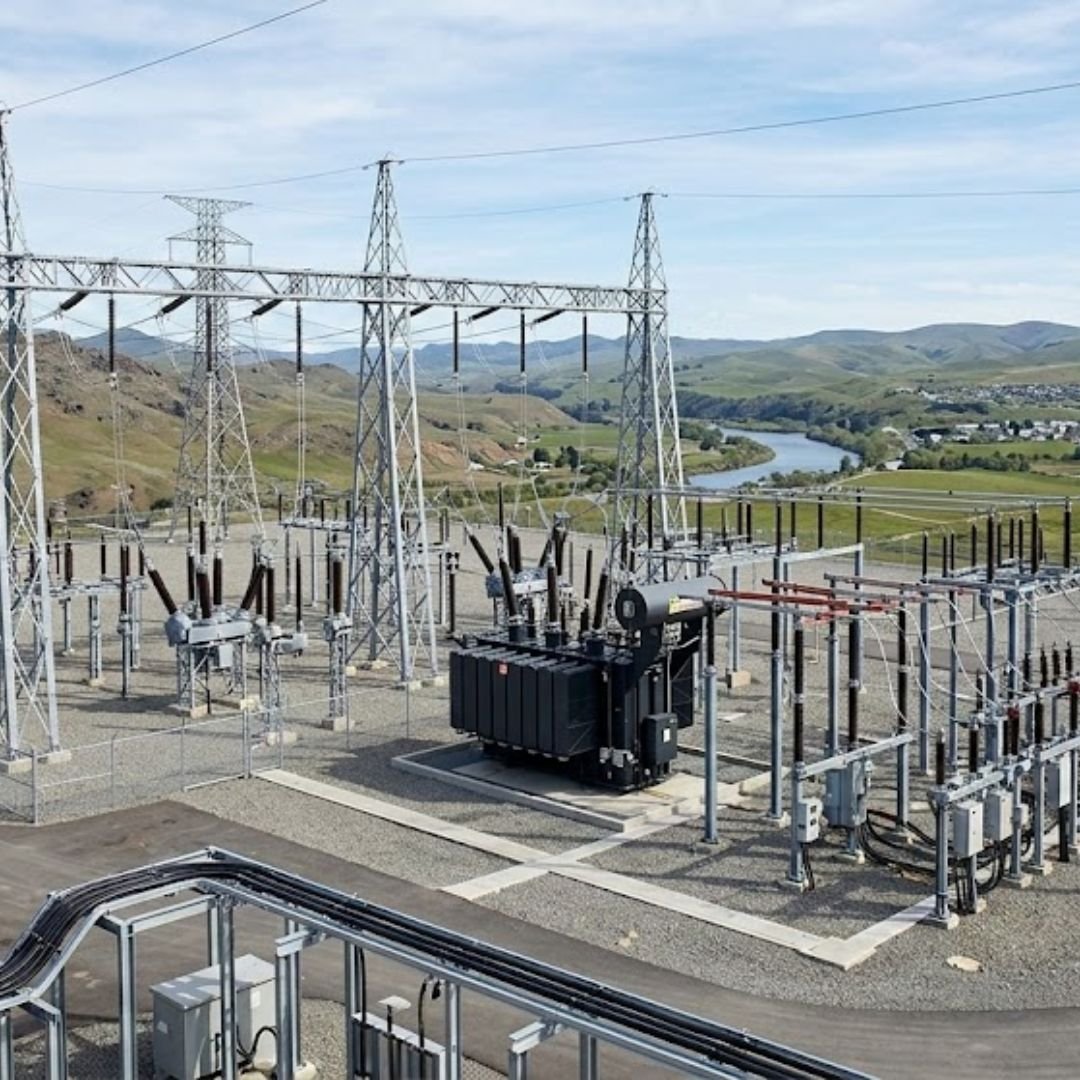
While traditional inspection methods are useful, they provide only a retroactive view of a machine’s health, leaving operators in charge blind to critical faults developing rapidly between service intervals.
An internal component that degrades unnoticed can cause an instantaneous short circuit out of the blue that destroys multi-million-dollar resources, leading to wide-scale blackouts.
To address these issues, many substations in this modern era use automated sensors for detecting thermal, electrical, and chemical anomalies in real-time. That’s why moving from guesswork to predictive care of the grid requires a clear understanding of the metrics captured by advanced power transformers monitoring equipment.
Key Takeaways
- Dissolved Gas Analysis: Tracking key hydrogen and hydrocarbon levels to pinpoint internal electrical faults.
- Moisture and Insulation Health: Measuring water parts per million to protect solid paper barriers from decay.
- Thermal Mapping: Capturing winding and top-oil temperatures to track real-time cooling efficiency.
- Electrical Impedance Metrics: Monitoring live phase current and voltage to identify physical winding shifts.
What Readings Can Power Transformers Monitoring Equipment Track Live?
● Dissolved Gas Concentrations: Detecting Internal Arcing Faults & Overheating
Under electrical or thermal stress the insulating properties of transformer oil chemically degrade to form certain byproduct gases. Sensors immersed directly in the oil continuously monitor parts-per-million (ppm) levels of hydrogen, acetylene, ethylene, and carbon monoxide.
A rapid increase in acetylene provides a swift indication of intense internal arcing, while increased ethylene indicates localized, serious overheating.
Capturing these shifting chemical trends instantly allows grid operators to isolate a compromised unit long before an explosion occurs, highlighting the diagnostic capability of modern power transformers monitoring equipment.
● Moisture-in-Oil Subsurface Data: Preventing Insulation Breakdown
Moisture is one of the major drivers of premature insulation aging and dangerous dielectric failures in high-voltage hardware. To fight this, automated moisture sensors make use of capacitive thin-film polymer elements to continuously log the water activity and absolute water content within the active insulating oil.
Monitoring this dynamic exchange live is critical as moisture continually migrates between the liquid oil and the solid paper insulation as operating temperatures fluctuate.
In the end, the ability to detect a fast rise in water saturation helps engineers to avoid sudden insulation tracking failures, which is a key function of premium power transformers monitoring equipment.
● Thermal Dynamics: Tracking Winding Hot Spots & Cooling System Efficiency
Traditional mechanical temperature gauges measure only the overall oil temperature at the top of the tank, with localized thermal spikes completely undetected.
Advanced diagnostic systems solve this visibility problem by combining fiber-optic probes embedded within the copper coils with external ambient temperature sensors to determine real-time winding hot spots.
This information informs operators exactly how hard the transformer can be safely pushed during peak demand hours without degrading the paper insulation.
Conclusion
Transitioning to automated, live grid diagnostics is the most reliable way to protect heavy transmission assets from unexpected, high-cost failures. Over-reliance on manual testing or lab oil reports always puts substations at risk of rapid insulation breakdown and catastrophic internal short circuits.
Digital systems continuously track dissolved gas analytics, moisture migration patterns, and winding temperatures in real-time, providing operators with the exact foresight to plan targeted repairs before an outage occurs.
Combining this data-driven method with a reliable network of premium auxiliary equipment for power plants guarantees the infrastructure is perfectly stabilized, highly efficient, and fully protected against peak operational stress for decades to come.