

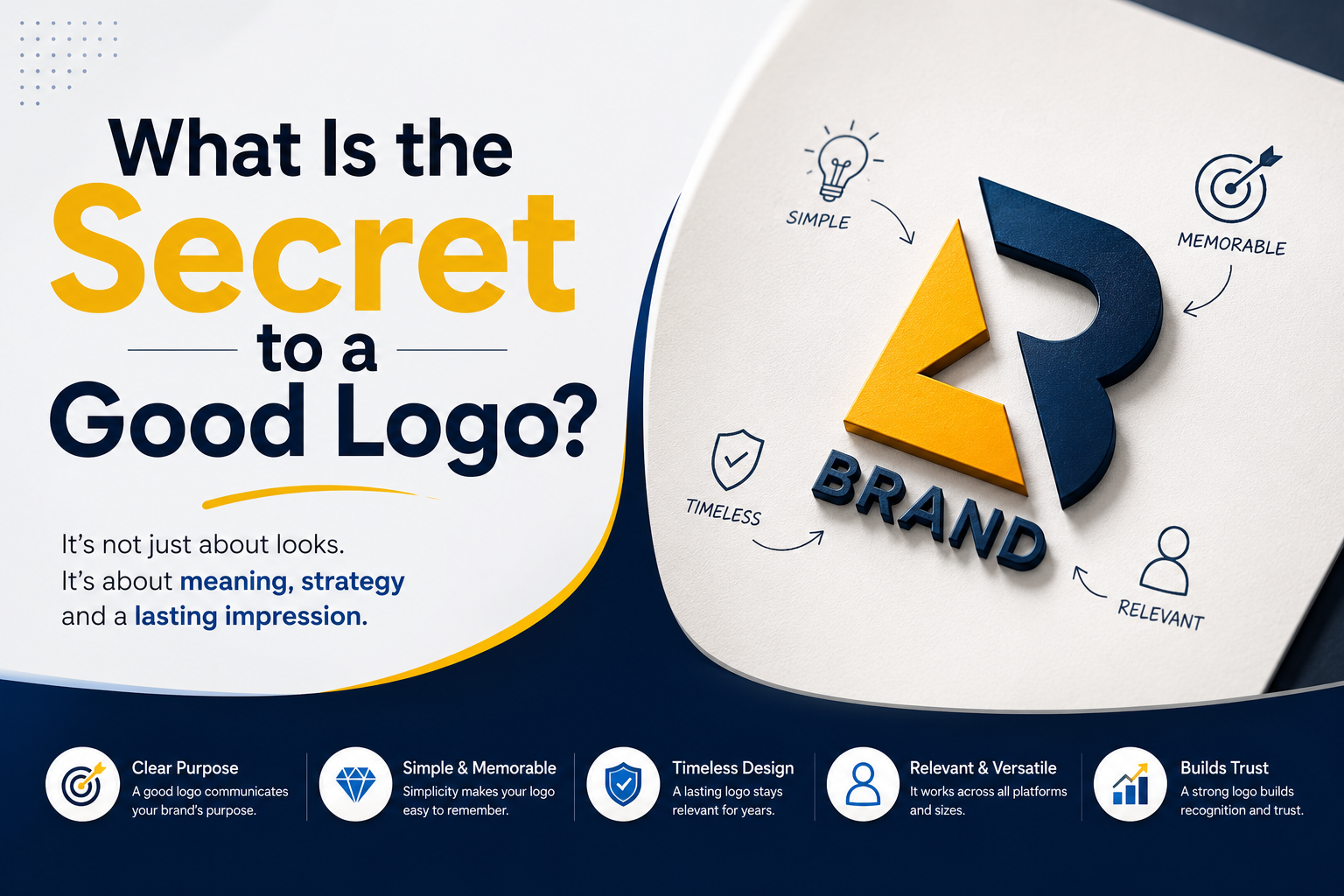
A logo is a symbol, and it’s also a means for a company to convey its brand, personality, and values. The best businesses are those that can be recognized based on their logos. Thus, even if you were working for a local company, an international business, or a new enterprise, a logo should never be forgotten.
But what is a good logo? Most people feel that it ought to be simply beautiful in color and design. Actually, there’s a lot more involved in creating a good logo. A good logo is simple, relevant, clear,r and memorable. In this article, we will discuss this topic.
The importance of a Logo for a Brand:
A logo is always the first thing your customers come into contact with. No matter if it is placed in ads, social networks, a website, or a business card, it is your company’s face.
A professional logo is advantageous because it offers the following benefits:
- Brand awareness creation
- Brand recognition
- Friendly attitude towards the company
- Credibility of a brand
If you don’t have a professionally designed logo for your business, it may not be able to communicate the message.
The Secret of Simplicity
Simplicity is one of the most important of all secrets to a good logo. Logos of Nike, Apple, and McDonald’s are all simple and conform to the core principle of logo design – simplicity allows the audience to recognize the logo and clearly understand its meaning quickly. Moreover, simple logos never go out of style. The trends can, however, shift rapidly, but in simplicity last a longer time.
A Good Logo Needs to be Memorable
One of the main considerations when designing a brand logo is that it should stick with people’s minds because it can help reduce the issues that people encounter in recognizing the specific brand. Later sections will cover the methodologies applied in creating memorable logos.
- Unique shapes
- Balanced typography
- Strong visual identity
- Memorable design elements
Several organizations looking to achieve professional branding consider the best Logo design services in Pakistan a great choice due to their innovative designs and affordable prices.
The presence of a logo has a positive effect on branding if the client can recognize it instantly.
Logo Relevance is Important Too
Businesses have to be careful about the logo design they choose for their commercial brand, as it has to be in line with the core qualities of their business. The design should be modified in three areas: colors, font, and visual imagery, and the design should also reflect the brand and audience.
For instance, law firms choose formal and dark-colored designs, and toy companies select vibrant and colorful designs. The logos are highly relevant, and so customers will be able to grasp the kind of business they’re transacting with little extra information.
Logos have meaning in terms of colors.
Choosing colors is a fundamental aspect of logo design that can affect the audience’s opinions and feelings about the brand. Certain colors are connected with certain particular connections, e.g.:
- Blue – trust, professionalism
- Red – energy, excitement
- Green – nature, growth
- Black – sophistication
- Yellow represents positivity and creativity.
The key is not to use too many colors. The majority of the successful logos are designed in one to three colors.
Typography Can Set the Tone of Your Brand
Typography plays an equally vital role in the design of logos, as fonts convey a message through their style.
For instance:
Serif fonts are seen as reliable fonts.
The use of sans-serif fonts gives a more professional look.
Script fonts exude elegance and creativity.
The right typography can help businesses create the right perception about their brands.
The typography pasted into the logo, if not well selected, can spoil even the most appealing logo design.
Versatility Is Key to Successful Logos
Your logo should be adaptable in various sizes and adaptable to all platforms, including:
- websites,
- mobile phones,
- social media profiles,
- packaging,
- billboards,
- Business cards.
Timeless Logos are still relevant for a longer time.
Most companies opt for professional designers, who will assist them in designing a versatile and impressive logo. A lot of entrepreneurs have begun to understand the significance of branding in developing a dominant position in the highly competitive market environment.
The main thing to avoid in developing a quality logo is being trendy. Oodles of stylish patterns are cool initially, but quickly go out of trend. Logos that last over the years are truly timeless. Brands such as Nike and Coca-Cola are successful due to their simple and consistent logos, and design activities should be geared toward the end user or the brand.
Originality Creates Brand Identity
The essence of any brand identity is originality. All logos must be original. Copying another business or using a generic logo will damage credibility and could cause legal issues.
Original logos will be advantageous for businesses because they will help the companies:
- Create a unique brand identity
- Become more visible among the competition
- Get trusted by customers
- Evade legal problems
Good logos are creative and original; average logos are not.
Emotional Connection Builds Loyalty
Your relationship with customers is strengthened when you connect with them on an emotional level. Many good logos can evoke feelings in people. In this way, people feel instantaneously linked with quality, trust, their own experience, and memories.
If customers feel identified with and connected to a business, they will become brand loyal and repeat consumers. Therefore, it is important to create a connection of feeling of a brand’s logo and its user, so that the logo can be easily remembered by the user.
Final Thoughts
The best logo has no tricks and only simple characteristics: It must be recognizable, relevant, universally applicable, easy to remember,r and unique. A logo created with these standards can aid a company to have a professional look, connect with consumers, and build an exclusive brand name in the target market. Finally, a logo that is good is certainly worth the investment.
