

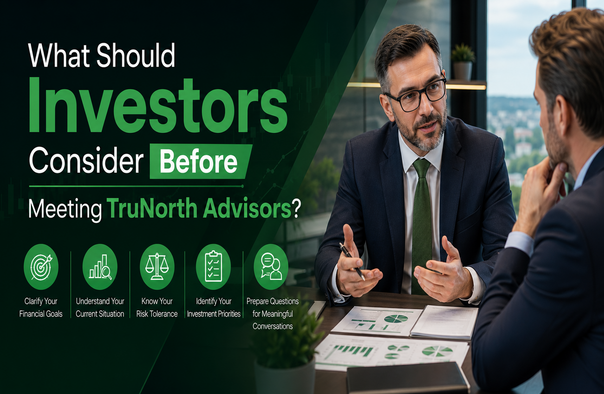
There’s more to preparing for a meeting with a financial advisor than just collecting account statements. The better you understand your financial objectives, concerns, and priorities the more productive the conversation will be. Whether you’re thinking about retirement, investments, or potential long-term financial planning goals, a meeting with TruNorth Advisors is a chance to consider your current situation and your future goals.
Planning ahead can help ensure you have the discussion on the topics that are most important and recommendations that support your financial goals.
Organize Your Financial Information
Having a full financial picture can include more information for advisors to provide informed counsel.
Preparing important papers ahead of the meeting can be useful in preparing the meeting more efficiently.
Useful information could consist of:
- Investment account statements
- Retirement account balances
- Bank account information
- Insurance policies
- Mortgage details
- Outstanding debts
- Recent tax documents
The more up to date financial details that are provided, the more likely they are to make recommendations based on your current situation vs. assumptions.
Understand Your Current Investment Strategy
Many investors may be familiar with where their money is invested but not what it’s being invested for.
Prior to a meeting with TruNorth Advisors, you should go over your existing investments and ask yourself:
- How are your assets allocated?
- Are your investments diversified?
- Does your portfolio match your risk tolerance?
- Have your financial goals changed?
Understanding your existing strategy makes it easier to discuss whether adjustments may be appropriate.
Evaluate Your Retirement Readiness
Financial planning meetings are frequently around retirement planning.
While saving balances are important, the investor should consider other parts of their retirement planning, such as:
- Expected retirement age
- Future lifestyle goals
- Healthcare expenses
- Retirement income sources
- Inflation
- Long-term spending expectations
Talking about these issues can help establish a retirement plan that’s based on realistic financial requirements.
Know Your Risk Tolerance
When deciding where to invest, it is important to consider both financial objectives and your tolerance for risk.
There are investors who want to invest in high growth but volatile companies, and there are those who want to invest in companies that are stable and provide capital protection.
Before you go to your meeting consider:
- How comfortable are you with market risk?
- How would you respond during a market downturn?
- What level of investment volatility feels acceptable?
A genuine discussion of the risks enables investment plans consistent with your long-term goals.
Prepare Questions About Financial Planning
This helps to make sure that key issues are covered by having questions ready.
Consider asking about:
- Investment strategy
- Retirement income planning
- Portfolio reviews
- Tax-efficient planning
- Estate planning considerations
- Long-term financial goals
Written questions can help to direct the discussion and ensure that significant issues are covered.
Discuss Life Changes That Affect Your Plan
Financial strategies should evolve as life changes.
Be prepared to discuss recent or upcoming events such as:
- Marriage
- Divorce
- Career changes
- Business ownership
- Inheritance
- Children or grandchildren
- Major property purchases
Often these milestones affect financial priorities and therefore long term planning strategies may need to be adjusted.
The full picture enables advisors to grasp the changing financial needs.
Focus on Long-Term Planning
A successful investor will typically make a long-term investment decision rather than short-term trading decisions.
In the meeting, you could be discussing:
- Long-term financial objectives
- Investment time horizons
- Retirement planning
- Wealth preservation
- Future income strategies
When it comes to investing, some professionals, such as Matt Dixon, may advise investors to assess their financial decisions over the long term rather than the short term.
This outlook helps to foster better financial planning.
Be Open About Your Concerns
Many investors arrive with specific financial concerns that deserve attention.
These concerns may involve:
- Market volatility
- Retirement readiness
- Healthcare expenses
- Investment performance
- Estate planning
- Tax implications
Sharing these concerns openly helps advisors provide guidance that addresses the issues most important to you.
Clear communication also supports a stronger long-term advisory relationship.It is important that the advisor has these concerns and shares them openly so that it can guide you in the direction of the issues that are most important.
Good communication also helps to build the relationship through the long-term.
Think Beyond Investments
Financial planning involves much more than selecting investments.
Routine discussions may include:
- Retirement income planning
- Cash flow management
- Insurance considerations
- Tax planning
- Legacy planning
- Risk management
A long-term financial plan with the right balance will stem from viewing finances as a whole system of decisions, not individual financial pieces.
This wider view can help to make more informed financial decisions in the long run.
FAQs
What should I bring to my first meeting with a financial advisor?
Take statements and information related to investments, retirement, insurance, tax and financial objectives and questions.
Why is it important to define financial goals before meeting an advisor?
Establishing financial objectives can guide financial recommendations, and ensure that investment strategies are aligned with long-term objectives.
Should I discuss retirement even if it’s years away?
Yes. Earlier retirement planning gives greater flexibility and time for investment plans to work out.
Conclusion
Planning in advance of the meeting with TruNorth Advisors will help lead to more effective meetings and better financial planning decisions. A more robust planning process is accomplished through organizing financial information, identifying long-term goals, assessing current investments and comprehending priorities.
As you meet with a professional like Matt Dixon, whether it’s about retirement planning, investment management, or other financial matters, careful preparation is key to maximizing your time spent together and ensuring you develop a financial plan that will serve you effectively well into retirement.