

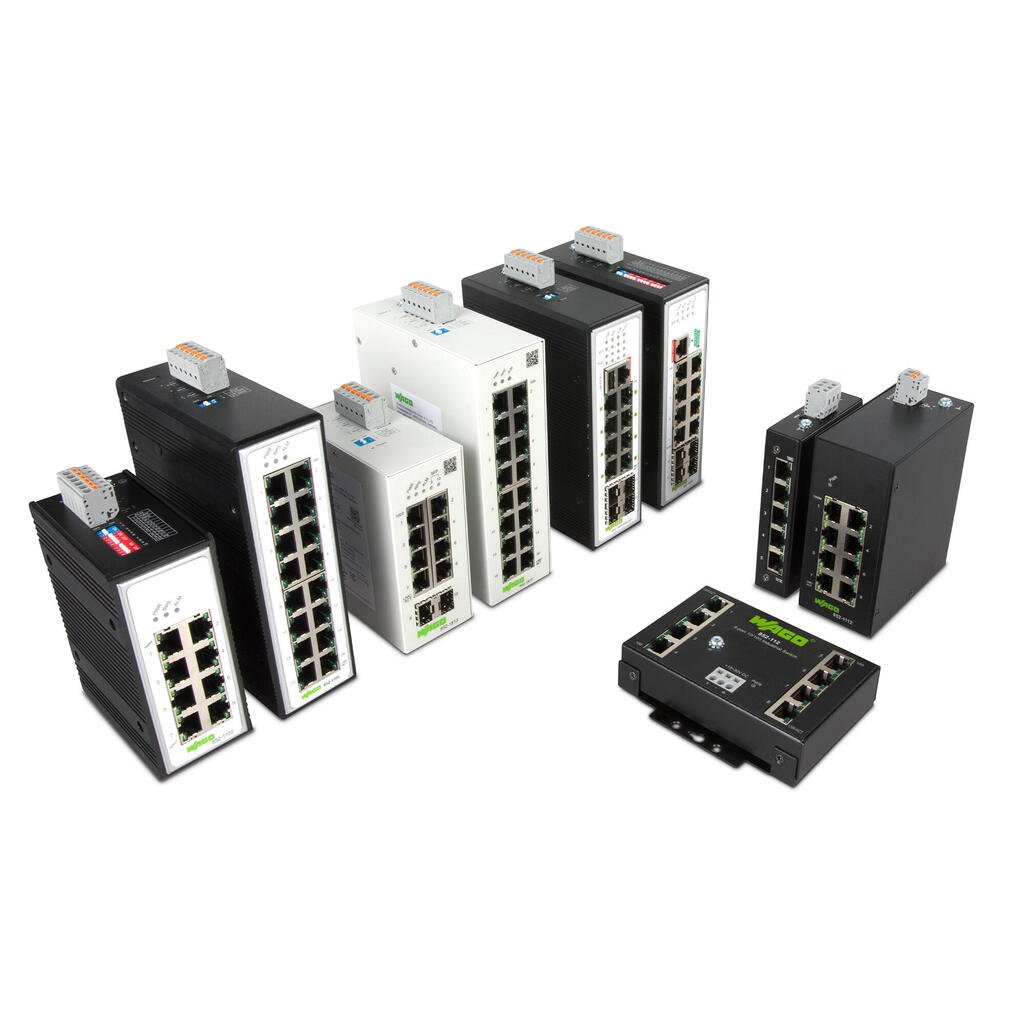
Industrial networks grow bigger every year. Machines talk to each other nonstop. Sensors send data every second. And one weak link can stop a whole production line. This is why picking the right industrial Ethernet switches matters so much in 2026. An industrial Ethernet switch is a rugged network device that connects industrial machines and control systems to enable fast, reliable, and secure data communication in harsh operating environments. A good switch keeps your factory connected. A bad one causes downtime and lost money.
This guide walks you through the exact features that matter today. You will learn what to check before you buy. You will also learn why redundancy, security, and temperature ratings are not optional anymore.
Features You Should Look for in 2026
Buying a switch is not just a technical task. It is a business decision. The right features protect your uptime, your data, and your budget. Here are the features that matter most this year.
Feature 1: Ring Redundancy
Factories run on data now. Every machine sends signals through the network. If the switch fails, the whole line stops. That costs real money every minute. Studies show unplanned downtime can cost manufacturers $260,000 per hour. Advanced industrial Ethernet switches ensure uninterrupted communication through ring redundancy, automatically restoring network connections in milliseconds if a link fails.
Ring redundancy solves this problem well. It creates a backup path for data. If one cable fails, data moves through another route instantly. Some switches recover in under 20 milliseconds. That speed keeps machines running without anyone noticing a fault has happened.
- Look for Xpress Ring or similar fast recovery tech
- Check recovery time under 20 milliseconds
- Confirm support for ERPSv2 RSTP or STP as backup options
Feature 2: Redundant Power Supply
Power failure is another silent killer. A switch with a single power source is risky. If that source fails, your network goes dark. Redundant power supply fixes this gap.
Look for port Ethernet switches that accept dual DC inputs. Many industrial models support ranges like 9 to 48 volts or 12 to 60 volts. This flexibility lets you match the switch to your existing power setup. It also means one power fault will not shut down your entire operation.
- Dual power inputs for backup
- Wide voltage range for flexible wiring
- Alarm contact to signal power loss instantly
Feature 3: Advanced Security Functions
Cyber threats target industrial systems more often now. Hackers know factories run critical operations. A breach can halt production or damage equipment. This makes security a core feature and not an extra add-on.
Managed switches offer strong protection tools. Here are the features worth checking:
- Port security to block unknown devices
- MAC address limitation to control access
- IEEE 802.1x authentication for verified logins
- IGMP snooping to manage multicast traffic properly
- Broadcast and bandwidth limiting to stop network flooding
Some advanced models go even further. They offer built-in encryption like 128-bit GCM-AES on the MAC layer. This protects data packets as they move across the network. Configuration through a secure web browser using HTTPS or SNMPv3 adds another safety layer.
Feature 4: Alerts and Diagnostics
Fault detection matters as much as fault prevention. Managed switches often support email alerts and SNMP traps. These send instant notifications when a problem appears. You do not need to walk the factory floor to find issues.
Many models also include a potential-free alarm contact. This can signal problems through a PLC or remote I O system. It monitors power supply status and port connections at the same time.
- Email alerts for fast response
- SNMP traps for network monitoring tools
- Alarm contact for power and port status
Fast alerts mean fast fixes and fewer surprises. This kind of visibility naturally leads to the next question. How tough does the hardware need to be for real industrial conditions?
Feature 5: Rugged Build For Harsh Environments
Factories are not office buildings. Dust, heat, vibration, and extreme cold all exist on the floor. Your switch must survive these conditions daily.
Check for these physical toughness markers:
- Operating temperature range from minus 40 to plus 70 degrees Celsius
- Metal housing for shock and impact resistance
- DIN rail mounting for easy cabinet installation
- Resistance to vibration common in industrial machinery
A switch rated for standard office use will fail fast in these settings. Extended temperature tolerance is not a luxury. It is a baseline requirement for reliable performance.
Feature 6: Power Over Ethernet Support
Power over Ethernet, or PoE, changes how you wire your network. One cable delivers both power and data. This cuts installation costs and reduces cable clutter significantly.
Newer PoE+ standards support higher power output. Some injectors now deliver up to 90 watts per port. This powers cameras, access points, and other devices without a separate power line. Less wiring means faster setup and lower maintenance costs over time.
- Single cable for power and data
- Up to 90 watts per port on newer models
- Works well with wireless access points on the shop floor
Feature 7: Fiber Optic and SFP Flexibility
Your network today may look different next year. A good port Ethernet switch should grow with your business. Look for SFP module support. This lets you switch between copper and fiber optic connections easily.
Fiber optic support extends your reach dramatically. Some setups support cable lengths up to 80 kilometers. This works well for large campuses, ports, or spread-out facilities. Multimode and single-mode fiber options give you flexibility based on distance needs.
- SFP module slots for easy upgrades
- Cable runs up to 80 kilometers
- A mix of copper and fiber in one network
Feature 8: Protocol Support for Automation
Modern factories run specific communication protocols. Your switch needs to speak the same language as your equipment. Check for support of:
- Modbus TCP for industrial device communication
- PROFINET for automation applications
- VLAN and QoS for traffic prioritization
- LLDP for network topology discovery
- Jumbo frame support up to 10240 bytes for large data packets
PROFINET-certified switches deserve special attention if you run automation-heavy operations. Certifications like PROFINET CC-B confirm that the switch meets strict industry standards. This certification also often includes cyclic diagnostics readable directly from your application.
Final Thoughts Before You Choose
Picking the right industrial Ethernet switches in 2026 comes down to these nine features. You need redundancy for uptime. You need security to block threats. You need rugged hardware to survive real factory conditions. You need PoE and fiber support to scale smoothly.
Do not settle for a switch that only meets today’s needs. Choose one that protects your network now and supports growth later. The right Ethernet switch keeps your machines talking smoothly every single day. It protects your data, your uptime, and your bottom line. Take your time comparing these features. Your network reliability depends on this one decision.