

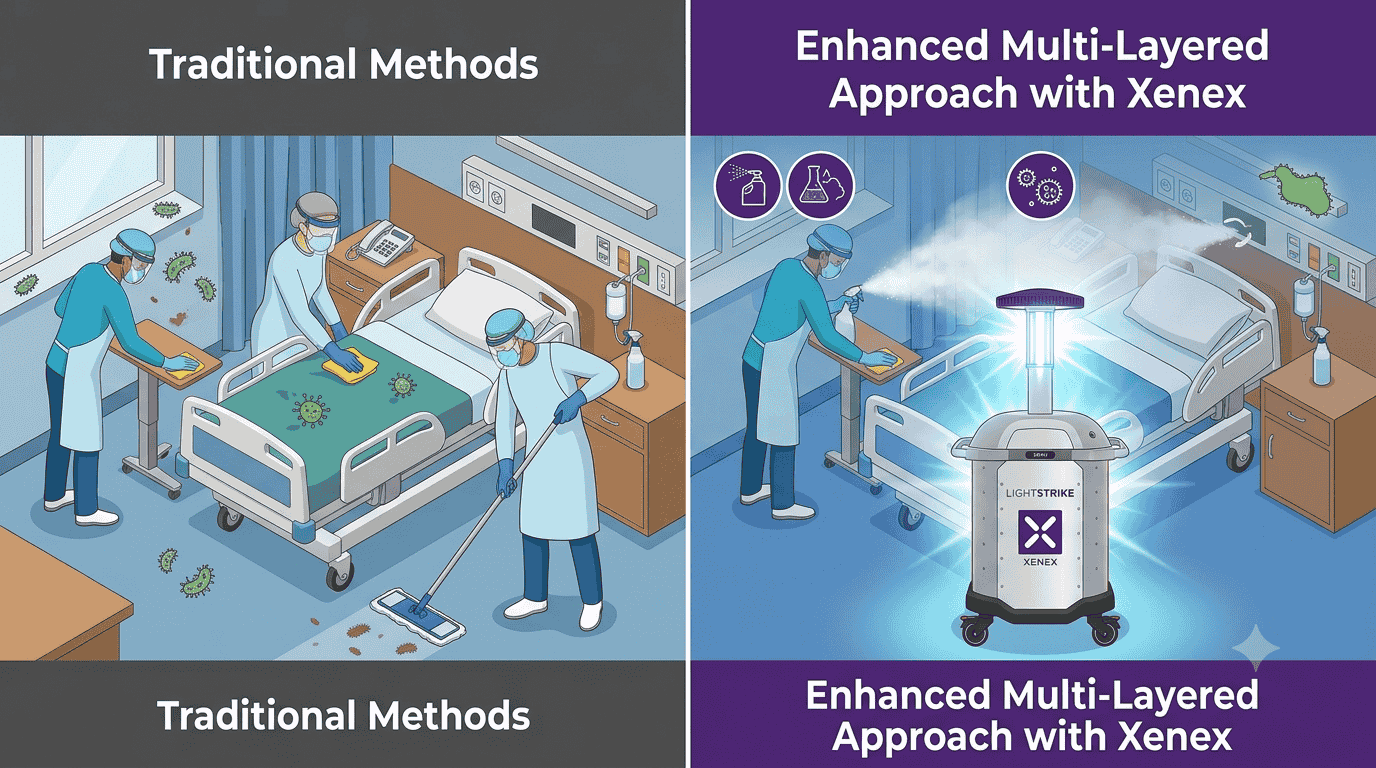
Healthcare facilities face an ongoing challenge: protecting patients, healthcare workers, and visitors from harmful pathogens. Despite advancements in medicine and infection control, healthcare-associated infections (HAIs) continue to impact hospitals and care facilities worldwide. While routine cleaning remains a critical component of infection prevention, relying on a single disinfection method is no longer sufficient in today’s healthcare environment. Modern healthcare organizations are increasingly adopting multi-layered disinfection strategies that combine traditional cleaning practices with advanced technologies such as those offered by healthcare infection prevention solutions.
A comprehensive approach to disinfection helps healthcare facilities reduce environmental contamination, minimize pathogen transmission, and create safer patient care environments.
Understanding the Complexity of Infection Prevention
Hospitals are among the most complex environments when it comes to infection control. Every day, patients, healthcare workers, visitors, and medical equipment move throughout the facility, creating numerous opportunities for microorganisms to spread.
Healthcare-associated infections can result from exposure to harmful pathogens such as:
- Methicillin-resistant Staphylococcus aureus (MRSA)
- Clostridioides difficile (C. difficile)
- Vancomycin-resistant Enterococci (VRE)
- Acinetobacter species
- Influenza viruses
- Norovirus
- Multidrug-resistant organisms (MDROs)
Because these microorganisms can survive on surfaces for extended periods, healthcare facilities must implement multiple layers of protection to effectively reduce infection risks.
Why One Disinfection Method Is Not Enough
Traditional cleaning and disinfection protocols remain essential. However, healthcare environments present unique challenges that make a single approach insufficient.
Human Error
Even highly trained environmental services teams can unintentionally miss contaminated surfaces during routine cleaning.
High-Touch Surface Contamination
Frequently touched surfaces such as bed rails, door handles, call buttons, and medical equipment can quickly become contaminated.
Hidden Pathogens
Some microorganisms survive in hard-to-reach areas that may not receive adequate attention during manual cleaning.
Constant Patient Movement
Patient admissions, transfers, and discharges create continuous opportunities for environmental contamination.
These realities highlight the need for multiple infection prevention measures working together rather than relying on a single cleaning process.
What Is a Multi-Layered Disinfection Strategy?
A multi-layered disinfection strategy combines several infection prevention techniques to reduce environmental contamination and pathogen transmission.
Rather than depending on one solution, healthcare facilities use multiple methods that complement one another.
Common layers include:
- Routine environmental cleaning
- Surface disinfection
- Hand hygiene programs
- Personal protective equipment (PPE)
- UV disinfection technology
- Environmental monitoring
- Staff education and training
Each layer addresses specific infection risks while supporting overall patient safety goals.
Layer One: Routine Environmental Cleaning
Environmental cleaning forms the foundation of every healthcare disinfection program.
Environmental services teams are responsible for removing:
- Dirt
- Dust
- Organic matter
- Visible contamination
Routine cleaning reduces the number of microorganisms present on surfaces and prepares rooms for further disinfection.
Key focus areas include:
- Patient rooms
- Operating rooms
- Waiting areas
- Emergency departments
- Intensive care units
Without effective environmental cleaning, even the most advanced disinfection technologies cannot perform optimally.
Layer Two: Surface Disinfection
After cleaning, healthcare facilities apply approved disinfectants to eliminate remaining microorganisms.
Surface disinfection targets:
- High-touch surfaces
- Medical equipment
- Furniture
- Clinical workstations
Chemical disinfectants play a vital role in reducing microbial contamination and supporting infection prevention efforts.
However, chemical disinfection alone may not reach every contaminated area, which is why additional layers are often necessary.
Layer Three: Hand Hygiene Programs
Healthcare workers are among the most common pathways for pathogen transmission.
Every interaction between patients, staff, equipment, and surfaces creates opportunities for microorganisms to spread.
Effective hand hygiene programs include:
- Handwashing protocols
- Alcohol-based sanitizers
- Compliance monitoring
- Staff education initiatives
Consistent hand hygiene remains one of the most effective methods for preventing healthcare-associated infections.
Layer Four: Advanced UV Disinfection Technology
One of the most important developments in modern healthcare disinfection is the use of UV technology.
UV disinfection systems provide an additional layer of protection by targeting microorganisms that may remain after manual cleaning and chemical disinfection.
Benefits of UV Disinfection
- No-touch disinfection
- Broad-spectrum pathogen reduction
- Consistent performance
- Whole-room disinfection capabilities
- Reduced environmental contamination
Advanced pulsed xenon UV technology emits broad-spectrum ultraviolet light that disrupts the DNA and RNA of microorganisms, preventing them from reproducing.
This technology helps healthcare facilities strengthen infection prevention programs and improve environmental hygiene.
Layer Five: Environmental Monitoring and Verification
Healthcare facilities cannot improve what they do not measure.
Environmental monitoring programs help organizations evaluate cleaning effectiveness and identify areas for improvement.
Monitoring methods may include:
- Surface testing
- Audit programs
- Compliance tracking
- Quality assurance inspections
Data-driven insights allow healthcare leaders to refine infection prevention strategies and ensure consistent performance across departments.
Layer Six: Staff Education and Training
Technology alone cannot eliminate infection risks.
Healthcare workers must understand and consistently follow established infection prevention protocols.
Training programs help staff:
- Follow cleaning procedures correctly
- Practice proper hand hygiene
- Use PPE appropriately
- Understand infection transmission risks
- Support patient safety initiatives
Well-trained employees play a critical role in the success of multi-layered disinfection programs.
The Benefits of Multi-Layered Disinfection Strategies
Reduced Healthcare-Associated Infections
Combining multiple infection prevention methods helps reduce opportunities for pathogen transmission.
Improved Patient Safety
Cleaner healthcare environments support better patient outcomes and reduce infection risks.
Enhanced Environmental Hygiene
Multiple disinfection layers provide more comprehensive protection than any single method alone.
Greater Operational Consistency
Standardized processes help maintain high cleaning and disinfection standards throughout the facility.
Increased Staff and Patient Confidence
Visible infection prevention efforts reassure patients, visitors, and healthcare workers that safety remains a priority.
Where Multi-Layered Strategies Have the Greatest Impact
Healthcare facilities commonly implement multi-layered disinfection approaches in:
Intensive Care Units (ICUs)
Patients with weakened immune systems require enhanced infection prevention measures.
Operating Rooms
Reducing environmental contamination helps support safer surgical outcomes.
Emergency Departments
High patient turnover increases infection control challenges.
Isolation Rooms
Patients with infectious diseases require specialized disinfection protocols.
Long-Term Care Facilities
Vulnerable populations benefit from comprehensive infection prevention programs.
These high-risk environments often see the greatest value from layered disinfection approaches.
The Future of Healthcare Infection Prevention
As healthcare organizations continue to prioritize patient safety, multi-layered disinfection strategies will become increasingly important.
Future innovations may include:
- Artificial intelligence-assisted cleaning programs
- Smart environmental monitoring systems
- Enhanced UV disinfection technologies
- Automated room disinfection solutions
- Data-driven infection prevention analytics
These advancements will help healthcare facilities strengthen infection control efforts while improving operational efficiency.
Conclusion
Healthcare facilities face complex infection prevention challenges that cannot be solved with a single cleaning method. Multi-layered disinfection strategies provide a comprehensive approach by combining environmental cleaning, chemical disinfection, hand hygiene, staff education, environmental monitoring, and advanced technologies such as UV disinfection.
By implementing multiple layers of protection, healthcare organizations can significantly reduce pathogen transmission, improve environmental hygiene, and create safer patient care environments. As healthcare continues to evolve, multi-layered disinfection strategies will remain essential for protecting patients, supporting staff, and achieving long-term infection prevention goals.
