

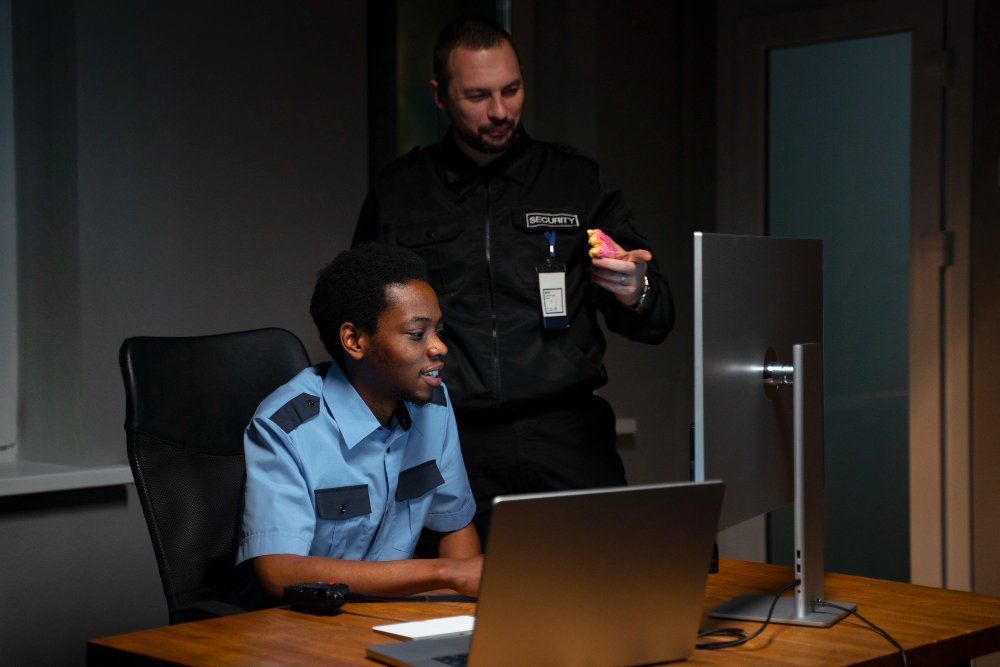
Walk into any IT park in Bengaluru, any hospital in Delhi, or a busy mall in Mumbai and the first person you’ll interact with is a security guard. Yet for years, this profession was treated as something anyone could walk into with no preparation and minimum wages. That’s been quietly changing, and honestly, it’s about time.
The security industry in India is going through a real shift. Not just in terms of demand though the numbers are staggering, with India being one of the world’s largest private security markets but in terms of how seriously people are starting to take preparation and credentials before stepping into the field. Clients want trained professionals. Employers are asking harder questions. And guards themselves are beginning to realise that a structured background opens doors that informal experience simply can’t.
What’s Actually Changing on the Ground
A few years ago, most people entering the security sector were placed at a post with little more than a uniform and a verbal briefing. The expectation was that they’d figure things out on the job. Some did. Many didn’t and that had real consequences for both the person and the client.
Today, the conversation sounds different. Companies are asking candidates about their formal backgrounds. Residential societies and corporate campuses are specifying that they want personnel who have gone through structured security officer training before deployment. This isn’t just about ticking a compliance box. There’s genuine pressure from clients to demonstrate that guards understand access control, emergency response, crowd management, and basic first aid not just how to stand at a gate.
The demand comes from both ends. Guards who’ve invested time in proper security officer training find they’re considered for supervisory roles faster. They can articulate what they’d do in a crisis. Employers notice that.
Why Higher-Level Courses Matter More Than Most People Think
There’s a difference between someone who knows the basics and someone who has put real effort into understanding the role. Higher-level training typically covers:
- Crisis communication and incident reporting protocols
- Legal rights and limitations of a security professional under Indian law
- Fire safety, evacuation coordination, and emergency response
- CCTV monitoring, access control systems, and modern surveillance tools
- Report writing and documentation something that comes up constantly in real work
These aren’t abstract skills. They show up in the first week on the job. Someone who understands how to write a proper incident report, or who knows exactly when they can and cannot detain a person on the property, handles situations with more confidence and fewer mistakes.
Institutions like Raxa Techno Security Solutions have built course structures specifically around the gaps they’ve seen in the workforce not just theoretical knowledge, but the kind of situational awareness that comes from structured, scenario-based learning.
The Bigger Picture for India
India’s security sector employs somewhere between seven to nine million people, depending on whose estimate you believe. That’s a massive workforce. And for a long time, very little of it had any standardised foundation. The Private Security Agencies Regulation Act (PSARA) created a legal framework, but implementation has been patchy and varies significantly by state.
What’s gradually filling that gap is demand-side pressure. When banks, hospitals, tech parks, and housing societies start insisting on credentialed personnel, the market responds. People who’ve taken the time to build real qualifications get prioritised. Those who haven’t get left in lower-wage, higher-turnover roles.
The profession has a real career ladder now from guard to shift supervisor to security manager to consultant roles. But moving up that ladder increasingly requires documented, verifiable training. That’s not a bad thing. It’s the profession maturing.
Frequently Asked Questions
Q: Is formal training actually required to work as a security guard in India?
Under PSARA regulations, security agencies are required to ensure their personnel receive basic training before deployment. However, enforcement varies by state. That said, agencies working with larger or more security-sensitive clients tend to require documented training regardless of the legal minimum.
Q: How long do higher-level security courses typically take in India?
It varies by institution and level of certification, but most structured programmes run anywhere from two weeks to three months. Some offer modular formats that working professionals can complete in stages.
Q: Does completing a recognised course actually improve job prospects?
In practical terms, yes especially for roles that involve client-facing responsibilities, supervisory duties, or deployment in high-security environments like banks, hospitals, or corporate campuses. Credentials make a measurable difference when employers are choosing between candidates with similar experience.
