

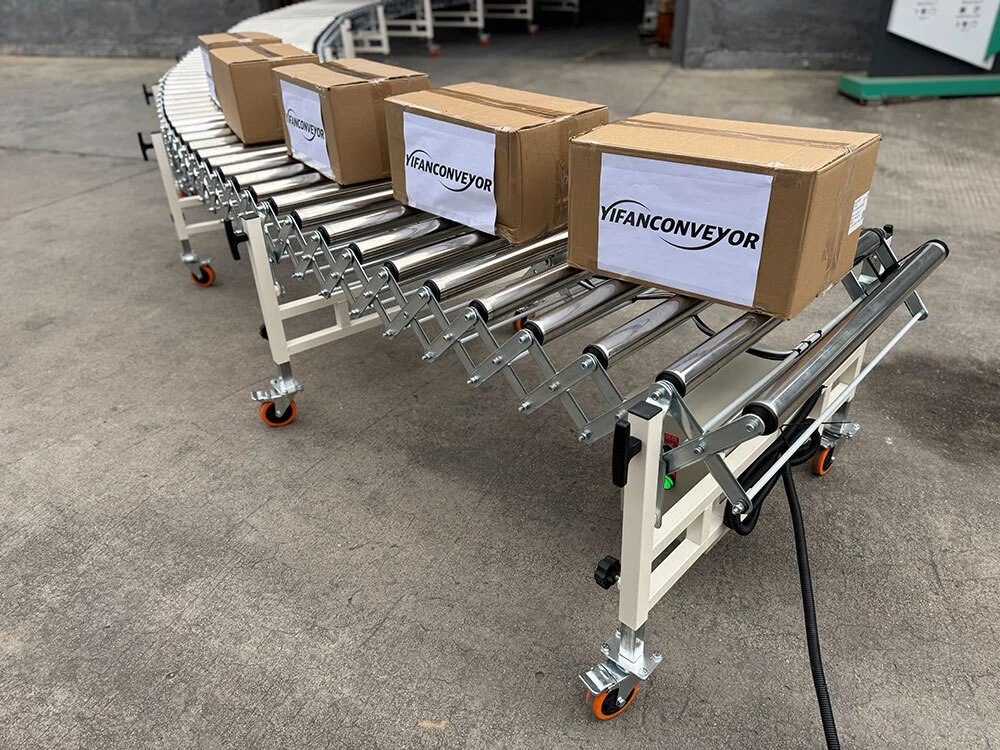
Good equipment design isn’t just about looks, it’s about how well the pieces work together under real daily use across months and years of continuous operation. A flexible motorized roller conveyor brings together a jointed frame, motor-driven rollers, and adjustable components into a single system, and understanding how each part contributes to overall performance helps buyers make a more informed choice rather than simply comparing price tags side by side without context.
Frame Design and Structural Flexibility
The frame is typically built from lightweight aluminum or reinforced steel sections connected through flexible joints, allowing the unit to curve or extend as needed to reach whatever destination the task requires that day. This design choice is what separates it from rigid conveyor systems, giving operators the ability to reshape the path products travel without needing separate equipment for every possible layout configuration a facility might encounter throughout its normal operating schedule. The quality of these joints plays a large role in how smoothly the unit performs once it’s been in use for an extended period of time.
How the Motorized Rollers Function
Small motors built into the roller assembly drive the rollers forward at a consistent pace, moving items along the conveyor without manual pushing or reliance on gravity to keep things moving. Depending on the model, motors may be positioned at intervals along the frame or concentrated near one end, with power distributed through a belt or chain system connecting the rollers together so that movement stays even and predictable across the entire length of the unit, even when the frame is curved or extended to its maximum reach.
Performance Under Different Load Conditions
Performance tends to vary depending on how close the load is to the unit’s maximum rated capacity, and understanding this relationship helps set realistic expectations before the equipment goes into daily use. Lighter loads generally move smoothly and consistently, while heavier loads may require a slightly reduced speed to maintain steady movement without straining the motor beyond its intended operating range. Checking a model’s performance specifications at both light and near-maximum loads gives a more complete picture than looking at top capacity alone, which can sometimes be misleading if it only reflects ideal conditions rather than everyday use.
Adjustability Features That Affect Daily Use
Height adjustment, length extension, and locking wheels all play a role in how easily the conveyor fits into daily operations, and small design details here can make a surprisingly large difference over the course of a busy week. A unit that’s quick to adjust saves meaningful time over the course of a busy shift, especially in environments where the conveyor needs to be repositioned multiple times a day between different tasks that each require a slightly different height or angle to work properly.
Bringing It All Together for Reliable Results
When frame flexibility, motor performance, and adjustability all work well together, the result is a piece of equipment that genuinely earns its place on a busy warehouse floor rather than sitting unused because it’s too difficult or slow to reconfigure. See how a flexible motorized roller conveyor balances these design elements, since it’s the combination of features, not any single one alone, that determines how reliable the equipment proves to be over years of daily use across a wide range of operating conditions.
