

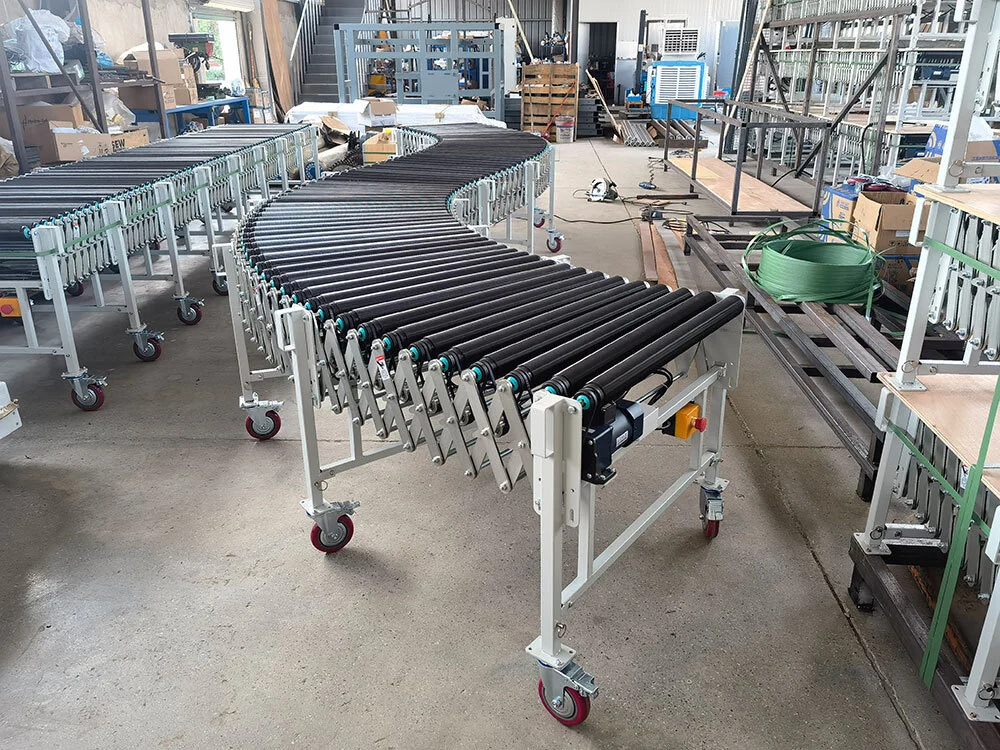
Moving boxes, pallets, and packages by hand is slow, tiring, and expensive over time, and most warehouse managers only realize how much it costs once they start tracking labor hours spent purely on carrying goods from one point to another. That’s exactly the problem a flexible powered roller conveyor is built to solve. Instead of relying on workers to carry or push items across a warehouse floor, this type of conveyor uses motorized rollers to move loads automatically, while its flexible frame lets it bend, extend, and adjust to fit almost any layout a facility might have. For businesses dealing with constant shipping and receiving, this kind of equipment quickly becomes a daily necessity rather than a luxury, and once teams get used to having it available, it’s rare to see them go back to purely manual handling for the same tasks.
What Makes This Conveyor Different From Standard Models
Unlike fixed conveyor lines that stay in one place and one shape for years at a time, this system can curve around corners, stretch to reach loading docks, and collapse for storage when it’s not in use, giving operators a level of control that traditional installed conveyors simply can’t offer. The frame sections connect with hinges or flexible joints, so the whole unit can be reshaped on the spot depending on where products need to travel that day, whether that means angling toward a specific trailer or looping around a stack of pallets blocking the direct path. This adaptability is especially useful in spaces where layouts change often, such as seasonal warehouses, shared loading areas, or facilities that rent out portions of their floor space to multiple tenants who each have different storage arrangements from month to month.
Motorized Power Behind the Movement
The rollers themselves are driven by small motors built into the frame, so products move forward without anyone pushing them, which changes the entire rhythm of how work gets done along a loading line. Operators can usually adjust the speed depending on the weight and fragility of the items being handled, which helps prevent damage to boxes or products during transport, especially when dealing with stacked cartons that could easily tip if moved too quickly. Because the motor does the work, employees are freed up to focus on sorting, scanning, or packing instead of physical pushing, reducing fatigue across long shifts and allowing the same team to handle a noticeably higher volume of goods without feeling rushed or overworked by the end of the day.
Where This Equipment Gets Used Most
These conveyors show up often in distribution centers, courier depots, and manufacturing plants where trucks are loaded and unloaded throughout the day, sometimes dozens of times before a single shift ends. They’re also common in airports for baggage handling and in retail warehouses preparing online orders that need to leave the building within hours of being picked. Because the unit can be wheeled into position and extended toward a truck bed, it removes the need for workers to climb in and out repeatedly, which speeds up loading times noticeably during busy shifts and reduces the risk of trips and falls that tend to happen when people are moving quickly in and out of a trailer all day long.
Durability and Build Quality Considerations
A well-built unit typically uses a lightweight but sturdy aluminum or steel frame, paired with rollers rated for repeated daily use across long operating hours without excessive wear. Buyers should look at the maximum load capacity per roller, the spacing between rollers, and whether the frame includes locking wheels for stability during operation, since a unit that shifts or wobbles while loaded can slow down work and create safety concerns for nearby staff. Cheaper models may cut corners on motor quality, which can lead to uneven speeds, overheating, or early breakdowns, so it pays to compare specifications carefully before purchasing rather than choosing based on the lowest price tag alone, which often ends up costing more in repairs and downtime later.
Getting the Best Value From Your Investment
Choosing the right size and configuration matters more than most buyers expect, since a unit that’s too short won’t reach the truck bed properly, while one that’s too long becomes awkward to maneuver in tight aisles or crowded loading zones. It helps to measure the typical distance between storage racks and loading points before ordering, and to think about future growth so the equipment doesn’t need replacing in a year or two once order volumes climb higher than expected. With the right fit, this kind of conveyor pays for itself through faster handling, fewer strained backs on the warehouse floor, and a measurable drop in the kind of small delays that quietly eat into a facility’s overall productivity throughout the year.
