

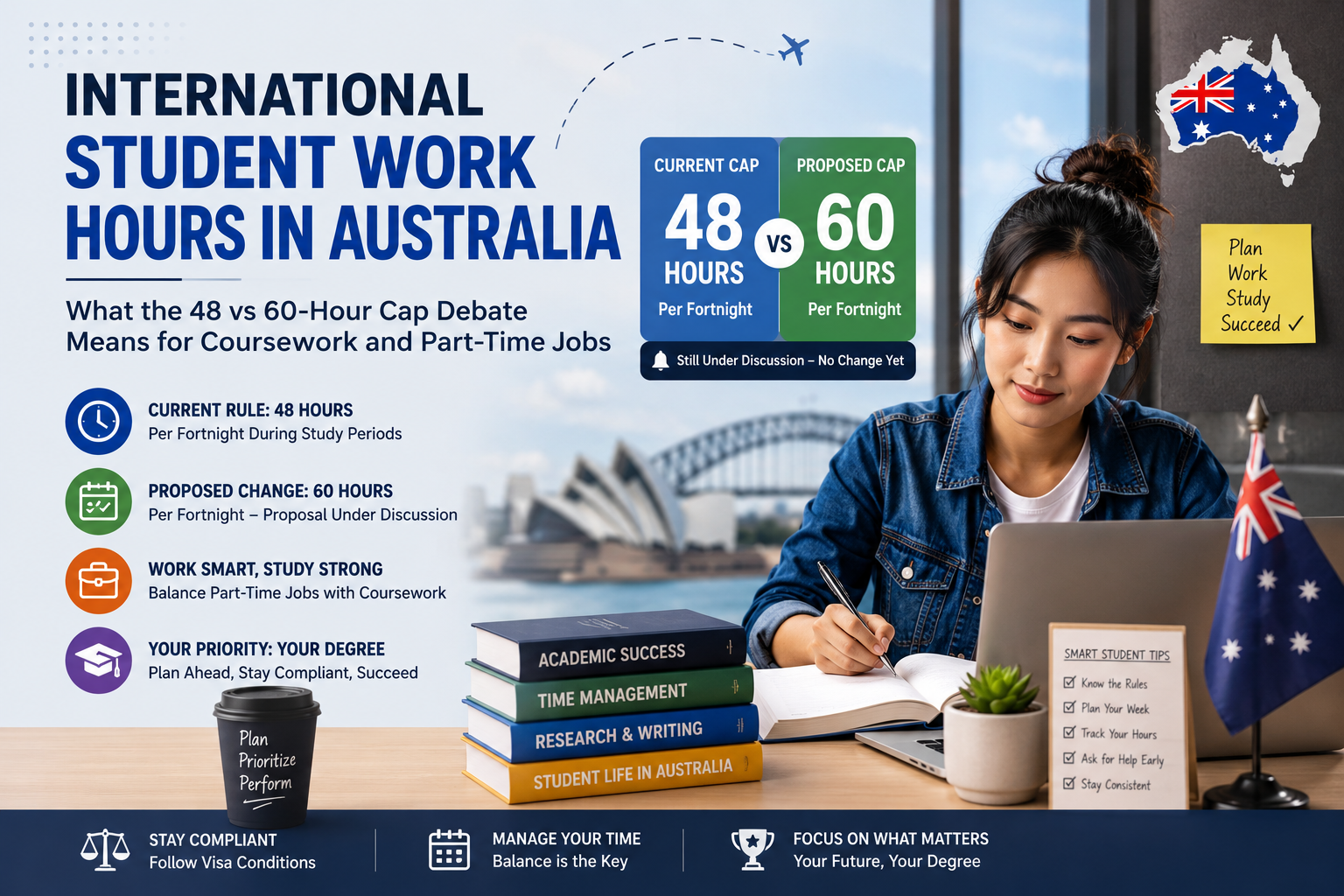
Australia’s proposed increase in the international student work limit from 48 to 60 hours per fortnight has generated plenty of discussion. While the legal cap remains 48 hours during study periods, the proposal has encouraged students to think more carefully about balancing employment with university responsibilities.
Extra work hours may sound appealing when rent, groceries, and transport costs continue to rise. However, earning more money is only one part of the equation. Academic performance, visa compliance, and long-term career goals remain just as important.
The real question isn’t whether students can work more hours. It’s whether they can do so without compromising the reason they came to Australia in the first place—their education.
More Income Doesn’t Always Mean Better Outcomes
Many students work part-time to support themselves financially. Hospitality, retail, delivery services, and customer service jobs offer valuable income while helping students gain Australian workplace experience.
If the work-hour limit eventually rises to 60 hours, students would have greater flexibility to accept additional shifts. That flexibility could help during periods of higher living expenses or unexpected financial pressure.
However, more hours at work also reduce the time available for lectures, independent reading, assignment preparation, and exam revision. Even losing a few study sessions each week can create a backlog that becomes difficult to recover from later in the semester.
Universities have consistently argued that increasing work hours could affect student performance because full-time study already requires a significant commitment outside the classroom.
Time Is Your Most Valuable Resource
Successful students often discover that managing time is more valuable than simply earning a higher weekly income.
Instead of measuring success by the number of hours worked, many high-performing students focus on making every available study hour productive. They schedule research before writing assignments, complete readings throughout the semester, and avoid leaving assessments until the final weekend.
Imagine building a house. If the foundation isn’t completed properly, adding more floors only creates bigger structural problems. University study works the same way. Strong planning early in the semester makes everything easier later.
Students should also communicate with employers well before major assessment periods. Many managers appreciate advance notice and are willing to adjust rosters when they understand academic commitments.
Quality Assignments Require More Than Writing
One of the biggest misconceptions among university students is that assignments only involve writing.
In reality, the writing stage is often the shortest part of the process. Students also need to locate credible academic sources, evaluate research, organise arguments, reference correctly, proofread carefully, and edit multiple drafts before submission.
This explains why students frequently underestimate the time required for major essays or research reports.
When workloads become overwhelming, reviewing assignments before submission becomes especially important. Small grammar mistakes, formatting errors, inconsistent referencing, or unclear arguments can reduce marks even when the research itself is strong.
For students who want to polish their work before submitting, professional services such as ExpertsMinds Proofreading Help can provide an additional quality check for grammar, clarity, formatting, and academic presentation. Using proofreading support responsibly helps students present their ideas more clearly while continuing to develop their own academic writing skills.
Stay Focused on the Current Rules
Although political discussion continues, nothing has changed legally. International students must still follow the 48-hour per fortnight limit during study periods, and exceeding that limit may breach visa condition 8105.
Rather than making decisions based on proposals, students should organise their finances and study schedules around the regulations currently in force. If changes eventually become law, adapting will be much easier for students who already have effective routines.
Keeping a simple calendar that includes work shifts, lectures, assignment deadlines, and revision sessions can prevent many common problems before they occur.
Your Degree Is Still the Best Investment
Part-time work plays an important role in the international student experience. It helps cover living expenses, builds professional confidence, and introduces students to Australian workplaces.
But employment should remain a support for education—not a replacement for it.
Whether Australia keeps the 48-hour limit or eventually adopts a 60-hour cap, students who consistently prioritise planning, maintain strong academic habits, and submit high-quality coursework will gain the greatest long-term benefit from their international education.
The work-hour debate may continue, but one principle remains unchanged: the knowledge, skills, and qualifications you earn during your degree will deliver far greater returns than a few extra shifts during university.
