

In modern insurance operations, agency growth often creates new responsibilities that require better systems and stronger oversight. As insurance agencies expand their producer network, increase carrier partnerships, and operate across multiple states, appointment management becomes more important.For many agencies, manual tracking may work during the early stages. However, growth often increases complexity. Delayed approvals, incomplete appointment records, and compliance gaps may create operational inefficiencies.This is why many insurance organizations today focus on building a structured appointment management process that supports long-term operational success.But why is appointment management such an important part of insurance compliance?
Understanding the Importance of Carrier Appointments
A carrier appointment is the approval process that authorizes a licensed insurance producer to represent an insurance carrier.In the United States insurance industry, insurance carriers generally require verification before a producer can begin selling approved insurance products. Appointment requirements may vary depending on state regulations and carrier expectations.As agencies grow, appointment tracking often becomes more difficult.
Insurance agencies commonly manage:
- Producer licensing requirements
- Carrier appointment approvals
- Compliance documentation
- Multi-state licensing obligations
- Appointment renewal tracking
Industry regulations require agencies to maintain accurate records. Incomplete appointment information may increase compliance risk and slow producer onboarding.For agencies and carriers operating in regulated environments, appointment management becomes an essential operational process.
Common Challenges in Appointment Management
Many insurance agencies begin appointment tracking using spreadsheets or manual systems.Although manageable at first, these systems may become harder to maintain as agencies scale.
Delays in Producer Onboarding
Appointment approval delays may prevent producers from becoming active quickly.Missing forms or incomplete licensing verification can slow onboarding and create operational bottlenecks.
Compliance Visibility Challenges
Compliance teams often face difficulty when appointment records are spread across different systems.Without centralized oversight, monitoring appointment status and producer licensing becomes more difficult.
Multi-State Compliance Requirements
Insurance agencies operating across multiple states must manage varying appointment standards.Different state regulations often increase administrative complexity and tracking requirements.
Increased Administrative Burden
Manual appointment tracking frequently involves repetitive follow-ups, status updates, and reporting.As agencies grow, these tasks may reduce operational efficiency.Because of these challenges, many insurance organizations increasingly use compliance software and insurance automation to improve consistency.
Best Practices for Managing Appointments
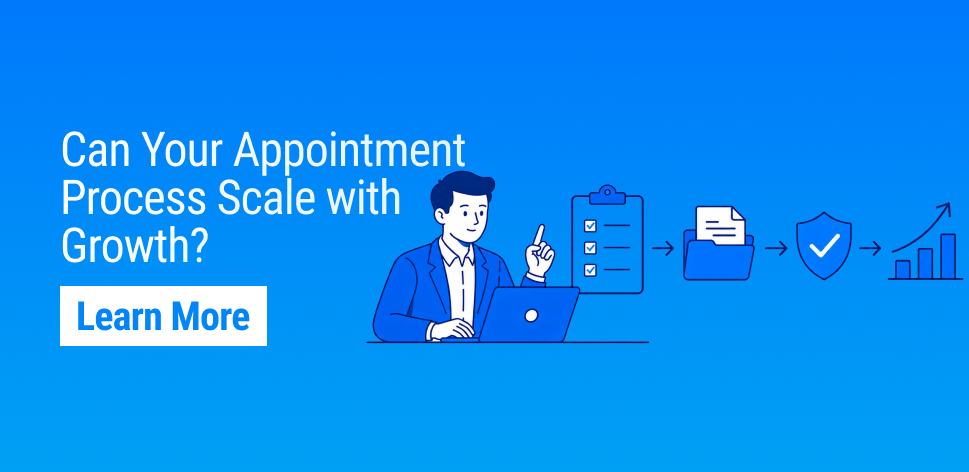
Best practices recommend treating appointment management as a structured workflow.A repeatable process often improves operational oversight and reduces compliance risk.
Verify Producer Licensing
Producer licensing verification is often the first step.Before submitting a carrier appointment, agencies should confirm that producers hold active licenses and meet state requirements.Many organizations rely on license tracking systems to improve accuracy and reduce compliance concerns.
Review Carrier Appointment Guidelines
Insurance carriers may follow different onboarding requirements.Some carriers request additional documentation or maintain different approval timelines.Reviewing these expectations early often helps agencies reduce delays.
Centralize Appointment Tracking
Centralized appointment tracking improves visibility.
Many agencies monitor:
- Pending appointments
- Approval status
- Compliance records
- Renewal timelines
- Producer activity
Appointment tracking platforms often help compliance teams improve reporting and operational consistency.
Improve Workflows Through Automation
Insurance automation helps agencies reduce repetitive manual work.
Compliance software may assist with:
- Appointment reminders
- Renewal tracking
- Workflow monitoring
- Producer management visibility
- Reporting support
Many agencies use insurance compliance platforms like Agenzee to manage appointment tracking, producer licensing, and compliance workflows in one place.

Why Better Appointment Tracking Supports Agency Growth
Appointment management is more than an administrative process.It supports operational growth.Why does this matter?As agencies expand, fragmented systems may increase delays, reduce visibility, and create unnecessary compliance exposure.A stronger appointment management process often helps agencies:
- Improve onboarding speed
- Reduce compliance risks
- Support multi-state operations
- Improve internal reporting
- Strengthen producer management
Many compliance teams today rely on centralized tools because modern insurance operations often require better oversight.
Conclusion
An effective appointment management process helps insurance agencies improve compliance, strengthen operations, and support long-term growth.As agencies expand, managing carrier appointments and producer licensing often becomes more complex. Manual tracking may eventually create inefficiencies and operational risk.Best practices recommend verifying licensing, understanding carrier requirements, centralizing appointment tracking, and using automation to improve oversight.Many agencies today use insurance compliance software such as Agenzee to improve appointment tracking, producer management, and insurance automation while maintaining regulatory standards.
