

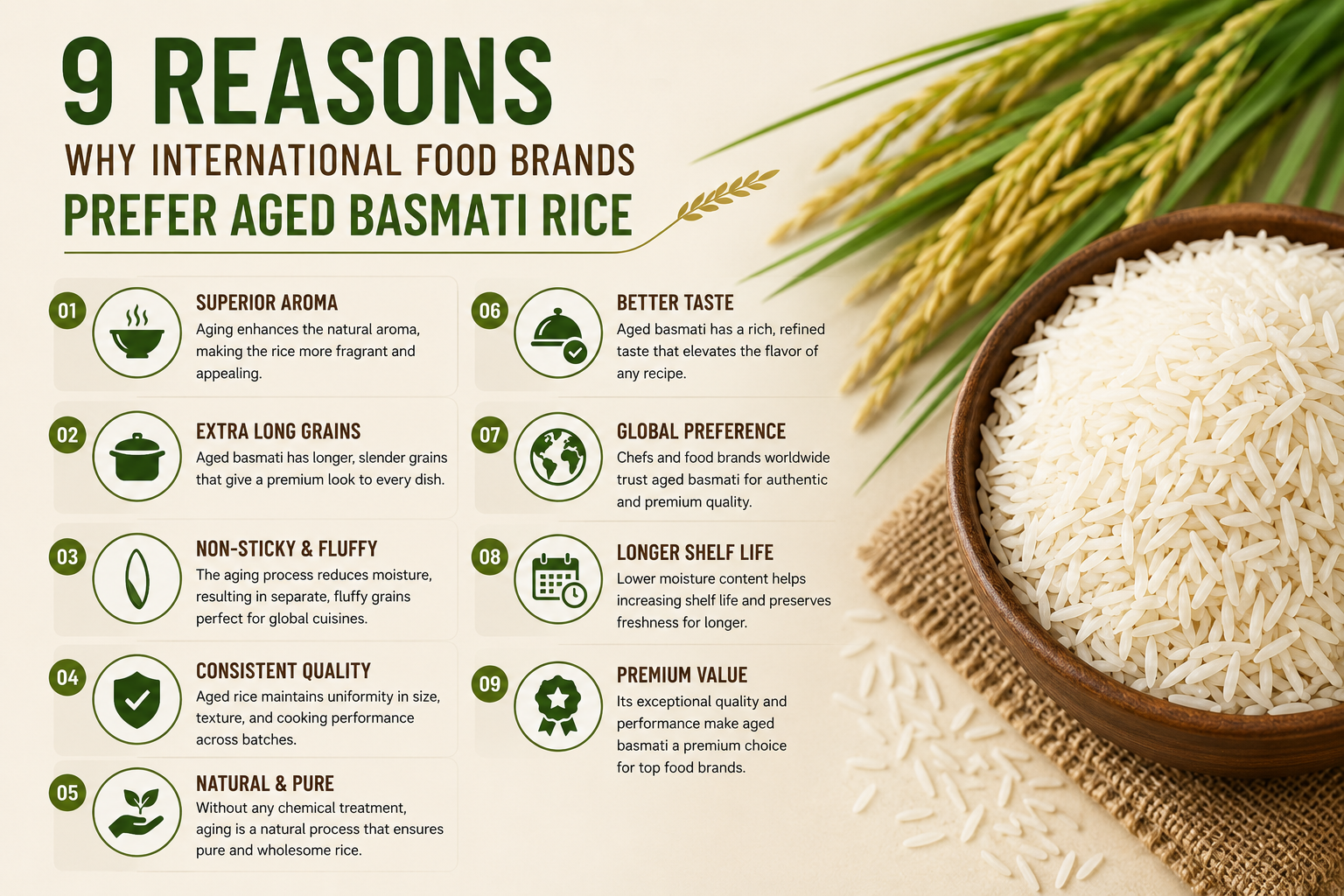
There has been an increase in demand for aged basmati rice from the international food industry due to its cooking stability, grain quality, aroma retention, and longer shelf life. Contrary to fresh-milled basmati, aged rice is stored for an average period of 12 months to 24 months for moisture to dehydrate naturally. This change alters the texture of the rice and improves cooking behaviour, making it ideal for commercial preparation purposes.
It is widely used in the following business segments, including restaurants, hotels, packed foods manufacturers and exporting firms.
Here are some of the reasons why international food brands continue to prefer aged basmati rice and why they source rice from experienced Basamati Rice Manufacturers in India.
Long Grain Expansion After Cooking
Long grain expansion after cooking is considered one of the main reasons why aged basmati rice dominates the market. After cooking, aged basmati rice expands and elongates considerably while remaining separated into individual grains. It’s very useful for cooking the following premium rice dishes.
- Biriani
- Mandi
- Kabsa
- Pilaf
- Persian rice dish preparation
These grains make dishes look better, which affects how customers view the food served.
Reduced Moisture Levels for Consistent Cooking Process
Newly milled rice usually contains excess moisture, which may alter cooking consistency. By storing this type of rice, moisture is naturally drained, improving cooking results. This gives large food businesses the following benefits;
- Uniform texture during bulk cooking
- Less sticky and consistent results
- Reduced sticking to each other during preparation.
- Better and more predictable cooking results
Commercial kitchens prepare many servings every day, which requires consistency and predictability of cooking results.
Development of Stronger Aroma
Another reason international brands prefer basmat rice is that the rice develops natural fragrant properties due to the ageing process as time goes by. In this way, aroma compounds are stabilised and concentrated.
Such properties are highly appreciated by international buyers who use them in their markets located in Middle East Countries, Europe, North America, and the luxury hospitality segment.
Improved Cooking Behavior Under a High-Stress Environment
Large-scale kitchens involve a lot of stress during food preparation, which may lead to poor results using newly harvested rice grains. Commercial kitchens prepare large volumes of food, which requires them to use large containers, steaming systems, dum cooking techniques, and holding processes.
In this case, aged basmati rice works well since it remains intact despite being heated for a longer duration. This makes it suitable for airline caterers, banquets, institutions, restaurant chains, frozen foods manufacturing, etc.
Low Broken Grains in Milled Products
Ageing allows basmati rice grains to develop a strong grain structure that reduces the chances of breakage during the milling and handling process. Lower broken grain percentage is crucial for better visual appearance, improved export grades, enhanced customer satisfaction and attractive packaging of aged rice products.
Most international food brands have stringent requirements regarding the amount of broken grains present in the final packaged product, especially in premium segments.
Increased Resistance to Spoilage During Storage and Transport
The process of transportation and long-term warehousing puts strain on the rice grain, which may affect its quality negatively. Aged basmati rice is less prone to spoilage-related issues due to low moisture content.
This leads to the following benefits:
- Longer-term storage performance
- Transport stability in shipping containers
- Increased warehouse stability
- Improved shelf-life performance
In this case, ageing helps to preserve product quality throughout its lifetime in warehouses and containers.
Improved Texture Required for Some Premium Rice Dishes
Some premium dishes require rice that remains separate after steaming, layering, and reheating. In such cases, aged basmati rice is able to keep its unique texture better compared to newly produced rice.
This becomes critical in the preparation of dishes cooked according to the following techniques.
- Slow cooking
- Dum preparation process
- Steam finishing method
- Use of buffets to hold food
The ability to retain texture is one of the main reasons why premium restaurants prefer aged varieties from top Basamati Rice Manufacturers in India.
Predictable Cooking Behaviors and Results in All Kitchens
International food brands operate with centralized procurement system that requires rice to behave consistently in all kitchens operated by them. In this regard, aged basmati rice becomes useful because of the features like predictable cooking behavior and results, uniform cooking process in different kitchens, chefs, and conditions, consistent customer satisfaction and reduced differences in results when cooking the same recipe.
Operational reliability and predictability are highly critical for international food businesses and restaurant chains.
High Premium Value in Global Markets
Many international markets consider aged basmati rice as a premium quality item due to its aroma and superior taste. Consequently, aged basmati rice is mostly used in the following categories:
- Premium retail packs
- Luxury hotel dining areas
- Premium restaurant menu items
- Food exports
Moreover, some food companies highlight the “aged basmati” label on their food packages to add extra value for customers.
Conclusion
Demand for aged basmati rice in international markets is associated with good performance, consistency, and high premium values expected from premium rice products. Improved grain expansion, predictable cooking behaviours, strong aroma, and long-term shelf performance are some of the advantages of aged basmati rice in international markets.
As global demand for rice products keeps increasing, international food brands need to seek the best and most trusted Basmati Rice Manufacturers in India who are able to provide aged Basmati rice of high quality.
