

Insurance organizations often focus on expanding producer networks, entering new states, and improving operational growth. However, as producer counts increase, compliance responsibilities also become more difficult to manage.Processes that work for a smaller team may not support a rapidly growing organization operating across multiple jurisdictions. Licensing oversight, continuing education tracking, and appointment visibility become more complex as operations scale.Insurance license tracking software helps agencies, MGAs, and insurance carriers maintain compliance visibility while supporting producer growth.
Why Compliance Complexity Increases During Growth
In the United States insurance industry, producers must maintain active licenses in the states where they conduct insurance business.
Insurance organizations must also monitor:
- License renewal schedules
- Continuing education (CE) requirements
- Producer onboarding records
- State compliance obligations
- Appointment-related visibility
- Multi-state licensing activity
As organizations expand, compliance teams often manage significantly more administrative work.Many insurance agencies initially rely on spreadsheets or manual tracking systems. While these methods may work temporarily, growth often reveals limitations in operational visibility.
The Difference Between Managing Five and Hundreds of Producers
Compliance requirements evolve as organizations scale.
Small Producer Operations
Organizations managing a limited number of producers may still maintain visibility through manual processes.Compliance teams often track renewals, licensing updates, and regulatory requirements through spreadsheets or reminders.
At this stage, operational complexity remains relatively low.
Mid-Sized Producer Teams
As agencies and MGAs grow, compliance management becomes more demanding.
Insurance organizations may begin experiencing:
- Fragmented producer records
- Reduced visibility into renewal deadlines
- Slower onboarding workflows
- Increasing administrative workloads
- More complicated multi-state oversight
Manual processes often become harder to maintain consistently.
Large Producer Networks
Organizations operating with hundreds of producers typically require stronger centralized oversight.
Without organized insurance automation, compliance teams may struggle to maintain:
- Licensing visibility
- Continuing education tracking
- Renewal monitoring
- Appointment oversight
- Producer information consistency
In regulated environments, missed compliance details may create operational concerns.
Why Manual Compliance Tracking Creates Risk
Insurance compliance is not a one-time activity.
Licenses expire regularly. Continuing education requirements must be completed on time. Regulatory standards evolve across states.Organizations relying heavily on disconnected systems often experience:
Missed Renewal Visibility
Delays in tracking renewals can interrupt licensing continuity.
Fragmented Compliance Information
Data spread across emails and spreadsheets often reduces operational clarity.
Slower Administrative Processes
Manual workflows may delay onboarding and compliance reviews.
Reduced Oversight
Compliance teams may spend more time locating information than proactively managing requirements.
Many organizations use NIPR to verify licensing status, but larger producer networks often require centralized systems to improve operational efficiency.
How Insurance License Tracking Software Improves Operations
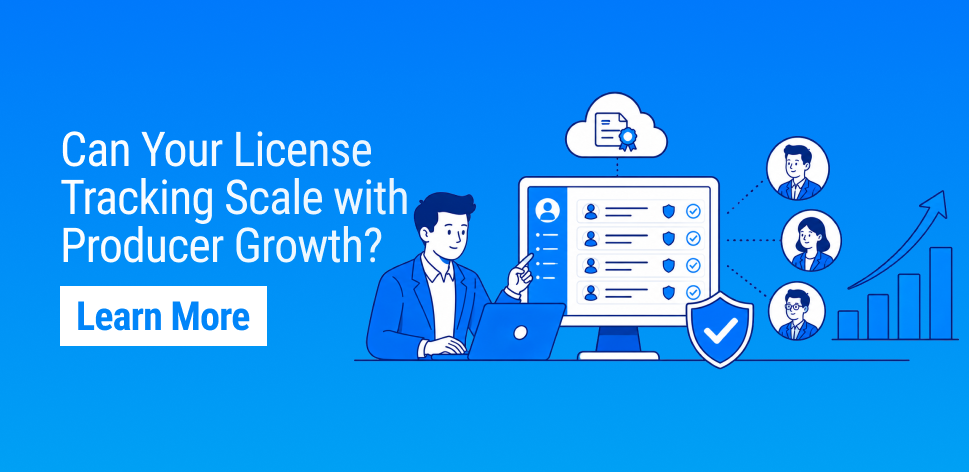
Insurance license tracking software helps agencies, MGAs, and carriers centralize compliance oversight.Instead of depending entirely on manual tracking, organizations can improve visibility into licensing and renewal activities.
An insurance compliance software platform like Agenzee supports:
- Producer licensing management
- Continuing education monitoring
- Renewal tracking
- Multi-state compliance visibility
- Appointment-related workflows
- Centralized producer management
In modern insurance operations, automation helps organizations reduce repetitive administrative work while improving compliance consistency.

Best Practices for Scalable Compliance Management
Many insurance organizations strengthen compliance through structured operational workflows.
A common process may include:
Verify Licensing Status Review producer licensing requirements regularly.
Monitor Continuing Education Track CE completion deadlines proactively.
Maintain Appointment Visibility Review carrier-related compliance requirements.
Centralize Producer InformationReduce fragmented systems and disconnected records.
Track Renewals Before DeadlinesIdentify risks before compliance disruptions occur.
Organizations that improve operational visibility often create stronger foundations for long-term growth.
Conclusion
Producer growth creates additional compliance responsibilities for insurance agencies, MGAs, and carriers.Manual systems that support smaller producer teams often become difficult to maintain as organizations expand across multiple states.Insurance license tracking software helps organizations improve compliance visibility, reduce administrative inefficiencies, and support scalable producer growth.Platforms like Agenzee help insurance organizations centralize licensing management and strengthen compliance operations in regulated insurance environments.
