

In modern insurance operations, producer onboarding is a regulated workflow that determines how quickly insurance carriers, agencies, and MGAs can activate licensed producers. In the United States insurance industry, onboarding is directly governed by state licensing requirements and compliance rules.Insurance organizations must complete several steps before activation, including license verification, carrier appointment validation, and producer code assignment. When these steps are delayed, onboarding timelines increase and operational efficiency decreases.To solve this challenge, many insurance organizations use insurance license management software to automate compliance workflows and reduce onboarding delays.
What Producer Onboarding Means in Insurance
Producer onboarding refers to the structured process of verifying and activating insurance professionals before they are allowed to sell insurance products.A producer must meet regulatory requirements before being added to carrier systems. This ensures compliance with state insurance regulations and carrier policies.
The onboarding process generally includes:
- License verification through NIPR
- Carrier appointment confirmation
- Producer code assignment
- Multi-state compliance validation
- System activation for production use
Each step must be completed in sequence. Missing or incomplete data can block activation.Insurance carriers and agencies depend on this structured workflow to maintain compliance and operational accuracy.
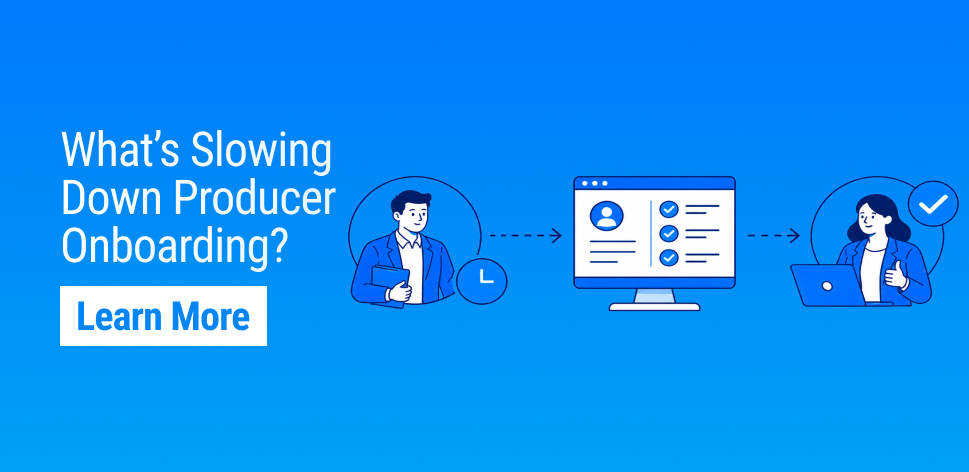
Why Onboarding Delays Happen in Insurance Operations
Onboarding delays often result from manual workflows and fragmented systems across insurance organizations.Many compliance teams still rely on spreadsheets and disconnected tools to manage licensing and appointment tracking. This creates inefficiencies in real-time data visibility.License verification across multiple states is often handled manually, which slows down processing. Carrier appointment updates may not sync instantly, leading to outdated records.Producer codes are sometimes assigned before full compliance validation, which creates correction cycles later in the process.In multi-state operations, varying regulatory requirements increase complexity and extend onboarding timelines.
Impact of Delayed Producer Activation
Delayed onboarding creates both operational and compliance challenges.
When producers are not activated on time, insurance organizations experience slower distribution and reduced productivity across carriers and agencies.
From a compliance perspective, risks include:
- Unverified producer records
- Missing carrier appointments
- Regulatory compliance gaps
- Increased audit exposure
Insurance carriers must ensure that only properly licensed and appointed producers are allowed to operate. Regulatory frameworks emphasize accurate onboarding validation.Even small delays can accumulate into larger operational inefficiencies in high-volume insurance environments.
How Automation Improves Insurance Compliance Efficiency
Insurance license management software centralizes onboarding and automates compliance workflows. It integrates licensing data, carrier appointment tracking, and producer management into a unified system.
Platforms like Agenzee, an insurance compliance software and producer licensing management system, help organizations streamline onboarding through automation.
Key capabilities include:
- Real-time license verification using NIPR integration
- Automated carrier appointment tracking
- Centralized producer code management
- Multi-state compliance monitoring
- Automated onboarding workflows
- Renewal and expiration alerts
This automation reduces manual workload and improves accuracy across insurance operations.Insurance teams can monitor producer readiness in real time instead of relying on fragmented systems.

Why Modern Insurance Operations Depend on Automation
Automation is now essential in insurance compliance due to increasing regulatory complexity and multi-state operations.Compliance teams must manage producer licensing and appointment data across multiple carriers and jurisdictions. Automation ensures consistent and updated information across systems.Industry guidelines require accurate tracking of producer status to avoid compliance risks. Automated systems reduce human error and improve operational consistency.Automation also improves audit readiness by maintaining structured compliance records with traceable workflows.
Conclusion
Producer onboarding delays remain a major challenge in insurance operations due to manual processes, disconnected systems, and regulatory complexity.Insurance organizations are increasingly adopting automation-driven compliance systems to improve onboarding efficiency and reduce operational delays.Insurance license management software enables real-time verification, streamlined carrier appointment tracking, and efficient producer lifecycle management.Platforms like Agenzee support carriers, agencies, and MGAs by improving onboarding speed, reducing compliance risk, and ensuring structured insurance operations.
