

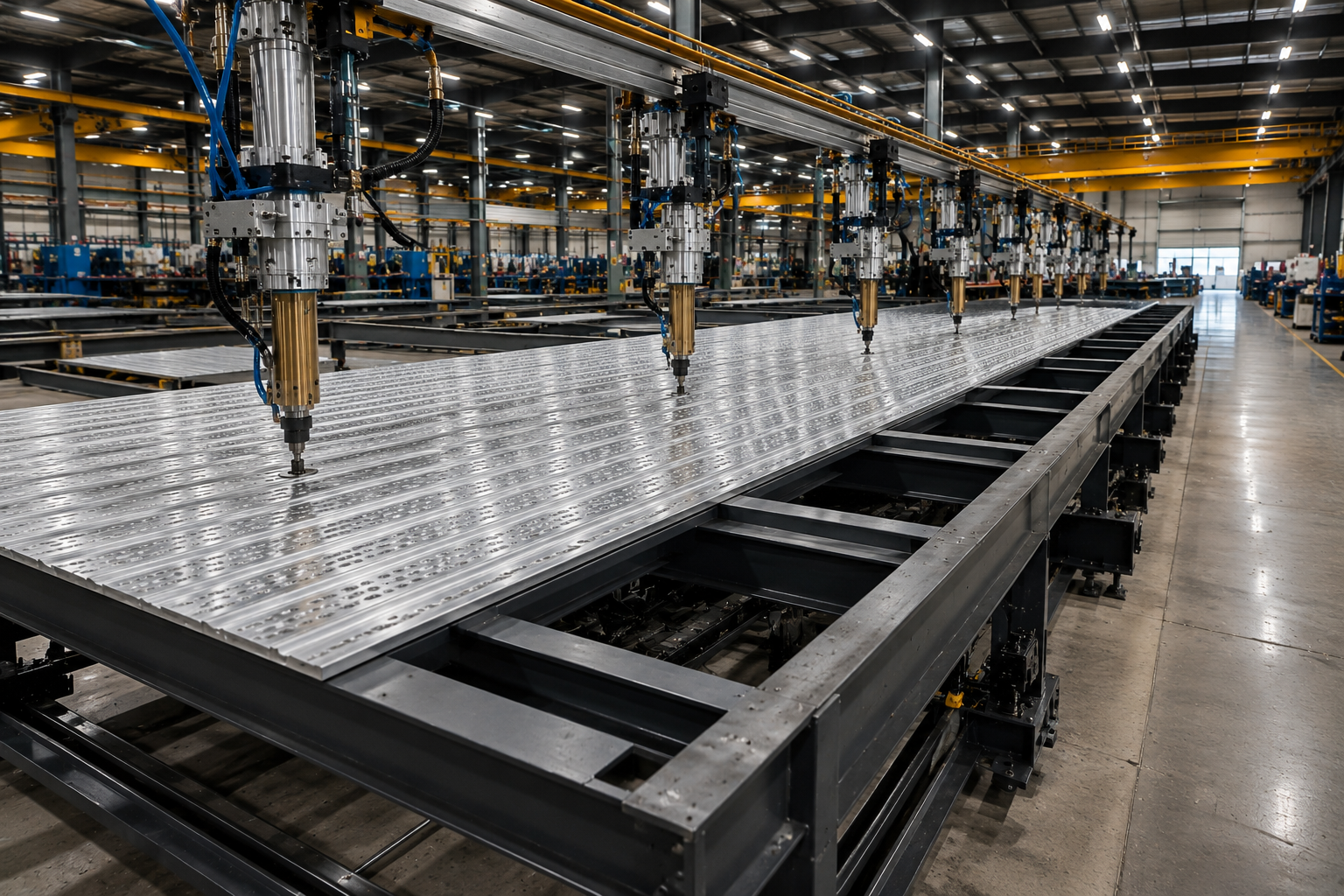
Steel deck assemblies depend on dependable mechanical connections to transfer diaphragm loads and resist uplift. Pneutek, Inc. engineers pneumatically driven fastening technology designed to enable more efficient installation workflows than traditional welded attachment methods.
Steel deck fastening attachment decisions influence cost, schedule, and structural performance on commercial projects. Pneutek, Inc. operates as a B2B manufacturer, supporting authorized distributors who serve contractors and project teams. Selecting the correct attachment method helps reduce the risk of rework and schedule delays.
What Is Steel Deck Fastening Attachment?
Steel deck fastening attachment refers to the process of securing steel deck panels to structural steel or concrete supports using approved fastening methods. Pneumatic fastening systems use compressed air to drive fasteners into substrates with controlled force, supporting repeatable installation performance. These systems are commonly used in commercial construction projects where installation consistency, code compliance, and project efficiency are important considerations.
Why Steel Deck Fastening Attachment Matters for Structural Integrity
Diaphragm action, member bracing, and wind uplift resistance rely on consistent connection performance. Inadequate attachment can affect lateral load paths and create installation challenges during deck placement. Pneumatically driven fasteners support repeatable embedment and consistent installation workflows.
The quality of steel deck fastening attachments influences inspection outcomes and long-term roof or floor performance. Pneutek, Inc. provides engineering submittals to help specifiers review project requirements before procurement. Authorized distributors coordinate logistics and product support, while structural engineers retain responsibility for connection design across small-, mid-, and large-scale commercial projects.
Types of Steel Deck Fastening Attachment Methods
Traditional welding requires certified operators, heat protection measures, and quality inspections. Mechanical fastening systems secure deck sheets to structural members without generating arc or exposing weld-related surfaces. Pneutek, Inc.’s Pneumatic Forced Entry Fastening System, the only pneumatically driven forced entry technology of its kind, drives fasteners into steel and concrete with controlled precision.
This approach provides a repeatable mechanical attachment method that supports efficient installation workflows. Specifiers can request technical documentation from Pneutek, Inc. to compare steel deck fastening attachment options across deck gauges and structural support conditions.
Comparing Pneumatic and Welded Connections
A pneumatic attachment eliminates the need for welding consumables and associated inspection requirements. Welded connections typically require specialized labor and additional quality-control procedures, whereas pneumatic fastening offers a mechanical attachment alternative for steel deck applications.
The Step-by-Step Process for Steel Deck Attachment
- Verify substrate readiness: confirm structural members and any concrete supports meet project requirements.
- Position the tool: align the pneumatic driver to maintain specified edge distances and fastening patterns.
- Drive with controlled pressure: a regulated air supply helps support consistent fastening performance.
- Inspect the seated fastener: verify seating and pattern conformance before progressing.
A common installation mistake is bypassing air-pressure checks, which can affect the consistency of fastening throughout the deck assembly.
Advanced Considerations for Steel Deck Fastening Attachment
Designers should evaluate uplift and shear requirements together when reviewing fastening configurations. Substrate thickness, deck gauge, and member dimensions can influence fastening selection. Marine, warehouse, truck, and trailer floor manufacturing, construction and infrastructure, and aerospace and defense applications may present unique environmental or performance requirements.
Pneutek, Inc. provides engineering submittals and technical documentation to support project evaluations, while authorized distributors assist with product selection for specific applications.
Addressing Seismic Design Requirements
Projects subject to dynamic loading conditions should reference current evaluation reports and project-specific engineering requirements when selecting fastening configurations.
Implementing Quality Control Protocols
Routine inspections, fastener pattern verification, and visual seating checks help confirm that installations align with project specifications and approved fastening layouts.
Strengthening Steel Deck Connections Through Proper Specification
Project managers should review Pneutek, Inc. evaluation reports and technical documentation when assessing steel deck fastening attachment requirements across different deck gauges and project conditions. Routine inspections help verify that installations align with design intent. Authorized distributors provide tool troubleshooting, pneumatic system maintenance support, product evaluations, and training assistance.
Contractors evaluating Pneutek steel decking fasteners for small-, mid-, and large-scale commercial projects should contact an authorized distributor for application guidance and product information. Pneutek, Inc. delivers the engineering and manufacturing expertise behind every fastening system, while authorized distributors remain the primary point of contact for sales and end-user support.
To evaluate the right fastening solution for your steel deck application, contact an authorized Pneutek, Inc. distributor for technical guidance, product information, and project-specific support.
