

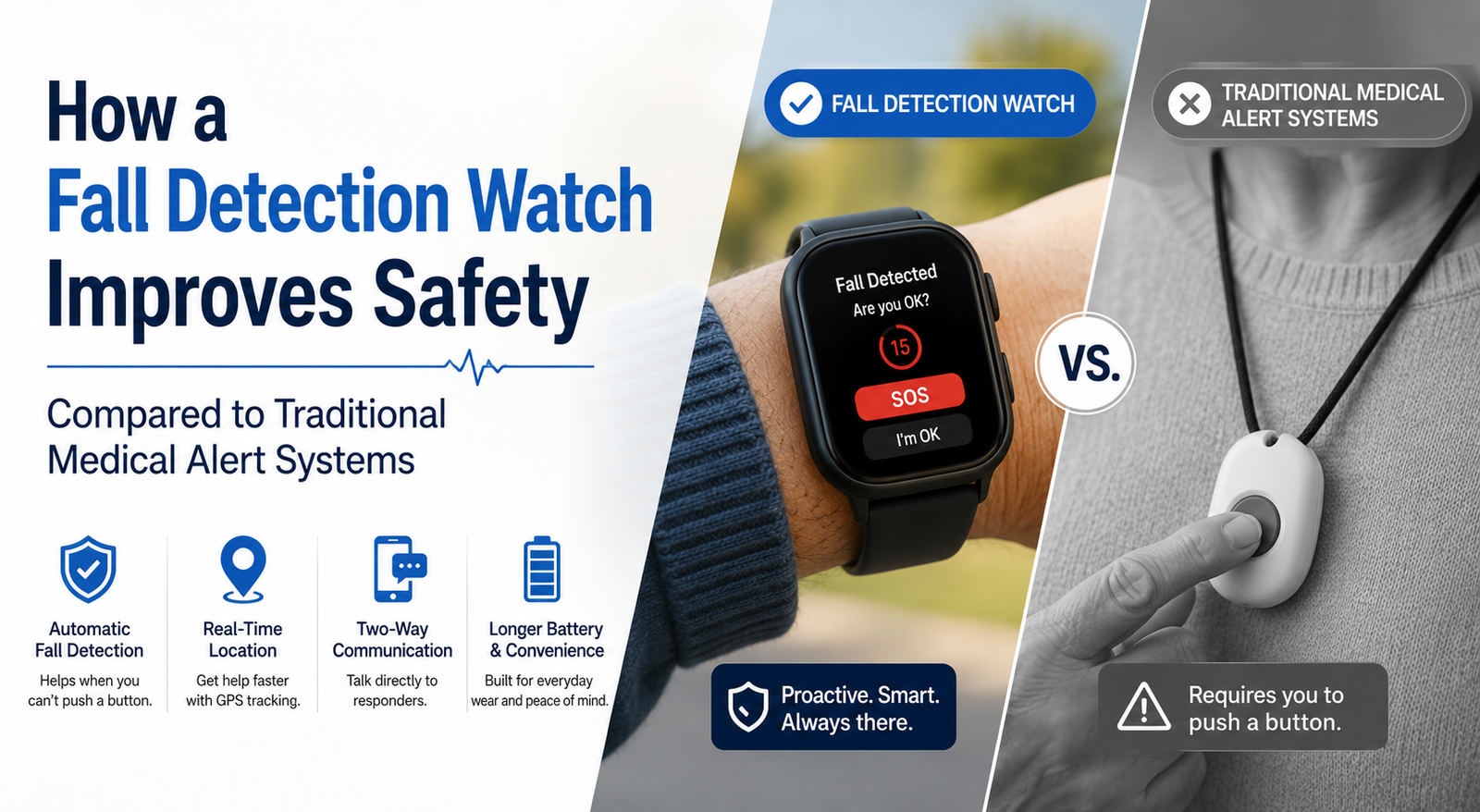
Falls are one of the leading causes of injury among older adults, making reliable emergency response technology more important than ever. While medical alert systems have provided peace of mind for decades, advancements in wearable technology have introduced smarter, more convenient solutions. Today, a fall detection watch offers greater mobility, automatic emergency alerts, and everyday usability that traditional devices often cannot match.
In this article, we’ll compare traditional medical alert systems with modern fall detection devices to help you understand why a fall detection watch is becoming the preferred choice for many seniors and caregivers.
Understanding Traditional Medical Alert Systems
Traditional medical alert systems are designed to connect users with emergency assistance when they need help. Most systems include a wearable pendant or wrist button connected to a base station installed at home.
When the emergency button is pressed, the system contacts a monitoring center or designated family member. While these devices have helped countless people over the years, they also come with several limitations.
Some common drawbacks include:
- Limited coverage outside the home
- Dependence on the user pressing the emergency button
- Bulky pendants that users may forget to wear
- Reduced functionality beyond emergency assistance
These limitations have encouraged the development of smarter fall detection devices that offer greater independence and faster emergency response.
What Is a Fall Detection Watch?
A fall detection watch is a wearable smartwatch equipped with advanced motion sensors, accelerometers, and intelligent algorithms that can recognize sudden falls. Unlike many traditional medical alert systems, the watch can automatically detect a serious fall and initiate an emergency alert if the wearer does not respond within a set period.
Many models also include features such as:
- GPS location tracking
- Two-way voice communication
- Heart rate monitoring
- Activity tracking
- Medication reminders
- Step counting
- Emergency SOS button
Because it functions like a modern smartwatch, users are often more willing to wear it throughout the day, increasing overall protection.
Automatic Fall Detection Saves Valuable Time
One of the biggest advantages of a fall detection watch is its ability to automatically recognize falls.
With traditional medical alert systems, the user must often press an emergency button. However, after a severe fall, a person may be unconscious, confused, or physically unable to reach the button.
Modern fall detection devices continuously monitor movement patterns. When a significant fall is detected, the watch automatically sends alerts to caregivers, emergency contacts, or professional monitoring centers, reducing response times when every minute matters.
Better Protection Inside and Outside the Home
Traditional medical alert systems were originally designed primarily for use at home. While mobile versions are available today, many older systems still rely on limited-range base stations.
A fall detection watch offers protection wherever the user goes. Built-in GPS and cellular connectivity allow emergency responders or family members to locate the wearer whether they’re walking in the neighborhood, shopping, traveling, or exercising.
This level of mobility provides greater independence without sacrificing safety.
Comfortable Enough for Everyday Wear
Many seniors hesitate to wear traditional pendants because they feel medical-looking or uncomfortable.
A fall detection watch resembles a regular smartwatch, making it more appealing for everyday use. Since users are more likely to wear it consistently, the device offers continuous monitoring and reliable protection throughout the day.
Consistent use is one of the most important factors in the effectiveness of any fall detection device.
More Than Emergency Assistance
Modern fall detection devices do much more than detect falls.
Many watches include wellness features that encourage healthier lifestyles while helping caregivers monitor overall well-being.
Additional features may include:
- Heart rate monitoring
- Blood oxygen measurement (on supported models)
- Sleep tracking
- Daily activity monitoring
- Fitness tracking
- Medication reminders
- Location sharing
- Emergency SOS
These added capabilities make a fall detection watch a valuable health companion rather than simply an emergency device.
Improved Peace of Mind for Families
Family members often worry about loved ones living independently.
A fall detection watch provides reassurance through automatic alerts, real-time location sharing, and continuous monitoring. Instead of waiting for someone to answer the phone or manually request help, caregivers receive notifications quickly when assistance may be needed.
Compared to many traditional medical alert systems, these advanced communication features strengthen the connection between seniors and their support network.
Choosing the Right Fall Detection Device
When selecting among today’s fall detection devices, consider the following features:
- Reliable automatic fall detection
- GPS tracking
- Cellular connectivity
- Long battery life
- Waterproof design
- Comfortable fit
- Easy-to-use interface
- Optional professional monitoring service
The best fall detection watch combines dependable emergency protection with everyday convenience.
Final Thoughts
Traditional medical alert systems continue to provide valuable protection, but wearable technology has significantly expanded what personal safety devices can do. A modern fall detection watch offers automatic fall detection, mobility, GPS tracking, health monitoring, and seamless communication in a single wearable device.
For seniors who want greater independence and families seeking additional peace of mind, today’s fall detection devices represent an important advancement in personal safety. By combining emergency response with everyday health features, a fall detection watch delivers comprehensive protection that goes far beyond the capabilities of many traditional medical alert systems.
