

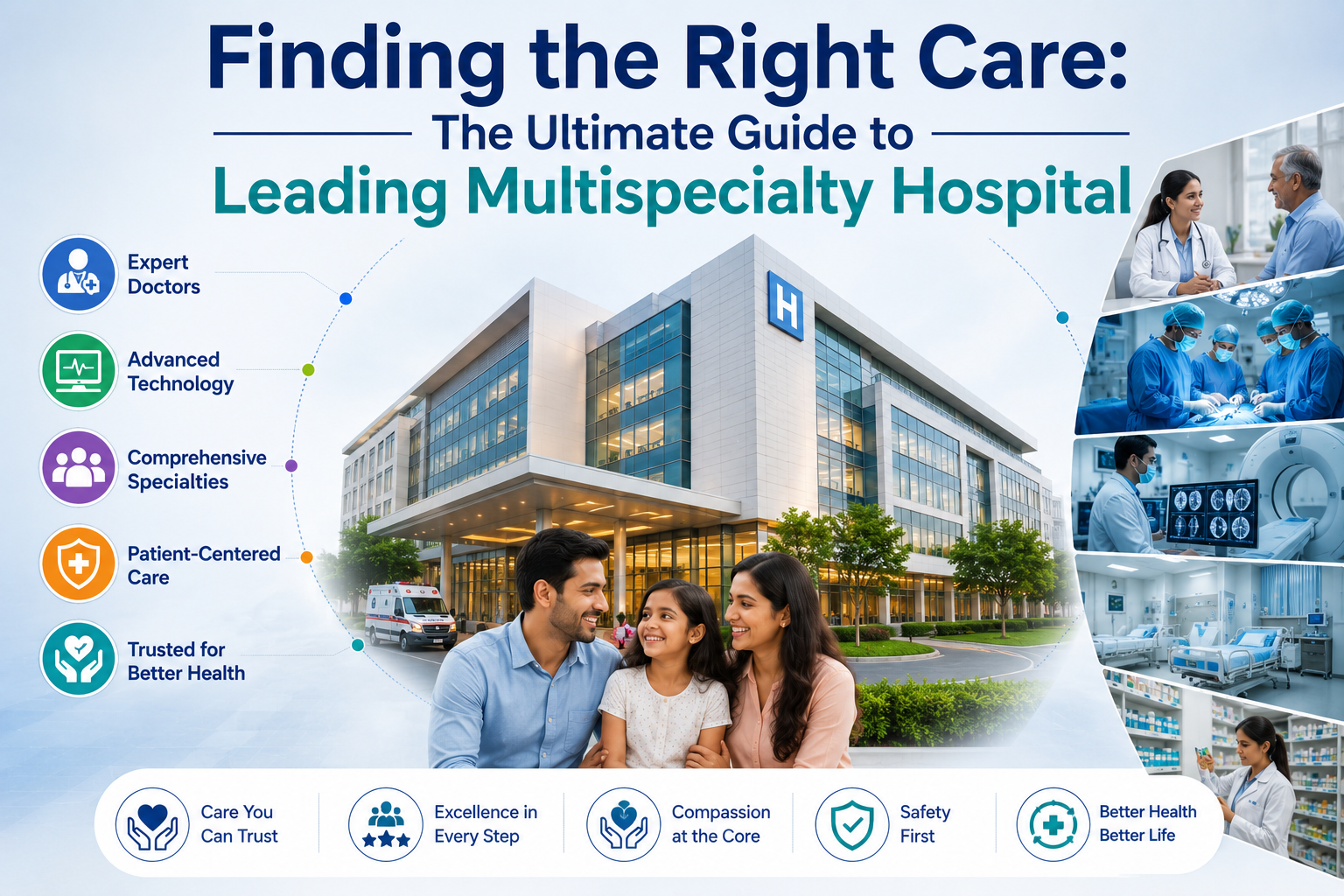
Navigating the modern healthcare system can often feel overwhelming, particularly when facing a complex diagnosis or requiring specialized surgical treatment. In times of medical urgency, families are confronted with dozens of clinical options, conflicting online reviews, and varying levels of hospital infrastructure. A multispecialty hospital bridges this gap by bringing diverse medical disciplines—ranging from cardiology and oncology to orthopedics and neurosurgery—under a single, synchronized roof.
When evaluating top-tier tertiary care centers, understanding the foundational pillars of quality medical infrastructure is essential for making an informed choice. Whether you are seeking advanced cardiac interventions, specialized organ care, or 24/7 trauma management, identifying the Best Hospital in Jaipur or any regional medical hub requires looking beyond mere branding. Genuine clinical quality relies on certified medical protocols, cutting-edge diagnostic technology, multi-disciplinary team coordination, and dedicated patient-centric support.
1. What Defines a Premier Multispecialty Hospital?
A true multispecialty hospital is more than just a large facility with multiple doctors; it is an integrated ecosystem designed to handle complex human health conditions seamlessly. Unlike single-specialty clinics, tertiary multispecialty centers are equipped to manage multi-organ complications, surgical emergencies, and long-term rehabilitative care simultaneously.
Key Pillars of a Modern Tertiary Care Center:
- Interdisciplinary Collaboration: Seamless coordination between specialists (e.g., a cardiologist working alongside a nephrologist for a high-risk cardiac patient with renal failure).
- Round-the-Clock Critical Care: Fully functional Intensive Care Units (ICUs), High Dependency Units (HDUs), and Neonatal ICUs (NICUs) staffed 24/7 by dedicated intensivists.
- Advanced Surgical Suites: Modular operation theaters featuring laminar airflow, HEPA filtration, and advanced robotic or laparoscopic surgical setups.
- Centralized Diagnostics: In-house 3.0 Tesla MRI, high-slice CT scans, digital mammography, and NABL-accredited pathology laboratories operating 24 hours a day.
2. Crucial Factors to Evaluate Before Choosing a Hospital
When selecting a healthcare institution for planned procedures or emergency preparedness, evaluating the following parameters ensures patient safety and medical reliability:
                          ┌───────────────────────────┐
                          │ Hospital Selection Guide  │
                          └─────────────┬─────────────┘
                                        │
         ┌──────────────────────────────┼──────────────────────────────┐
         ▼                              ▼                              ▼
┌──────────────────┐          ┌──────────────────┐          ┌──────────────────┐
│  Accreditation   │          │  Specialist Team │          │ Infrastructure  │
│  NABH / NABL /   │          │ Multi-Disciplinary│          │ 24/7 ICU & Modular│
│  JCI Certifications         │ Super-Specialists│          │ Operation Theatre│
└──────────────────┘          └──────────────────┘          └──────────────────┘
Accreditation and Safety Standards
Accreditation serves as an objective benchmark for clinical quality and operational safety. National Accreditation Board for Hospitals & Healthcare Providers (NABH) and National Accreditation Board for Testing and Calibration Laboratories (NABL) indicate that the facility adheres to rigorous infection control standards, fire safety norms, and patient rights protocols.
Surgical and Intensive Care Capability
Surgical success rates are heavily tied to the quality of the post-operative ICU environment. Look for facilities that feature high nurse-to-patient ratios in critical care wards, advanced mechanical ventilation, continuous hemodynamic monitoring, and dedicated dialysis support.
3. Core Clinical Departments to Look For
A high-performing multispecialty hospital typically operates distinct Centers of Excellence. Here is an overview of the vital departments that form the backbone of a tertiary healthcare setup:
| Department | Key Services & Procedures | Essential Technology |
| Cardiac Sciences | Angioplasty, CABG (Bypass Surgery), Valve Replacement, Pacemaker Implantation | Flat Panel Cath Lab, 2D Echo, Cardiac MRI |
| Neurosciences | Brain Tumor Resection, Aneurysm Clipping, Spine Surgeries, Stroke Management | Intraoperative Neuro-Monitoring, Neuro ICU |
| Oncology (Cancer Care) | Medical, Surgical, and Radiation Oncology, Chemotherapy | PET-CT, Linear Accelerator (LINAC) |
| Orthopedics & Joint Care | Robotic Knee & Hip Replacements, Trauma Recovery, Arthroscopy | C-Arm Fluoroscopy, Arthroscopic Towers |
| Gastroenterology & Hepatology | Endoscopy, Colonoscopy, Liver Disease Management, GI Surgeries | High-Definition Endoscopy Suites |
| Nephrology & Urology | Kidney Transplants, Hemodialysis, Laser Stone Surgeries | Holmium Laser, Dedicated Dialysis Units |
4. Understanding Emergency Response and the Golden Hour
In emergency medicine, the first 60 minutes after a severe injury, heart attack, or acute stroke are known as the “Golden Hour.” Receiving proper medical intervention during this window drastically alters patient outcomes.
Emergency Checklist:
- Does the hospital have a dedicated, non-blocking emergency drive-in?
- Are Advanced Life Support (ALS) ambulances (“ICU on Wheels”) available 24/7?
- Is a cardiac cath lab or trauma surgery team available on standby around the clock?
When patients evaluate healthcare options across Northern India, finding the Top Hospital in Jaipur often comes down to assessing how swiftly these emergency departments respond during critical moments. A medical center that integrates its triage team directly with diagnostic radiology and operating rooms ensures zero delay when every second counts.
5. Health Insurance, Empanelments, and Cashless Treatment
The cost of advanced tertiary care can be substantial, making financial transparency and smooth claim processing crucial factors during hospital stays. Leading healthcare centers maintain robust Third-Party Administrator (TPA) desks to handle insurance approvals seamlessly.
                     ┌───────────────────────────────────┐
                     │    Patient Admission & TPA Desk   │
                     └─────────────────┬─────────────────┘
                                       │
         ┌─────────────────────────────┴─────────────────────────────┐
         ▼                                                           ▼
┌──────────────────────────────┐                   ┌──────────────────────────────┐
│  Government Schemes          │                   │  Private Health Insurance    │
│  • RGHS                      │                   │  • Corporate Health Policies │
│  • Ayushman Bharat / Chiranjeevi                 │  • Cashless Claims Processing│
│  • CGHS / ECHS / Railways    │                   │  • TPA Pre-Authorizations    │
└──────────────────────────────┘                   └──────────────────────────────┘
A well-organized hospital helpdesk will guide families through pre-authorization forms, estimate costs upfront, and assist with document submission to eliminate unexpected out-of-pocket expenses at the time of discharge.
6. Patient-Centric Facilities and Holistic Healing
Modern medical standards acknowledge that clinical success is closely linked to patient comfort, emotional well-being, and post-discharge recovery.
Beyond Medicine: Hospital Quality Indicators
- Infection Control Protocols: Regular air exchanges in wards, strict hand-hygiene compliance, and clear isolation facilities for contagious conditions.
- Transparent Communication: Daily counselor updates for ICU patients and structured doctor-family briefings.
- Dedicated Rehabilitation: On-site physiotherapy, occupational therapy, and nutritional counseling for complete recovery.
- Digital Accessibility: Online appointment booking, teleconsultation options, and electronic medical record (EMR) portals.
Summary and Final Thoughts
Choosing a hospital should never be a decision made solely under pressure. By researching medical accreditations, verifying the presence of full-time super-specialists, and ensuring robust 24/7 emergency infrastructure, patients can secure safe, effective, and compassionate medical care.
Your health journey deserves clinical precision, ethical care, and transparent support. Whether you are scheduling a routine preventive health check-up or planning a complex surgical procedure, selecting a recognized institution like the Best Hospital in Rajasthan ensures that world-class medical outcomes and peace of mind remain well within reach.
